




prevention-icon

Termites

prevention-icon

Ants

prevention-icon

Cockroaches

prevention-icon

Spiders

prevention-icon

Birds

prevention-icon

Bed Bugs

prevention-icon

Bees & Wasps

prevention-icon

Rats & Mice

prevention-icon

Possums

prevention-icon

Biting Insects

prevention-icon

Disinfection Services

HOW TO KEEP BIRDS AWAY

HOW TO KEEP BIRDS AWAY

Are you waking up to the sounds of persistent chirping? You could have a pest bird outbreak! Find out how to keep birds away from your house for good in this Hivemind blog.

Whether it’s noise, droppings or damage to your roof, this guide will cover practical DIY methods and professional bird control options in Adelaide.

What questions will this article answer?

Why are there so many birds at my house?

Are you waking up to the sounds of persistent chirping? You could have a pest bird outbreak! Understanding what attracts them is the first step in learning how to keep birds away from your home.

While they are active all year round, the peak season for pest birds is typically spring. With breeding in full swing, they’ll be looking for places to roost, safe and warm nesting spots, as well as food and water, making your roof and yard a very appealing target.

Here’s other ways to tell if you’re experiencing a pest bird infestation at your home:

  • You notice more of birds on your roof
  • Bird droppings and bird nests
  • You see more feathers and nesting material around

Make your yard less bird-friendly

Pest birds are always on the lookout for food, water and safe nesting sites. You’ll want to make your property as uninviting to them as possible by following some of these tips. If you’re looking for how to keep birds away from your house long term:

Grow plants which deter birds

Strongly scented leaves, fruits and flowers act as effective bird deterrents. This means that herbs such as mint, lavender and garlic are handy to keep around. Planting them in a dense pattern around the perimeter of your yard also creates an intimidating physical barrier against pest birds.

Remove sources of food and water

With an appetite for grains, seeds and plants, as well as the occasional small insect, pest birds are also notorious for enjoying food scraps. We recommend avoiding leaving food out, including bird feeders and keeping other food covered. This includes pet food bowls and water.

Manage waste properly

Teeming with rotting food, garbage and compost are popular targets for hungry pest birds, so it’s important to manage waste appropriately to avoid attracting pest birds to your yard.

Keep compost heaps covered and rubbish secured in plastic bags inside tightly sealed bins with well-fitted lids. Empty your bins regularly to avoid overflowing.

Regular yard maintenance

Remove fallen fruit from your yard, as this will attract many different pests, including pest birds. Trimming back overhanging tree branches and shrubs will reduce the chances of pest birds getting easy access to your property.

Keep outdoor dining areas clean

Make sure that outdoor dining areas are free from crumbs, dropped food and scraps. Wipe away spills immediately, and ensure that dining tables, cooktops and food preparation areas are disinfected.

Predator Decoys

Scarecrows have long been used to frighten birds away from veggie patches, but there are other predators which can stimulate a bird’s sense of danger.

You can install a life-size statue or replica of creatures such as cats, owls and even large birds such as hawks or vultures to keep pest birds out of your garden. These simple decoys are a low-cost way to keep birds away from your yard.

Keep birds away for good. Speak to an expert today.

or

Visual bird deterrents: how to keep birds away with sight-based tricks

With better eyesight than humans, birds can see further and with more vivid detail. If you’ve been wondering how to keep birds away from your garden or roof without chemicals, visual deterrents are one of the easiest DIY methods.

Here are some ways to make your property less appealing for pest birds to come and visit:

  • Many birds perceive colours such as orange, red and silver to be threatening
  • Hang spherical garden balls off tree branches, scatter them over the garden beds and lawns
  • Shiny objects can cause distracting reflections within pest bird eyes and can be suspended in trees and popular nesting sites. These include foil sheets, aluminium cans and mirrors

Electronic sound devices

Pre-programmed to broadcast pre-recorded predator calls, combined with distress calls from different species of pest birds, electronic sound devices are useful at keeping birds away from your home by simply just mimicking a threat. They’re especially useful if you want to know how to keep birds away from your roof or solar panels without physical barriers.

You can program these devices to operate at different times and intervals to minimise the distraction of these sounds during your day-to-day activities.

Bird-repelling scents to keep birds away

Although they mainly use their sharp vision to hunt for food, pest birds have special olfactory organs located on their beaks which help them to also detect smells from a distance.

Strong smelling household items can be mixed with water and poured into a spray bottle and applied liberally along popular roosting sites. These include:

  • Essential oils
  • Vinegar
  • Pepper
  • Citrus scents
  • Mint
  • Cayenne pepper

Seal off entry points around your roof

Pest birds are flexible enough to squeeze through small gaps between loose or cracked roof tiles, spaces between eaves and vents and holes in rotting timber.

We recommend regularly inspecting your roof for all potential access sites and then covering them or filling them completely. Ensure that mesh covers are strong enough to resist pecking, with fine openings that can’t be easily damaged and widened.

This step is essential if you’re focused on how to keep birds away from your roof in Adelaide homes.

Have birds chirping around your roof? Speak to an expert today

or

How to keep birds away: professional bird management

At Allstate, we emphasise a safe and humane approach to handling pest birds. Your pest technician will choose one or more of the following techniques to stop birds from roosting on your property.

Professional treatments are the most reliable way to keep birds away for good:

Bird spikes

By creating an uneven landing area, bird spikes are designed to discourage pest birds from roosting on leading edges along your roof. They’re best used on exposed ledges, beams, windowsills, railings, gutters, girders, chimneys and signs. They come in a range of types, sizes, shapes and materials including polycarbonate and steel.

Bird netting

Useful for enclosed areas, bird netting physically prevents birds and other pests from entering key areas, while still allowing air flow and light to pass through. Available in a range of flexible and durable materials and colours, they can be customised to fit problem areas.

Bird wire

An alternative to spikes, bird wire is a more discreet bird deterrent suitable for new buildings. Thin, UV protected stainless steel wire is secured between posts to destabilise the landing area and reduce roosting.

Bird Jolt Flat Track System

As a barely noticeable bird deterrent for roofs, the Bird Jolt Flat Track system is an electrically powered, near-flat surface that delivers a very mild electric shock whenever birds try to land on it. Standing at only ¼ of an inch tall, it can be installed on any surface.

Bird traps

For severe outbreaks, you may need to bait pest birds and capture them in a large cage to physically remove them.

Solar panel bird proofing

As more and more South Australians are reaping the benefits of solar energy, so are pest birds. Solar panels not only provide a safe place to shelter underneath, they also make for popular breeding and nesting sites. That’s why many homeowners ask how to keep birds away from solar panels in Adelaide.

Unfortunately, over a long period of time, their presence can create issues for even the most robust of solar panels, causing them to work less efficiently. However, you won’t have to worry about these types of problems with solar panel proofing.

At Allstate, our pest technicians will carefully begin by cleaning your solar panels and their surroundings, including roof spaces, to clear every trace of feathers, droppings or nesting material present.

They’ll then install a durable, UV-coated mesh, that does not interfere with the functionality with your solar panels, around the perimeter of each panel. This is specially fitted to prevent pest birds from venturing underneath, and can be removed or reinstalled at any time.

With a 1-year warranty on this service, protecting your solar panels from irreversible damage is just a phone call to Allstate away.

Choose Allstate for safe and humane bird control

Since 1986, we’ve offered reliable quality pest control services to clients in commercial, residential and industrial settings across all suburbs of Adelaide. Our highly trained and fully equipped pest control technicians can deliver a tailored, humane management plan to ensure that you, your family and employees won’t have to worry about nuisance pest birds for years to come.

While all our services emphasise the safety and wellbeing of the pest birds, we also have competitive warranties and payment plans available. So if you’re needing urgent advice on a pest bird outbreak, Allstate is here for you 24/7.
Our expert team is ready to help you now

or

HOW TO KEEP BIRDS AWAY

How to prevent birds from nesting in your roof

With the winter chill setting in, the last thing you need to worry about is a flock of pest birds sheltering in your roof. They’re messy, noisy and cause damage to your building.

Continue reading to find out how you can stay free of pest birds this winter season.

What questions will this article answer?

Why are pest birds attracted to my home in winter?

Well adapted to survive the harsh winter elements, pest birds such as pigeons, sparrows, starlings and mynas can thrive in homes and businesses across Adelaide.

Similar to people, pest birds are drawn to the warmth and shelter that your home provides when the mercury drops.

With the ability to squeeze through tiny gaps between loose roof tiles, they make their way inside your roof space, roof ventilators, attics and walls to build nests, lay eggs and raise their young. Another popular cosy nesting spot is underneath solar panels.

If you’ve got food and water sources available, this makes your home even more appealing for pest birds, who survive by scavenging a wide range of food. From small insects to diving in rubbish bins to food scraps left on the ground, they are definitely not fussy eaters!

How to spot a pest bird outbreak

If you’re wondering whether or not you have some bird visitors or a full-blown pest bird outbreak, here’s some signs to look for:

Large numbers of pest birds around your home

You may find them perching and roosting on your roof, chimney, verandah, balcony, antennae, window panels, solar panels, gutters or wooden support beams.

Persistent chirping noises

Birds, and especially chicks, chirp to communicate with each other.

Bird droppings

An accumulation of messy brown, black or white droppings on the ground is a clear sign of a pest bird outbreak.

Nesting material

Pest birds are clever at crafting sturdy nests from various foraged scraps, such as twigs, leaves, straw, pine needles and grass. So look out for nests underneath solar panels, inside your roof, or even tucked between some wooden beams.

Control pest birds fast. Speak to an expert today.

or

Problems caused by a pest bird outbreak

There are many problems that a pest bird outbreak can cause in your home or business:

  • Constant chirping sounds can be distracting and disruptive
  • Pest bird droppings are an eyesore and contain corrosive compounds that can damage your roof, buildings, air conditioning unit, solar panels and outdoor furniture
  • Sticky and slippery bird droppings are a health and safety hazard for stairs, fire escapes and footpaths
  • They can carry and spread germs and diseases such as ornithosis (Bird Fancier’s Lung), cryptococcosis, salmonella, E-coli bacteria, histoplasmosis and aspergillosis
  • Pest birds carry parasites such as bird mites, bed bugs and ticks, which can trigger secondary pest outbreaks and allergiess
  • Birds can contaminate food and water contamination through droppings, nesting material and feathers
  • The accumulation of feathers and nesting material in your gutters and drains can cause water blockage, leaks and overflow
  • Pecking and fouling in your garden can ruin your plants, fruit trees and veggie patch and leave a mess behind
  • Pest birds can be aggressive and breed fast, so if you notice fewer native birds in your yard, chances are that pest birds have taken over the space as their territory

5 ways you can prevent pest birds this winter

We recommend the following tips to help protect your home or business from a pest bird outbreak:

Tip 1: Remove all sources of food and water

Pest birds are expert scavengers and have a wide and varied diet which can include common things you would find in an average suburban backyard. This includes flowers, fruit, vegetables, and insects. Pet food and water bowls, as well as food scraps in compost piles and rubbish bins are also a popular choice.

While bird feeders and bird baths can attract native birds, they’re also likely to capture the interest of pest birds. Where possible, we recommend having less available food and water and keeping compost and waste tightly sealed and covered.

Tip 2: Regularly inspect your home for access points and proof them

Pest birds range in size and have the ability to squeeze into small spaces to enter your home. So, it’s best to check your roof for gaps between loose tiles, uncovered vents and other small openings and either seal them off or cover them with a fine mesh. Overhanging branches and vegetation can also encourage birds to nest close to the building.

Tip 3: Locate and remove nesting material

As territorial creatures by nature, pest birds carefully choose places to nest, roost and breed. Besides harbouring different types of parasites, germs and diseases, nests also provide a safe place to lay and incubate eggs, which attracts more birds and worsens an outbreak.

Regular yard maintenance and keeping your garden tidy and relatively free of small loose twigs and leaves can also help reduce the availability of nesting material.

Tip 4: Clean and disinfect the affected area

Not only do pest birds make a mess with feathers, germ-infested nesting material, debris and droppings, they also leave behind pheromones, which attracts other birds. That’s why it’s always important to clean up the mess from any pest bird infestation.

Allstate offers professional cleaning and property maintenance services to refresh, rejuvenate and sterilise the mess from pest birds. Our services include gutter, roof void and water tank cleaning or pressure washing to keep your property looking sparkling clean and pest-free.

Tip 5: Solar panel cleaning and proofing

With the rise in solar panel installations, pest birds have had increasingly more options for safe and comfortable nesting spots on roofs all around Adelaide.

Unfortunately, they are also responsible for causing messy stains and damage to expensive solar panels, resulting in the loss of efficiency.

You can avoid pricey repair bills with Allstate’s solar panel cleaning and proofing service.

After managing the pest bird problem, we conduct a thorough clean of the area and then install a UV coated mesh skirting to the sides of your panels. This hard-wearing mesh prevents birds from nesting underneath your panels, enabling them to function at their best.

Protect your home from pest birds today

or

Professional pest bird management

At Allstate, we provide a range of innovative and humane pest bird management methods Depending on the extent of the outbreak, we may use a combination of approaches to ensure that the root cause of the problem is fixed as quickly as possible.

These include:

  • Installing roosting deterrents such as bird spikes, netting, wire, jolt
  • Physical control measures such as trapping
  • OvoControl – an RSPCA approved and AI-powered modern long-term bird control solution

To learn more about a tailored bird control program for your home or business, contact Allstate for a comprehensive pest bird assessment today.

For safe and fast pest bird control, choose Allstate

Having a pest bird infestation is a noisy and messy distraction, and the last thing you need to deal with in the cold winter weather!

At Allstate, we understand pest bird behaviour so that we can manage all infestations from their source, and use a range of innovative and modern treatments to help prevent the problem from returning.

Since 1986, we’ve assisted homes and businesses across all suburbs of Adelaide with pest bird outbreaks of all sizes in commercial, residential and industrial settings.

Available 24/7 for advice and solutions, we offer payment plans to help keep you and your family protected from pest birds for good.

Our expert team is ready to help you now

or

5 Ways to Prevent Pest Birds this Winter

5 Ways to Prevent Pest Birds this Winter

With the winter chill setting in, the last thing you need to worry about is a flock of pest birds sheltering in your roof. They’re messy, noisy and cause damage to your building.

Continue reading to find out how you can stay free of pest birds this winter season.

What questions will this article answer?

Why are pest birds attracted to my home in winter?

Well adapted to survive the harsh winter elements, pest birds such as pigeons, sparrows, starlings and mynas can thrive in homes and businesses across Adelaide.

Similar to people, pest birds are drawn to the warmth and shelter that your home provides when the mercury drops.

With the ability to squeeze through tiny gaps between loose roof tiles, they make their way inside your roof space, roof ventilators, attics and walls to build nests, lay eggs and raise their young. Another popular cosy nesting spot is underneath solar panels.

If you’ve got food and water sources available, this makes your home even more appealing for pest birds, who survive by scavenging a wide range of food. From small insects to diving in rubbish bins to food scraps left on the ground, they are definitely not fussy eaters!

How to spot a pest bird outbreak

If you’re wondering whether or not you have some bird visitors or a full-blown pest bird outbreak, here’s some signs to look for:

Large numbers of pest birds around your home

You may find them perching and roosting on your roof, chimney, verandah, balcony, antennae, window panels, solar panels, gutters or wooden support beams.

Persistent chirping noises

Birds, and especially chicks, chirp to communicate with each other.

Bird droppings

An accumulation of messy brown, black or white droppings on the ground is a clear sign of a pest bird outbreak.

Nesting material

Pest birds are clever at crafting sturdy nests from various foraged scraps, such as twigs, leaves, straw, pine needles and grass. So look out for nests underneath solar panels, inside your roof, or even tucked between some wooden beams.

Control pest birds fast. Speak to an expert today.

or

Problems caused by a pest bird outbreak

There are many problems that a pest bird outbreak can cause in your home or business:

  • Constant chirping sounds can be distracting and disruptive
  • Pest bird droppings are an eyesore and contain corrosive compounds that can damage your roof, buildings, air conditioning unit, solar panels and outdoor furniture
  • Sticky and slippery bird droppings are a health and safety hazard for stairs, fire escapes and footpaths
  • They can carry and spread germs and diseases such as ornithosis (Bird Fancier’s Lung), cryptococcosis, salmonella, E-coli bacteria, histoplasmosis and aspergillosis
  • Pest birds carry parasites such as bird mites, bed bugs and ticks, which can trigger secondary pest outbreaks and allergiess
  • Birds can contaminate food and water contamination through droppings, nesting material and feathers
  • The accumulation of feathers and nesting material in your gutters and drains can cause water blockage, leaks and overflow
  • Pecking and fouling in your garden can ruin your plants, fruit trees and veggie patch and leave a mess behind
  • Pest birds can be aggressive and breed fast, so if you notice fewer native birds in your yard, chances are that pest birds have taken over the space as their territory

5 ways you can prevent pest birds this winter

We recommend the following tips to help protect your home or business from a pest bird outbreak:

Tip 1: Remove all sources of food and water

Pest birds are expert scavengers and have a wide and varied diet which can include common things you would find in an average suburban backyard. This includes flowers, fruit, vegetables, and insects. Pet food and water bowls, as well as food scraps in compost piles and rubbish bins are also a popular choice.

While bird feeders and bird baths can attract native birds, they’re also likely to capture the interest of pest birds. Where possible, we recommend having less available food and water and keeping compost and waste tightly sealed and covered.

Tip 2: Regularly inspect your home for access points and proof them

Pest birds range in size and have the ability to squeeze into small spaces to enter your home. So, it’s best to check your roof for gaps between loose tiles, uncovered vents and other small openings and either seal them off or cover them with a fine mesh. Overhanging branches and vegetation can also encourage birds to nest close to the building.

Tip 3: Locate and remove nesting material

As territorial creatures by nature, pest birds carefully choose places to nest, roost and breed. Besides harbouring different types of parasites, germs and diseases, nests also provide a safe place to lay and incubate eggs, which attracts more birds and worsens an outbreak.

Regular yard maintenance and keeping your garden tidy and relatively free of small loose twigs and leaves can also help reduce the availability of nesting material.

Tip 4: Clean and disinfect the affected area

Not only do pest birds make a mess with feathers, germ-infested nesting material, debris and droppings, they also leave behind pheromones, which attracts other birds. That’s why it’s always important to clean up the mess from any pest bird infestation.

Allstate offers professional cleaning and property maintenance services to refresh, rejuvenate and sterilise the mess from pest birds. Our services include gutter, roof void and water tank cleaning or pressure washing to keep your property looking sparkling clean and pest-free.

Tip 5: Solar panel cleaning and proofing

With the rise in solar panel installations, pest birds have had increasingly more options for safe and comfortable nesting spots on roofs all around Adelaide.

Unfortunately, they are also responsible for causing messy stains and damage to expensive solar panels, resulting in the loss of efficiency.

You can avoid pricey repair bills with Allstate’s solar panel cleaning and proofing service.

After managing the pest bird problem, we conduct a thorough clean of the area and then install a UV coated mesh skirting to the sides of your panels. This hard-wearing mesh prevents birds from nesting underneath your panels, enabling them to function at their best.

Protect your home from pest birds today

or

Professional pest bird management

At Allstate, we provide a range of innovative and humane pest bird management methods Depending on the extent of the outbreak, we may use a combination of approaches to ensure that the root cause of the problem is fixed as quickly as possible.

These include:

  • Installing roosting deterrents such as bird spikes, netting, wire, jolt
  • Physical control measures such as trapping
  • OvoControl – an RSPCA approved and AI-powered modern long-term bird control solution

To learn more about a tailored bird control program for your home or business, contact Allstate for a comprehensive pest bird assessment today.

For safe and fast pest bird control, choose Allstate

Having a pest bird infestation is a noisy and messy distraction, and the last thing you need to deal with in the cold winter weather!

At Allstate, we understand pest bird behaviour so that we can manage all infestations from their source, and use a range of innovative and modern treatments to help prevent the problem from returning.

Since 1986, we’ve assisted homes and businesses across all suburbs of Adelaide with pest bird outbreaks of all sizes in commercial, residential and industrial settings.

Available 24/7 for advice and solutions, we offer payment plans to help keep you and your family protected from pest birds for good.

Our expert team is ready to help you now

or

Your guide to Pigeon Control

Your guide to Pigeon Control

YOUR GUIDE TO HUMANE PIGEON CONTROL


Introduced to Australia from Europe, feral or pest pigeons have become well adapted to urban environments and steadily increased in population since. Unfortunately, these noisy pests can also carry diseases, parasites, leave a mess and damage your property.

With readily available nesting sites, sources of food and water, pigeons can breed all year round, almost anywhere. They may well choose your home or business as their next preferred spot to create a nuisance!

If you’re worried about a pigeon outbreak, keep reading our blog to learn more about how to responsibly prevente these pests for good. For expert pest control in Toorak Gardens, visit Allstate Pest Control’s Toorak Gardens location.

What questions will this article answer?

How to identify pest pigeons

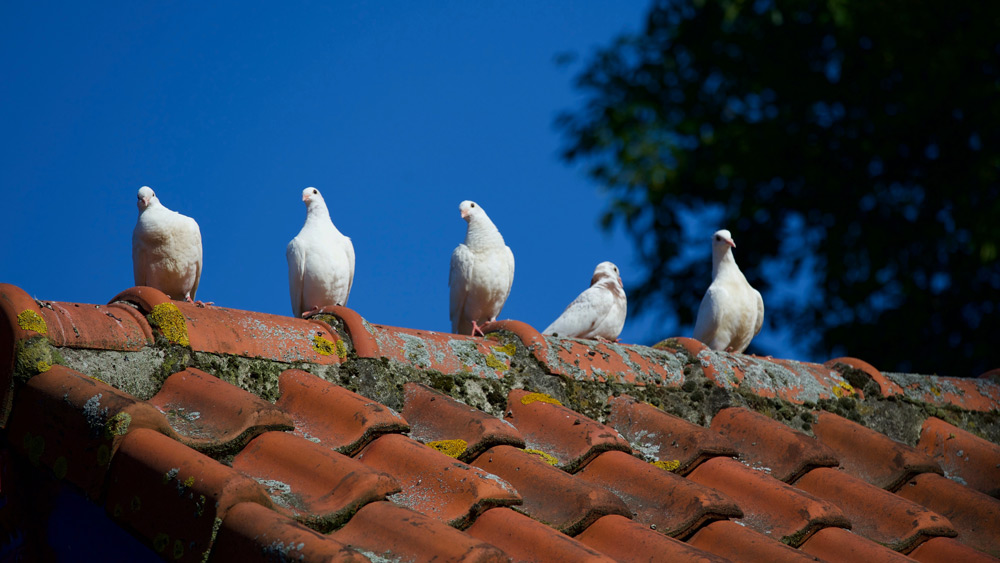
Grey coloured with a small collar of iridescent feathers around the neckline, pigeons have two characteristic black stripes across each wing. While a majority are grey, you’ll also find brown and white coloured pigeons as well.

Unlike feral pigeons, you can identify domestic pigeons that are kept as pets or for racing by looking for a tag around their leg.

Pest pigeons? Our experienced team is ready to help.

or

Problems caused by pigeons

A pigeon outbreak can lead to the following issues at your home or business:


  • Highly acidic pigeon droppings can cause damage to buildings, outdoor furniture, airconditioning units, solar panels and rooftop machinery
  • They leave behind an unpleasant odour
  • Noise disturbance from chirping, especially from chicks
  • Carry and transmit diseases such as histoplasmosis, cryptococcosis and ornithosis (Bird Fancier’s Lung)
  • Carry parasites such as bed bugs, bird mites, ticks and clothes moths which can cause secondary pest outbreaks and trigger allergies
  • Attract ticks, mites and cockroaches
  • Contamination of food supplies and water through droppings, feathers and nesting material
  • Slippery pigeon droppings can cause a health and safety hazard on footpaths, stairs and fire escapes
  • Pigeons can squeeze through small gaps and enter your roof space

Signs of a pigeon outbreak

Here are some ways you can tell if you have a pigeon infestation:


  • Many pigeons roosting and perching on your roof, eaves and window ledges or even nesting under your solar panels
  • A large amount of brown-white pigeon droppings
  • Nest debris appearing on your roof, such as sticks, twigs, pine needles, straw or grass stems
  • Frequent chirping noises from chicks
  • Damage to native plants in your garden from pecking
  • Feathers accumulating around your roof and yard, in gutters and blocking drains, causing leaks and overflowing in plumbing


Learn more about the signs of a pigeon outbreak here.

Nuisance pigeons around your home? Get fast pigeon control today

or

DIY ways to avoid a pigeon outbreak

The best way to stop a pigeon outbreak is to prevent it from happening in the first place. There are several simple actions that you can take to make sure that your property does not become a potential nesting site.

We recommend removing all possible sources of food and water from your yard, including pet food, water bowls and fallen fruit.

Sealing off potential entry points with wooden panels or mesh, installing mesh screens over chimneys and fixing loose tiles on your roof will help keep them out of your home.

Regularly check your roof for nests and remove them promptly, then disinfect the area. Trim away overhanging tree branches that cover your roof and gutters.

You can even consider using audio and visual deterrents which can be purchased from hardware stores.

Professional pigeon prevention

Sometimes, despite your best efforts, pest pigeons can still persistently cause problems at your home.

At Allstate, we have a range of treatments to manage a pest pigeon outbreak. Our technicians will advise which solution is the most appropriate for your circumstances.

OvoControl

An innovative new treatment that has been shown to significantly reduce bird populations within two years, OvoControl works as a form of pigeon birth control. It uses AI-controlled automatic feeding baits laced with a chemical that inhibits egg fertilisation in female pigeons.

Bird netting

This is used to form a physical barrier to prevent pigeons from accessing your roof.

Bird spikes

Providing an uneven surface to land, particularly on leading edges, bird spikes are commonly used on exposed ledges, sills, girders and steel beams.

Bird wire

A discreet way to protect leading edges of a building, stainless steel bird wire can be secured between vertical posts and makes the surface too unstable for pigeons to land.

Bird Jolt Flat Track

An electrically active surface that works discreetly, the Bird Jolt Flat Track delivers a mild electric shock when pigeons land and stimulate it. It is humane and not harmful to pigeons in any way and can be powered either by an AC or solar charger.

Bird gel

Specially formulated, weather resistant, nearly invisible and nontoxic, bird gel can be spread over nesting areas and discourage birds from landing due to its uncomfortable, tacky consistency.

Bird repellent optical gel

A long lasting and non-harmful method to deter pigeons from an area, bird repellent optical gel not only has a strong scent that is unpleasant for pigeons. It also creates a visual disturbance and confuses pigeons to discourage them from returning to the site.

Solar panel proofing and cleaning

The shelter and warmth underneath solar panels provides an ideal spot for pigeon nesting but can cause damage over time. We can help you to protect your panels by cleaning away the mess left behind by the pigeons and installing a strong mesh around them.

Severe outbreaks

For infestations that cannot be brought under control by any other means, we can physically prevente pigeons if necessary. Our work is always carried out in the most humane and responsible way possible. We are compliant with the National Parks and Wildlife Act 1972 and have the appropriate permits and licenses to ensure a respectful and safe outcome.

Choose Allstate for fast and reliable pigeon control

At Allstate, we understand how stressful and disruptive a pigeon outbreak can be.

That’s why we have a range of innovative and effective, yet humane treatments that can help you rid of pest pigeons as quickly as possible. You can rest assured that all our treatments carried out respectfully and are nontoxic to people, pets and the environment.

We’re available 24/7 for all urgent pest enquiries to all suburbs of Adelaide in residential, commercial and industrial settings.

With a 100% satisfaction guarantee, competitive warranties and payment plans, you don’t need to delay getting rid of pigeons from your home once and for all.

Speak to the pigeon removal experts with 35+ years’ experience

or

Your guide to Pigeon Control

Are Pest Pigeons a Problem in Winter?

ARE PEST PIGEONS A PROBLEM IN WINTER?


While it’s true that most birds prefer to escape to warmer climates for winter, pigeons are an exception. They have traits that make them highly adaptable to survive in cold weather. They find it even easier to survive by roosting in or on buildings that provide shelter and warmth. Once they find the perfect spot to roost, nest and breed, their population will quickly increase and before you know it, you’re left to deal with an outbreak.

If you’re concerned about having pigeons in your home or business this winter, continue reading to find out more about how to identify, prevent and treat a pigeon problem before it gets out of hand. For professional pest control services in Gilberton, be sure to check out Allstate Pest Control’s Gilberton location.

What questions will this article answer?

How do pigeons survive in winter?

You may notice there are less birds in winter, and this is because many of them fly away to warmer climates to escape the chill.

However, you’ll find that pigeons are the exception. They have several physical, behavioural and physiological characteristics which make them well adapted to survive in cold weather.

Feathers

Besides providing insulation and protection from the harsh conditions, pigeons may fluff their feathers to trap air around their bodies, providing additional warmth.

Waterproofing 

Pigeons have special oil secreting uropygial or preen glands, which help to keep their feathers dry when it rains.

Regulating body temperature

Pigeons can reduce their exposure to the cold by tucking in their head and feet, sticking their feathers down and crouching. In extreme conditions, they can also constrict blood flow to their feet to further prevent heat loss.

Socialised behaviour

Flocks of pigeons are comfortable to huddle and roost close together to share warmth.

Diet changes

In autumn, pigeons may seek food sources that are high in calories to gain weight for insulation. This includes seeds and fruit. During winter, they will continue to eat extra food and include grains, rice, nuts and insects. For extra energy, they may even opt to eat protein-rich food such as meat.

They are excellent scavengers

Pigeons are very resourceful and will look for food anywhere. So even if their preferred food sources such as insects and earthworms become scarce in winter, they will hunt around for food in rubbish bins, compost bins, dumpsters and bird feeders. Pigeons will fly along the streets searching for scraps from cafes, restaurants and parks.

Nocturnal hypothermia

On cold nights, pigeons shiver to raise their metabolism. They can also reduce their overall body temperature if needed.

Protecting baby pigeons

To ensure the survival of their offspring, adult pigeons add extra insulation and waterproofing to their nests.

Why are pigeons a pest in winter?

Since pigeons are very attached to their nests, they’re fortunate to have developed many attributes which help them survive in their preferred location during winter. So it’s important that they choose a spot which provides them optimum protection from the harsh elements.

Besides sturdy tree trunks, there are many places in urban areas which offer shelter and warmth for pigeons. 

As they are naturally attracted to the heat emitted from buildings during winter, pigeons can find access points to nesting spots in roof ventilators, attics, wall and roof spaces. They are capable of squeezing through gaps as small as an inch wide.

Once they enter your home or business and find a suitable nesting spot, it doesn’t take long for pigeons to build nests and lay eggs. This means that within a short amount of time you’ll be faced with a full-blown outbreak.

Signs of a pigeon outbreak


If you’re experiencing any of the following problems around your home or business, it’s best to contact Allstate for a pigeon inspection as soon as possible.

Bird noises

You can hear frequent chirping and crying from baby pigeons coming from your roof.

Pigeon droppings

Look for an accumulation of messy brown-white deposits where your suspect pigeons are roosting and nesting.

Pigeons roosting

You can see many pigeons roosting on the roof, eaves, gutter, balcony, window ledges or chimney.

Nesting material

Pay attention to an increase in clutter scattered around your yard and roof. In particular, look for leaves, pine needles, grass stems, twigs, straw and other suitable nesting debris.

Damage to your garden and plants

Your native plants may be targeted by pigeons pecking and fouling around your yard. 

Water damage 

Bird nest debris, droppings and feathers can build up along gutters, clog drains and downpipes, resulting in blockages, overflowing water and leakage in and around your building.

Noticing signs of a pigeon outbreak? Speak to an Adelaide pigeon removal expert today

or

Problems caused by a pigeon outbreak

Flocks of pigeons swarming around your home or business can create many issues, so it’s best to prevent an infestation from happening in the first place.

Spreading diseases

Bird droppings and feathers can carry nasty bacteria such as e-coli and salmonella. This can lead to illnesses such as gastroenteritis. They can also host viruses, fungi and parasites and spread diseases such as the flu, ornithosis, toxoplasmosis, encephalitis, histoplasmosis and cryptococcosis.

Triggering allergies

Parasites such as bird mites, bed bugs, ticks, mites and clothes moths can be carried by pigeons and their bites can trigger allergies in some people.

People who have serious bird allergies may also experience Bird Fancier’s Lung.

Damage to buildings

Pigeon droppings can cause discolouration and tarnish the appearance of buildings. Furthermore, they contain highly corrosive uric acid which can cause furniture, equipment, machines, construction materials and paint to rust and deteriorate.

Contamination of food, supplies and water

Poor hygiene and sanitisation can result from bird droppings, pecking, discarded feathers and debris from bird nests and dead birds.

Health and safety hazard

Fresh bird droppings on footpaths, steps and fire escapes can be slippery.

How to protect your home from pigeons this winter

The last thing you need is to worry about pigeons roosting in and around your roof. There are a few steps you can take during the onset of cold weather to make sure that you and your family won’t have to face the inconvenience of managing unwanted pigeon house guests. 

Firstly, we recommend removing all potential sources of food and water from your roof and yard to prevent pigeons from being attracted to your property. This includes fallen fruit, seeds, insects, pet food and water bowls.

Take care to properly seal all gaps and entry points and install mesh screens over chimneys.

Then, you’ll need to locate and remove nests and destroy any empty nests to prevent pigeons from returning. Remember to thoroughly clean and disinfect the affected area afterwards.

Solar panel proofing and cleaning

It’s common to find pigeons nesting underneath solar panels as they provide warmth and safety. Unfortunately, they can leave behind a mess and cause damage to your panels, causing them to work less effectively. At Allstate, we offer a service to help maintain and protect your panels from pigeons. Read more about our solar panel proofing and cleaning service here.

Need help with pigeon-proofing your home or business? Contact Allstate today

or

Professional pigeon removal


If you are experiencing an outbreak of pigeons, Allstate is here to help. Our pest control technicians use a range of techniques to prevent pigeons from perching on your roof and settling down in your roof space. This includes installing bird netting, spikes, wire, traps or even an electronic deterrent system. Read more about our most effective solutions for managing pest birds here.

OvoControl

At Allstate, we aim to offer the most humane, yet most effective solutions to help our clients remove their pest bird and pigeon problems. That’s why we always stay up to date with the latest in pest control innovations.

A recent breakthrough in bird control technology, the OvoControl system offers a humane and safe approach to prevente a pigeon outbreak naturally and with minimal disruption.

OvoControl works as a form of birth control to drastically reduce the pigion population. It AI-controlled automatic feeding baits containing Nicarbazin, an RSPCA-approved compound designed to disrupt egg fertilisation in pest birds. While humane, OvoControl is highly effective; it has been shown to significantly remove bird outbreaks within 2 years.

Speak to an Allstate customer service representative today to find out how OvoControl can help you manage pesky pigeons once and for all.

For a reliable pigeon removal service, speak to an experienced Allstate technician today

or

Choose Allstate for effective protection from pigeons this winter


As they are well adapted to survive winter, pest pigeons can cause problems by seeking shelter and warmth in your home or business. At Allstate, we understand the stress and disruption this can cause to your daily life and work.

That’s why we have a highly experienced team of pigeon removal experts to assist with managing your pigeon outbreak quickly, safely and humanely. We have a range of modern solutions using cutting-edge technology including OvoControl to ensure that you and your family are protected from future outbreaks.

Since 1986, Allstate has been providing pest control services to homes and businesses across all suburbs of Adelaide. Our highly-responsive, fully equipped team is available 24/7 for emergency call outs. We take care to only use products and treatments which are non-toxic to children, pets and the environment.

Stop Pest Birds Nesting in Your Roof

Stop Pest Birds Nesting in Your Roof

After a wet and cold winter, spring is finally giving us some welcome relief. But just as prolific as sunny days are wild birds looking for a place to nest. And while you see your roof void as a space for your home’s insulation and wiring, birds see free 5-star accommodation in its place.

Unfortunately, pest birds aren’t the most considerate of guests: their nests and droppings can cause considerable damage and they carry more germs than a medi-hotel. But luckily there are a few things you can do to keep these annihilative avians at bay.

Whether you think you already have birds on your roof or are worried about the risk, read on to find out what you can do about it.

Why do birds nest in rooves?

With soft insulation and shelter from the elements, roof spaces make the perfect home for birds to build their nests.

Unfortunately, the longer birds are left to nest, the harder it can be to remove them, which is why you should act quickly to prevent or get rid of them.

How can you tell if a bird has made a home inside your roof?

There are some tell-tale signs that birds have taken up residence inside your home.
As spring approaches, you should keep an eye (and ear) out for:

  • Bird noises, particularly the cries and chirps of young chicks after eggs hatch
  • Nest debris or birds picking up sticks and other materials in your garden to use in their nest
  • Large amounts of droppings all in one area (this may be a sign that a bird is living there, rather than just passing by)
  • Feathers in gutters and blocking drains
  • Nests under solar panels

Are pest birds dangerous?

Many people are unaware that pest birds can pose more problems than just noise.

They can make a mess in hard-to-reach areas which may entice other pests like rats and mice, leading to further health and safety issues. And it’s not just rodents – birds can also bring in small biting insects that once in the home, can be hard to get rid of. This includes fleas, lice, flies, and bird mites.

When pest birds nest in and on your roof, they also cause property damage.

Their acidic droppings are a big problem for solar panels and HVAC systems, and can interfere with their function. Birds’ feathers and nest debris can also clog up drains and gutters, causing plumbing and water damage problems.

Pest birds also have pest implications. Adelaide birds are known disease carriers and can cause health problems such as:

  • Salmonella
  • Ornithosis
  • Bird fanciers lung
  • E-Coli
  • Health issues from contaminated food and water supplies

How can you prevent and eradicate pest birds?

As spring approaches, we recommend you carry out preventative measures to reduce the risk of pest birds becoming a problem. This is a simple checklist of things you can do to prevent birds this time of year:

  • Although it can be nice to provide your local birds with food and water, you might also be attracting pest birds. Discourage unwanted birds from arriving and nesting by removing access to food and water sources during spring.
  • You should frequently assess your roof for access points or hire a professional to do so. Many pests, including birds, may enter your home via small gaps, overhanging branches, and loose tiles. Pigeons are frequent culprits because they only need a gap of 25 mm to enter the roof void. Pigeons will even shift loose or damaged roofing tiles to gain access.
  • If you have solar panels, you should consider bird proofing.

If birds are still causing you issues, our team can help you with more targeted bird prevention, bird removal, and cleaning up bird mess from your roof.

Our expert team is ready to help you now

or

How does Allstate prevent and eradicate birds?

At Allstate, we use a variety of methods to prevent and control pest birds, including:

  • Bird netting
  • Bird spikes
  • Bird jolt
  • Bird wire
  • Cleaning
  • Solar panel proofing
  • Shooting
  • Trapping

For more information on each of these methods, see our bird control solutions.

What happens after Allstate removes the birds?

Once we have removed pest birds, it’s important to clean up the mess left behind. At Allstate we can help you out with roof void cleaning, gutter cleaning, and solar panel cleaning and protection. Check out our maintenance services here.

We also encourage our customers to keep a regular maintenance schedule throughout spring to prevent birds from returning.

Our expert team is ready to help you now

or