





7 Signs You Might Have Termites
Termites damage more Australian homes each year than fire, storms, and floods combined, and most homeowners only find out once the damage is done. The signs of termites are subtle because these insects work inside timber and behind walls, out of sight. Knowing what to look for gives you the chance to act early, when treatment is simpler, and repair bills are smaller.
This guide covers the seven most common signs of termite infestation seen in Adelaide homes, what causes each one, and what to do next. Allstate Pest Control has carried out termite inspections and termite control across Adelaide since 1986, and the signs below are the ones our technicians find most often in local properties.
Why Adelaide Homes Are at Risk
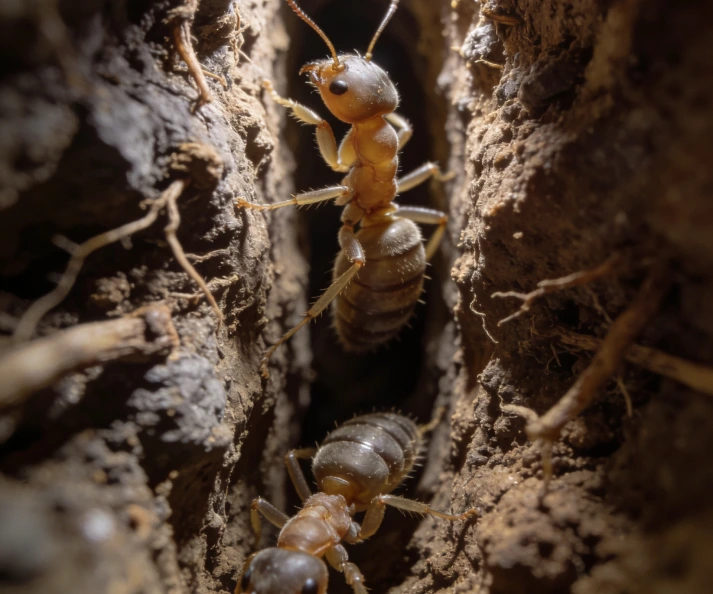
Adelaide sits in a high-activity zone for subterranean termites, with Coptotermes acinaciformis responsible for much of the serious structural damage across South Australia. These termites nest in soil and travel underground, entering homes through slab edges, cracks in concrete, pipe penetrations, and timber in contact with the ground.
Homes with subfloors, common in Adelaide’s older suburbs, are particularly exposed because most termite attacks begin in subfloor spaces. Slab-on-ground homes in newer suburbs are not immune either, since termites can enter through gaps as narrow as a couple of millimetres. Around one in five Australian homes experiences termite activity at some point, and home insurance rarely covers the damage.
 or
or
What Are the Signs of Termites? The 7 to Watch For
1. Mud tubes on walls, piers, or foundations
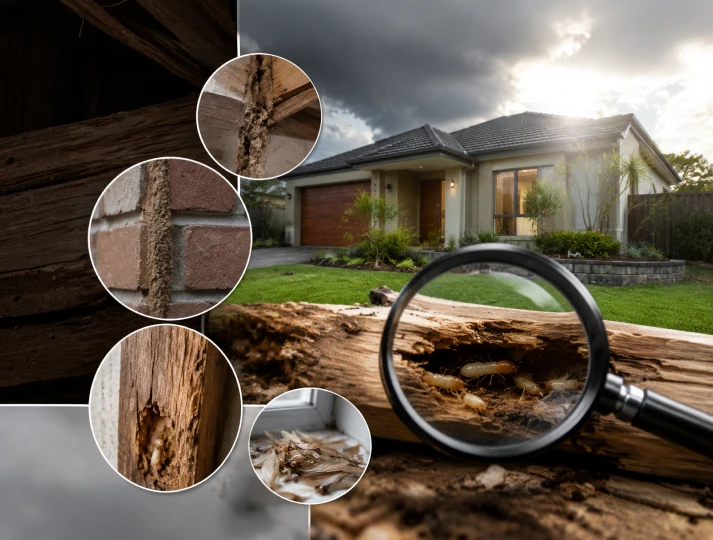
Mud tubes are the clearest of all termite infestation signs. Subterranean termites build these pencil-width tunnels from soil, saliva, and droppings so they can travel between their nest and their food source without drying out or being exposed to predators.
Check along your home’s foundations, brick piers, subfloor walls, fence lines, and around external pipes. In Adelaide homes, tubes often appear on subfloor piers and inside garages where the slab meets the wall. An empty tube doesn’t mean the termites have gone; they may simply be working elsewhere in the building.
2. Timber that sounds hollow or papery
Termites eat timber from the inside out, leaving only a thin skin of wood or paint on the surface. Tap your skirting boards, door frames, and architraves with the handle of a screwdriver. Healthy timber gives a solid sound; termite-damaged timber sounds hollow or papery.
Some of the most common first discoveries our technicians hear about are accidental: a vacuum cleaner going straight through a skirting board, or a finger pressing into a door jamb that looked completely normal.
or
3. Flying termites or discarded wings
Flying termites, known as alates, leave the nest in swarms to start new colonies. In Adelaide, this usually happens on warm, humid evenings from October through to early summer, often just before or after rain. Seeing a swarm near your home, or finding piles of small, equal-sized wings on window sills and in spider webs, means a mature colony is active nearby.
Alates are one of the earliest signs of termites you can catch, because the swarm happens before the new colonies do any damage. If you see one, book a termite inspection promptly.
4. Doors and windows that suddenly stick
When termites tunnel through timber frames, the moisture they carry and the damage they cause make the timber swell and warp. Doors that no longer close cleanly and windows that jam in their frames can be an early warning, especially if the change happens over weeks rather than years.
Seasonal movement is normal in Adelaide’s climate, so one sticky door in the middle of a wet winter isn’t cause for alarm on its own. Several affected doors or windows, or sticking combined with any other sign on this list, deserve a professional look.
5. Bubbling paint or cracked plaster
Termite activity behind a wall raises moisture levels in the surface material. Paint that bubbles, blisters, or peels for no obvious reason, and fine cracks appearing in plaster or cornices, can both point to termites working underneath. These signs are easy to mistake for water damage, which is exactly why they get missed. A licensed termite inspector can tell the difference using moisture meters and thermal imaging.
6. Sagging floors or crumbling skirting boards
As termites hollow out structural timbers, floors can develop soft spots, springiness, or visible sagging. Skirting boards may crumble at a touch, and you might notice fine soil or mud packed into joints and cracks where termites have sealed their workings. In subfloor homes, this damage often starts in bearers and joists well before anything shows inside the living areas.
7. Quiet clicking sounds or unexplained electrical faults
Soldier termites bang their heads against tunnel walls to signal danger to the colony, which produces a faint clicking or rustling inside walls, most noticeable at night. Termites are also drawn to the warmth of electrical fittings and will chew through cable insulation, so unexplained power failures or tripping circuits can point to hidden activity. Both signs are easy to dismiss, and both are worth checking.
or
Early Signs of Termites vs Advanced Damage
The early signs of termites are the ones outside your living areas: mud tubes on piers, alate wings on sills, and activity in garden timbers, stumps, or fence posts. By the time you notice sagging floors or crumbling skirting boards, the colony has usually been feeding for months or longer. This is why acting on the subtle outdoor signs matters more than waiting for indoor proof.
If you spot any sign of termites, resist the urge to break open the timber or spray the area. Disturbed termites abandon the site and reroute to another part of the building, which makes locating and controlling the colony harder. Leave everything as you found it and arrange a professional inspection.
How a Professional Termite Inspection Works
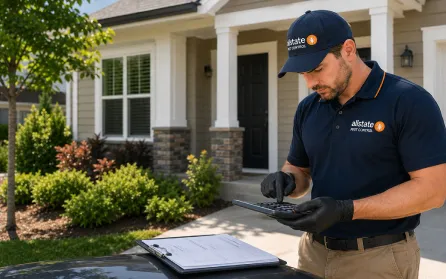
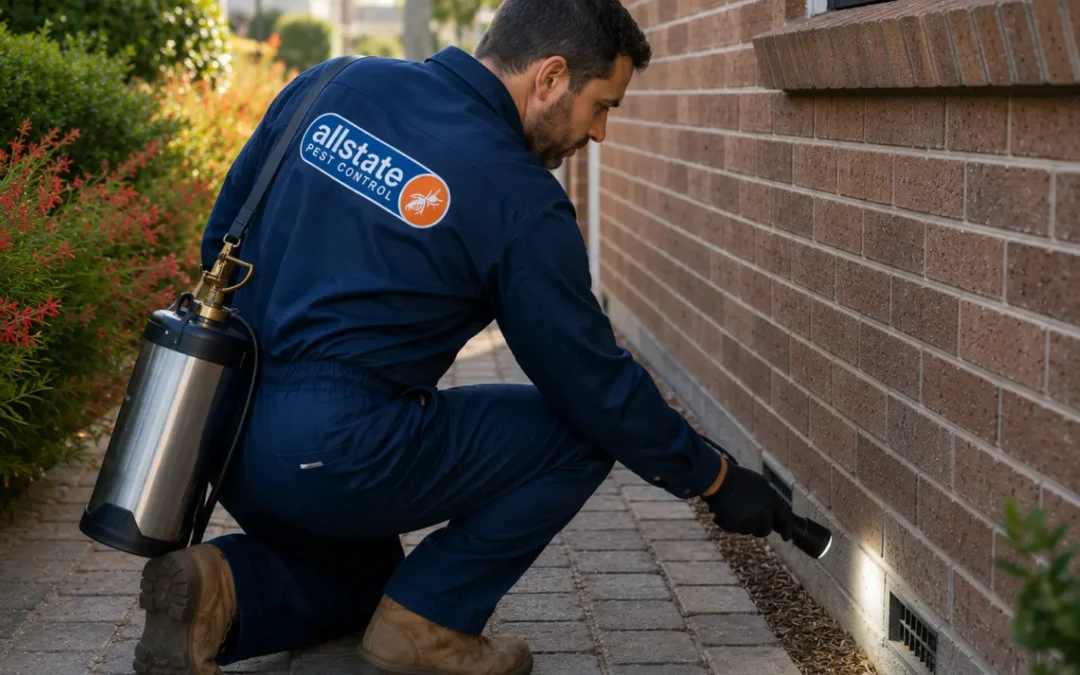
A visual check by a homeowner catches some signs, but termites are experts at staying hidden. A professional termite inspection from Allstate Pest Control follows a detailed checklist covering the interior, roof void, subfloor, exterior, outbuildings, and grounds, including landscaping timbers, stumps, and fence lines.
Our licensed technicians use moisture meters, thermal imaging, and borescope technology to check inside wall cavities and subfloor spaces without cutting into your home. Reports are prepared in line with AS 4349.3-2010, the Australian Standard for timber pest inspections, and include photos, findings, and a clear proposal if termite control is needed.
CSIRO research supports a termite inspection at least once a year for Australian homes, with more frequent checks for higher-risk properties, such as those near bushland, with previous termite history, or with timber in ground contact.
How Much Does a Termite Inspection Cost in Adelaide?
Allstate Pest Control’s detailed termite inspection starts from $275, including GST, covering all areas of the home and grounds with a full written report. If you already know you have termite activity, we also offer an assessment and a proposal for treatment. Terms and conditions apply, and we service all suburbs of Greater Adelaide, South Australia.
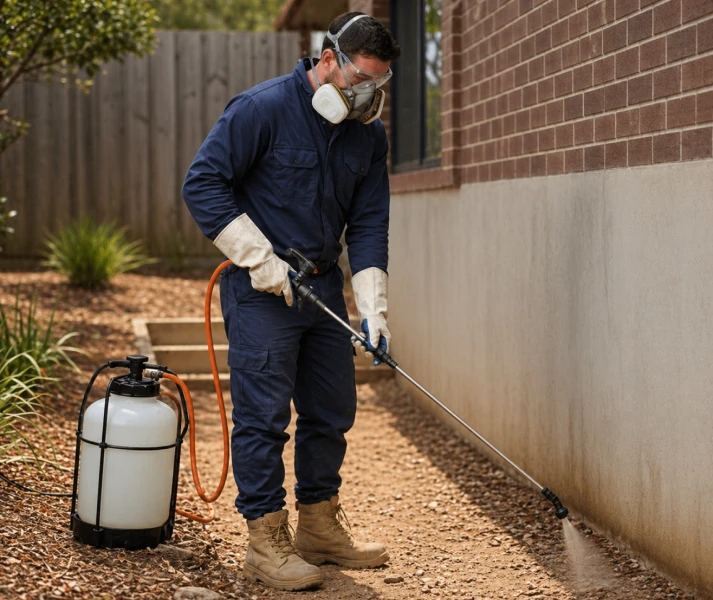
Where activity is confirmed, treatment options are tailored to your property and may include baiting and monitoring systems or chemical soil treatments applied in line with AS 3660.2-2017, the Australian Standard for termite management in existing buildings. The goal of any program is long-term management that reduces the chance of termite damage and supports your home’s defence against future activity.
What to Do Right Now
If any of the seven signs above look familiar, here’s the short version of the right response:
- Don’t disturb the termites or spray anything on them
- Photograph what you’ve found from a distance
- Book a termite inspection promptly, since colonies keep feeding while you wait
- Keep a record of the inspection report for future reference and resale
Termites never stop on their own. Early detection is the single biggest factor in how much a termite problem ends up costing you.
Frequently Asked Questions
Are white ants the same as termites?
Yes. White ants are simply the common Australian name for termites. They aren’t ants at all, and any white ant activity in your home means a termite colony is feeding nearby and needs professional attention.
How often should I get a termite inspection?
CSIRO research supports at least one termite inspection every year for Australian homes. Properties near bushland, with subfloors, or with past termite activity, benefit from checks every six months.
Does home insurance cover termite damage?
Rarely. Most Australian home insurance policies specifically exclude termite damage, which is why regular inspections matter so much. The cost of an annual inspection is small compared with structural repairs.
Can I get rid of termites myself?
DIY termite sprays and traps usually make things worse. Disturbed termites reroute to other parts of the building, and surface sprays never reach the colony. Professional termite control targets the source, not just the termites you can see.
How long does a termite inspection take?
Most residential inspections take between one and two hours, depending on the size of the property and access to the roof void and subfloor. You receive a verbal rundown on the day, followed by a detailed written report with photos.