




prevention-icon

Termites

prevention-icon

Ants

prevention-icon

Cockroaches

prevention-icon

Spiders

prevention-icon

Birds

prevention-icon

Bed Bugs

prevention-icon

Bees & Wasps

prevention-icon

Rats & Mice

prevention-icon

Possums

prevention-icon

Biting Insects

prevention-icon

Disinfection Services

How to Prevent Anthills in Your Garden

How to Prevent Anthills in Your Garden

With the remarkable ability to sniff out food up to 6 metres away, hungry ants won’t hesitate to set up a new anthill once they find a great place to feed.

Avoid having ants marching their way to your home and garden by following our top tips to prevent anthills all year round.

What questions will this article answer?

[slide-anything id=’257666′]

Why ants are attracted to your garden

While they are still around in winter, ants are more commonly seen out and about foraging for food in the heat of an Aussie summer.

With a colony of sometimes millions to feed, ants will travel great distances to scavenge for food. They may venture 700 feet from their nest and have the ability to detect food up to 6 metres away.

This means that ants living in your area can potentially sniff out their next feed in your home and yard. With wide and varied diets depending on the species, ants will come over and help themselves to whatever sparks their appetite, and also invite the rest of the colony around to set up a new ant nest!

Ant species you’ll find in your garden

Out of over 4000 species of ants existing in Australia, there are around a handful of mainly introduced species which are considered as common pests. These include:

Black house ants

Arguably the most recognised species, black ants grow 2.5-3mm long and have a shiny black appearance, as their name suggests.

Bull ants

Packed with venom, painful bull ant bites are best avoided. Red and black in colour and growing up to 40mm in size, bull ants can become aggressive when their nests are disturbed.

Argentine ants

Considered an invasive species, Argentine ants are 2.2-2.6mm long, and light to dark brown coloured. With an aggressive nature, these ecological pests are territorial and drive away other native ants.

Carpenter ants

Built with strong jaws and having an affinity for wood, carpenter ants are notorious for tunnelling through timber, leaving behind wood shavings and causing structural damage to trees and buildings alike. They grow 3-12mm long, and can be black, dark brown or orange coloured.

Pharoah’s Ants

Drawn to warm and humid areas, Pharoah’s ants are brown and yellow coloured, grow up to 2mm long, and males have wings. They are commonly found in hospitals.

Ghost ants

Known for their pale brown, translucent legs and abdomen, ghost ants are a pint-sized nuisance at 1.3-1.5mm long. You’ll find them in areas of high moisture content.

Fire ants

With their fiery bright red copper heads, feisty fire ants are aggressive when provoked, and fierce defenders of their distinctive nests, which can be up to 40cm high. It’s important t oavoid getting painful stings from fire ants at all costs, as they can result in swollen welts and trigger allergic reactions. Worker fire ants grow up to 3-6mm long.

Odorous house ants

Emitting a pleasant coconut scent when crushed, odorous house ants are brown or black coloured, and grow up to 3.18mm long. They are often spotted in moisture-rich places, such as leaking pipes.

Stop marching ants in their tracks. Speak to an expert today.

or

Signs you have an ant outbreak

It’s not hard to tell if these tiny terrors are trying to invade your property. Here are some clues to look for in a potential ant infestation:

  • You notice more ants, usually moving along well-defined trails
  • You spot anthills in your yard (dirt mounds with a central opening to their underground nests)
  • If you have carpenter ants you might notice piles of fine wood shavings on the floor 

Reasons to avoid an ant infestation

Here are some problems that you may experience when ants invade your home

Contamination of surfaces and food

Experts at foraging, ants travel far and wide to scavenge for food to feed the colony. Their movements will take them from rubbish bins and toilets to your kitchen and pantry. Along the way, they can pick up germs, including bacteria and viruses, contaminating many areas of your home.

Don’t forget to inspect potted plants, mulch, hay and manure for signs of fire ants.

Spread of diseases

If your family or pets come into contact with surfaces or food items that have been contaminated by germ-carrying ants, it can lead to illnesses such as gastroenteritis.

Ant bites

Some species of ants, such as bull ants and fire ants, have more potent, venomous bites, which can trigger allergic reactions. However, for most other species, ant bites only produce mild discomfort.

Damage to buildings

Carpenter ants chew through wood and timber, and cause expensive structural problems to your home.

Damage to plants in your garden

Fire ants will help themselves to fruit, vegetables and seedlings in your yard.

Avoid the sting of an ant outbreak. Get advice today.

or

How to prevent anthills in your garden

Once you have a few ants around your home, it doesn’t take long for more to join them. Here are some ways that you can keep anthills out of your yard for good:

Lawn maintenance

Keeping your lawn healthy and thick makes it more difficult for ants to dig through and create an underground nest. You can also rake over any anthills that you happen to spot.

Regular garden maintenance

Rotten fruit and vegetables can attract a range of pests, including ants, so dispose these promptly. Remove piles of vegetation, which make good hiding spots for anthills, and clear away trees and foliage which come into contact with your home, as they provide an easy access point.

Remove food sources

From nectar and small insects to plants, sweet and greasy foods, bread, and meat, most ants will eat almost anything. With a remarkable ability to sniff out food from many metres away, it’s best to keep food carefully covered and stored away to avoid ants helping themselves to it first. Don’t forget to empty pet food bowls as well.

Keep surfaces clean

Food spills and crumbs can also attract ants. We recommend maintaining good hygiene in dining and food preparation areas by regularly sweeping, wiping, mopping, vacuuming and disinfecting.

Practice proper waste management

Rubbish bins are a favourite for ants, so ensure that all waste is tightly sealed in sturdy bags, and bins have tight fitting lids. Keep compost piles well covered.

Home maintenance

Leaking pipes and drains provide a source of moisture, which attracts ants, so repair these quickly.

Seal off entry points to your home

Inspect your home regularly for potential access points and fill them. This includes tiny holes, gaps, cracks and crevices. Check that the window and door seals are well fitted.

Professional ant control

We use the following ant treatment methods:

Chemical baits

Laced with an insecticide that is toxic to ants, chemical baits are strategically placed at popular feeding sites to attract ants, which then carry the lethal compounds back to the rest of the colony.

Ant control dust

Consisting of diatomaceous earth, which is ground down to a fine, powdered form, ant control dust is sprinkled along the perimeters of your home, as well as hard to reach areas that carry heavy ant traffic, and around anthills.

Insecticide spray

A fast acting approach to quickly reduce the number of active ants, insecticide sprays are useful for heavy infestations. We recommend keeping your pets away from treated areas.

Choose Allstate for effective ant management

Ants are active all year around, so outbreaks can happen at any time, and the last thing you need is for a couple of ants to escalate into a whole army. That’s why Allstate is always here to help.

Since 1986, we’ve successfully managed ant outbreaks in commercial, residential and industrial settings, using innovative treatments and the latest in pest control technology.

Available 24/7 for urgent advice, our pest control services have safeguarded clients in all suburbs of Adelaide.

No matter where you are, you can count on Allstate to assist with fast, targeted ant infestation solutions at any time.
Our expert team is ready to help you now

or

How to tell the difference between ant species in Australia

How to tell the difference between ant species in Australia

There are at least 1,275 known species of ants in Australia, but only a few are considered as household pests. It’s handy to know which species you’re dealing with in the event of an outbreak, as this can affect the type of treatment you’ll need to manage them for good.

If you’re experiencing an ant outbreak and wondering which type of ant is the cause, we’ve prepared this guide on identifying the most common pest ants.

What questions will this article answer?

Importance of Identifying Australian Ants

While most ant outbreaks can be easily treated, certain ants, due to their behavior, require more targeted or aggressive solutions.

For example, some species, like Pharaoh and Argentine ants, can multiply fast and create several nests, requiring long-term treatment to prevent sustained attacks. On the other hand, bull ants are known for their painful bites, and carpenter ants build their nests in wooden house frames, so you’ll want to prevent an outbreak quickly.

However, without special training, it can be challenging to identify which species of ant is causing problems around your home or business.

The earlier you determine which species of ant is the culprit, the faster the outbreak can be treated, and any potential damage and disruption can be minimised. That’s where professional pest control can make a big difference.

Get effective ant removal advice today

or

Black House Ant

Quite possibly the most common type of ant that you’ll encounter, black house ants often lurk around kitchens, bathrooms and even your garage.

They are 2.5-3mm long and shiny black coloured, with 6 spindly legs.

Black house ant larvae normally take over 6 weeks to mature into adults.

They feed on sweet and greasy food, breadcrumbs and meat.

Fire Ant

As aggressive defenders of their nests, fire ants aren’t afraid to sting to defend their colony if provoked. These painful stings can swell into welts within 24-48 hours and trigger allergic reactions.

They build distinct nest mounds which can stand over 40cm high above their underground chambers.

Fire ants have a characteristic antennae club, bright copper head and dark brown body. Workers grow between 3.18-6.15mm and queens are 1.59cm long.

Larvae take 16 days to mature.

They feast on dead insects, vertebrates and earthworms, as well as sweets, fatty food and proteins.

Ghost Ant

Drawn to areas with high moisture, such as kitchen and bathrooms, ghost ants nest in wall spaces, loose bark, flowerpots and underneath objects in the ground. A single colony can have several nesting sites.

They have pale, translucent legs and abdomens and grow up to 1.6mm long.

Ghost ants eat sweet and greasy food, as well as honeydew produced from aphids.

Prevent ants fast. Speak to an expert today.

or

Odorous House Ant

Producing a unique coconut smell when crushed, odorous house ants are attracted to places with moisture. However, you’ll also find them lurking around house plants and toilet lids.

They are usually brown or black in colour with 6 legs and antennae with 12 segments.

Odorous house ants grow between 1.59-3.18mm long and take 34-38 days to become adults.

They feed on pet food, sweet foods and fruits, particularly melons.

Pharoah’s Ant

Most commonly found in heating systems and areas with humidity, Pharaoh’s ants swarm all year long and are often found in hospitals. They form new colonies after their nests have been disturbed from insecticide treatments.

Pharaoh’s ants have black eyes and 2 small segments at the pedicel. Workers are yellow/brown with brown abdomen and grow up to 1.5-2mm long. Males have wings and are usually black and 3mm long. Queens are dark red and also have wings, and typically measure 3.5-6mm long.

Larvae take 18-20 days to mature into adults.

Their favourite foods are high in protein, such as meat, blood, fat and dead insects.

Carpenter Ant

With their strong jaws, carpenter ants chew through wooden structures and objects, leaving behind wood shavings, also known as frass. They can cause significant structural damage to buildings and trees, and build satellite nests in different areas.

Carpenter ants are usually dark brown, orange or black coloured, with 6 legs and 2 antennae. They range from 3-12mm long, depending on their job classification within the colony.

Workers take 60 days to become adults.

They enjoy feeding on honeydew produced by aphids, dead insects and pantry food items.

Argentine Ant

A well-known ecological pest, Argentine ants are aggressive and territorial, and will deter other native ant species from setting up a colony in their preferred area. They also attack nesting birds and hatching eggs. You’ll find their nests in wood, tree cavities, older shrubs and mulch.

Argentine ants are light to dark brown in colour, with a small and slender build. They grow 2.2-2.6mm long.

Their diet includes sweets, decaying fruit, cereal, meat products as well as insects.

Bull Ant

If you’ve disturbed a bull ant nest, watch out! They can be very aggressive and secrete venom through their painful bites. With excellent eyesight, they prefer to hide away in areas with dense vegetation, nesting under logs and rocks.

They are red to black coloured and can grow up to 40mm in size. Eggs take 3-4 months hatch and mature into adults.

They collect plant nectar and other plant juices as well as animal prey.

Professional ant extermination

Before initiating treatment, our expert pest control technician will thoroughly assess the outbreak and identify the type of ant or ants involved. We’ll locate the ant nests as well as potential food sources that need to be removed.

Then, we’ll come up with a treatment plan, which typically involves a combination of the following methods:

Ant control dust

When sprinkled into wall cavities and roof voids and other hard-to-reach areas, this kills ants upon contact.

Insecticide

Applied to treated zones around the perimeter of the building, this acts as an effective deterrent for ants attempting to enter.

Chemical baits

We’ll strategically position baiting stations at popular feeding sites to ensure that as many ants as possible can carry the poisonous bait back to the colony.

Ant prevention treatment can usually take time before seeing results, so your technician will need to return to replenish it and review its effectiveness after a few weeks.

For effective and reliable ant removal, choose Allstate

At Allstate pest control, our technicians are highly trained to identify different types of ant species that require specific treatment modalities. This means that you won’t need to worry about getting to the root cause of the outbreak yourself, and you can expect that it will be treated as quickly as possible.

We’re available 24/7 to all suburbs of Adelaide to treat infestations in residential, commercial and industrial settings. Using modern technology and innovative treatments that are safe for people, pets and the environment, we offer a 100% satisfaction guarantee and competitive warranties on all our services.

With payment plans available, there is no need to delay having an ant extermination through Allstate.

Our expert team is ready to help you now

or

Frequently Asked Questions

What are the most common ants found in Australian homes?

Argentine, blackhouse, and ghost ants are Australia’s most common ant varieties. These nuisance pests are attracted to sweet foods, pet food, and other insects and often build nesting sites in wall spaces or soil near foundations.

How can I identify a bull ant in my backyard?

Bull ants are a native ant species known for their powerful sting and aggressive nature. They have distinct reddish-brown bodies, large mandibles, and painful bites. Bull ants are found near trees, plants, or nest mounds in urban and rural areas.

Are carpenter ants dangerous to my house structure?

Carpenter ants can cause significant damage by hollowing wooden structures for nesting sites. Although they don’t consume wood, their presence is marked by smooth tunnels, frass, or disturbed wooden surfaces.

What eco-friendly methods can I use to manage ghost ants?

To manage ghost ants and other ant species, use natural repellents like vinegar sprays, lemon juice, or essential oils such as peppermint. Ensure cleanliness to prevent attraction to honeydew produced by aphids, sweet foods, or dead insects. Seal entry points near wall spaces and heating systems to prevent invasive ants like Pharaoh’s ants from creating new colonies.

When should I call a professional pest control service for ants?

Call a pest control service if ants like fire ants or coastal brown ants build super colonies or if invasive ant species cause structural damage. Licensed experts can treat commercial buildings, homes, and urban areas infestations, particularly when colonies with multiple queens or satellite nests are involved.

Getting Rid of Ants – The Complete Guide

Getting Rid of Ants – The Complete Guide

GETTING RID OF ANTS – THE COMPLETE GUIDE


With summer finally here, you’ll be sure to notice more ants marching around. Outside in the garden or intruding in the kitchen, these tiny terrors can multiply quickly and become a huge problem to your home or business if left unchecked.

Ants can contaminate your food, spread diseases and cause an uncomfortable stinging sensation with their bites. In some cases, they can even damage wooden structures and the electrical wiring in your home or office. Thankfully, it’s possible to avoid all these issues by preventing an outbreak as quickly as possible.

If you’re looking for tips on how to stay ant-free in any season, continue reading to learn more.

What questions will this article answer?

[slide-anything id='228696']

Why are there ants in the garden?

No matter where you live or work, it is a common sight to see ants crawling around outside. And as they thrive in warm temperatures, they can certainly be a nuisance when you want to enjoy a hot and sunny summer’s day.

If your neighbours have many ants in their own yard, all competing for limited resources, it makes sense that they’ll wander over to your property to look for food.

Ants are always scouting for food to sustain the colony, so if you have uncovered edible items in your yard, such as rotten fruit, pet food and rubbish, there’s a good chance they’ll find their way to it quickly. Once they’ve located viable food sources, they may bring along other ants and choose to set up their colony in your yard.

Signs of an ant infestation

Here are some ways you can tell that these pesky insects are invading your home or business:

Trails of ants

You have more frequent ant sightings than usual, particularly indoors, clustering around a food source. They tend to prefer moving around in large groups along defined trails, travelling between food sources and their nest.

Disturbed soil or dirt

You can easily tell if there’s an ant colony nearby if you notice small mounds of dirt. You’ll find these ant mounds or anthills outdoors on soil or grass, pavers or up against walls with a characteristic central opening.

Frass

When carpenter ants carve away at wooden structures, they can be messy and leave behind piles of dirt particles, droppings and dead ant parts known as frass. In some cases, you can find wood shavings inside the home from carpenter ants carving away at wood.

White ants

To the untrained eye, termites can look like white-coloured ants and are therefore often referred to as ‘white ants’. However, they are a completely different species and are more closely related to cockroaches than regular ants. So be sure to rule out a termite outbreak as this can cause significant – and expensive – damage to your home or business. To find out more about telling the difference between these insects, read this blog.

Signs of ants in your home of business?
Speak to our expert team today

or

How to manage ants outside the home

If you’ve identified the tell-tale signs that ant colonies are living in your yard, don’t panic. There are many ways you can try to manage them and prevent them from coming inside.

Boiling water

Pouring boiling water into a nest can kill many ants upon contact. However, it may not penetrate deep enough within the ground to reach the entire colony, including the queen, who is responsible for laying eggs and producing more ants.

Water hose

Turning a hose directly into an ant nest enables water to penetrate deep inside the ground and drown all the ants within a colony, including the queen.

Soapy water

For a powerful mixture that damages the outer coating of ants, you can use household items such as detergent or liquid soap mixed with water and oil to spray directly onto ants.

Regular yard inspections

Check your yard regularly for signs of ants. If you notice ant mounds or an increased number of ant trails around your property, you can take steps to prevente them and avoid an outbreak by applying insecticide products to ant colonies.

Professional ant control

Many supermarket ant control solutions can be highly toxic, so if you have a serious ant problem, it’s best to leave it to a professional ant exterminator.

How to prevent ants outside

If you want to spend an enjoyable summer outside, we suggest taking the following steps to safeguard your backyard from ants before the hot weather comes.

Remove access to all sources of food and water

  • Wipe down surfaces including benchtops, tabletops, stoves and sinks
  • Clean any spills immediately
  • Cover food in tightly sealed containers
  • Sweep, mop and vacuum floors regularly to remove crumbs and spills
  • Clear away dirty dishes and throw food scraps away into secured bins
  • Cover pet food

Regular yard maintenance

  • Keep lawns tidy and rubbish secured
  • Clear away debris including fallen fruit, branches, leaves
  • Keep plants, bushes, shrubs and trees trimmed and away from your home to remove easy access points

How to manage ants inside

When it rains, or if the weather is very hot, ants may be drawn indoors to seek protection and enjoy an abundance of resources such as food and water.

Insecticide spray can be applied directly to ants as a spot treatment if there are only a few ants. For serious infestations, this method is far less effective. It’s handier to prevent ants from coming inside in the first place. Inspect your home and use fillers such as silicone and caulk to seal off cracks, crevices, openings, gaps and holes that enable easy access for tiny ants.

You can also make your own natural baits which are safer for children and pets than store-bought insecticides, such as baking powder mixed with sugar.

Natural ways to deter ants

Ants crawling around your kitchen and all over your belongings aren’t a pleasant sight. Thankfully, there are various ways to make sure that this doesn’t happen to you. Here are some natural ant control methods:

Water

Placing your pet’s food bowl within a shallow dish filled with water makes it hard to reach for ants.

Homemade sprays

You can mix essential oils (such as tea tree oil, citrus, clove and peppermint) into a pump bottle filled with water and vodka. Lemon juice and vinegar can also work well, depending on the type of surface. Spray this mixture liberally in areas where you notice ants regularly.

Powdery substances

Sprinkling chalk, baking powder or baby powder around entry points to your home provides an obstacle for ants to come inside. It clogs their pores and causes breathing difficulties.

Deter with overpowering smells

We recommend mixing cinnamon, garlic, mint or black pepper with vinegar. You probably already have many of these everyday pantry staples at home, and it’s as simple as putting them into a bowl and leaving them out. Doing this will leave a strong smell that is unpleasant and repulsive to ants.

Diatomaceous earth

A naturally occurring substance made of ground up tiny fossils, diatomaceous earth can be sprinkled onto heavily trafficked areas. This includes ant trails, ant mounds, along your driveway, the perimeter of your home and patio and your veranda.
It is so versatile that it can also be used indoors, in the kitchen and around doorways and windows.
Diatomaceous earth works by causing damage to the outer shell of ants upon contact, leading to dehydration and eventually death.

Professional ant prevention

At Allstate, our highly trained and knowledgeable team can assist you with your ant problems any time. No matter if you’re at home or running a business, we can come up with an effective way to manage pest ants in accordance with Australian standards and laws. Here is our four-step ant control method:

Initial assessment

We will carefully inspect your yard and building and see if we can locate the source of the outbreak. From this, we’ll be able to decide the best approach to treat the problem.

Ant removal treatment

We use a combination of the following treatments, depending on the extent of your outbreak:

  • Ant control dust is sprinkled into roof and wall cavities
  • Insecticide is applied to designated treated zones around the sides of the building
  • Chemical baits containing insecticides can be placed in locations around known feeding sites, nesting sites and areas which ants heavily traffic

Follow-up treatment

As treatment can take some time, patience is the key to success. That’s why we’ll schedule you in for a review, if necessary, so that we can replenish the treatment until the problem has been completely resolved.

Pest control report

We’ll prepare a report for you to keep regarding the treatment. This means that you can refer to it anytime should any further outbreaks occur.

Struggling with ants? Speak to an expert today

or

You can rely on Allstate for safe and effective ant removal

We have been helping customers across all suburbs of Adelaide to prevente ant outbreaks since 1986. We understand the disruption and concern that having ants can cause to you, your family and business, so we offer a 24/7 emergency callout service.

Our team of highly trained, licensed professional pest control technicians is fully equipped to assist you with any ant problems. Whether you’re in a commercial, residential or industrial setting, we have innovative, tailored solutions to meet your needs.

We have a thorough understanding of food regulations and Australian standards to ensure that your home or business remains ant-free and compliant.

Our treatments are non-toxic to people, pets and the environment and can be accessed with a payment plan if needed.

Backed by competitive warranties and a 100% money-back satisfaction guarantee, we can help protect you and your family from ants in the long term. Speak to a friendly Allstate consultant today to learn more.

Our expert team is ready to help you now

or

Bird proofing your solar panels – is it really necessary?

Bird proofing your solar panels – is it really necessary?

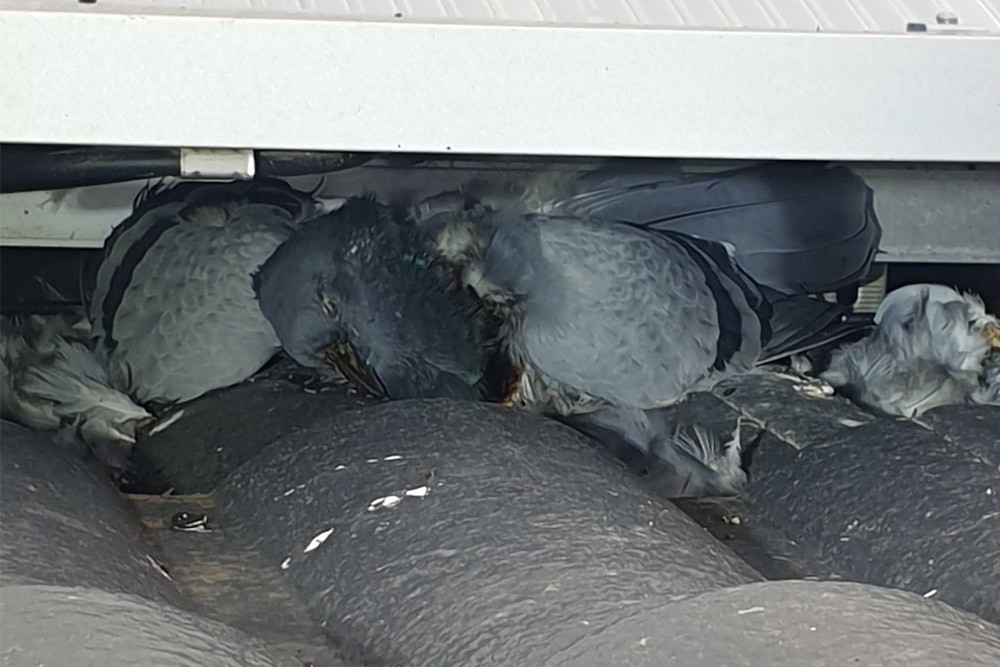
Your solar panels were working out great, but then the birds moved in. Your roof quickly became inundated with pigeons and your solar panels were covered in feathers and bird droppings. You may have heard about bird proofing your solar panels, but wondered if you actually need to do it, or you could just wait for the birds to move on?

The answer is yes – you do need to install proofing on your solar panels in order to protect them from pest birds. While you could use other methods of bird control, as soon as you remove pigeons from under your solar panels it’s likely a new flock of birds will come and replace them.

Why bird proof your solar panels in Adelaide?

Unfortunately solar panels are a 5-star nesting spot for pigeons and other Adelaide pest birds, thanks to fact they are provide shelter and a hiding place while being up high away from most predators.

Even if you can put up with the mess they create, it’s unwise to let them continue living and breeding on your roof because a) the damage they cause to your solar panels and b) the significant health risk. If pigeons roost on your solar panels for too long, these are just some of the problems you’re likely to face:

  • Your panels stop working effectively: pest birds damage the wiring on your solar panels and interrupt the flow from the panels to the board.
  • Your solar panels sustain expensive, long-term damage: bird droppings are corrosive and if allowed to build up on your panels can permanently damage them.
  • Your roof gets stained: by nesting under your panels, birds leave far more droppings on your roof than they otherwise would, which can stain and damage it.
  • You are exposed to bird lice and dangerous pathogens: birds carry lice and infectious pathogens including Salmonella and E. Coli, which can cause serious problems for humans. When birds nest on your roof, bird lice find additional hosts by entering the roof cavity and feeding on the humans inside. Infectious diseases are spread through feathers and droppings, which quickly turn to a dust-like substance and spread to the inhabitants below.
  • You attract other pests: birds’ droppings and nests attract other unhygienic pests like rats, mice and cockroaches.

Getting solar proofing installed

Now you know that birds under your solar panels are more than a noisy, messy nuisance, you’ll understand why it’s best to keep them out for good.

By bird proofing your solar panels, you will reliably stop them from nesting underneath, but the task should be carried out by an Adelaide pest control professional to make sure you don’t get any future problems.

Here’s what you can expect when our team pigeon proof your solar panels:

  1. We willl inspect the roof and roof cavity to find all birds dwelling in your home, then manage them through one of a number of bird control methods.
  2. We remove all faeces, feathers and nesting material, then thoroughly clean the solar panels and surrounding areas.
  3. We fit a hardwearing, UV coated mesh to the outsides of your solar panels. The mesh can be removed and reinstalled for any future solar panel maintenance, and doesn’t interfere with your solar panels’ function or affect their warranty.
  4. 1. In addition to our Money Back Guarantee, we offer a 1 year warranty: if birds manage to get under your solar panels within this period we will come and fix the problem free of charge.

What if I don’t yet have solar panels?

If you’re based in Adelaide and about to invest in solar panels, you can save yourself the hassle of any bird problems and get solar panel proofing as soon as your solar panels are installed. Call us for a free quote and to book.

Your chance to remove pest pigeons for good

If you’re sick of birds hanging in and around your solar panels (or dreading the prospect of it happening), solar panel proofing is the most effective way to keep them out permanently. Allstate Adelaide’s bird control team are experienced, highly trained, and always look after our customers.

Learn more about solar panel proofing and get a quote today– click the orange chat button or speak to our friendly team on 08 7123 0705.