










How to Identify and Get Rid of Silverfish in Your Home
This guide covers what silverfish are, where they come from, the DIY steps that genuinely work, and when professional silverfish pest control is the better path. Allstate Pest Control has managed household pests across Adelaide and South Australia since 1986, and silverfish are a regular find during our inspections, especially in older homes.
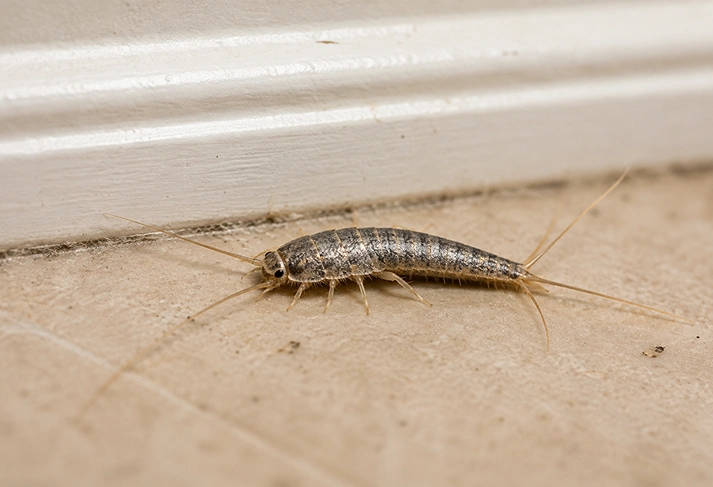
What Are Silverfish?
They’re also one of the oldest insects on earth, predating the dinosaurs, and that long history shows in how hardy they are. A silverfish can live for two to three years and survive for months without food, which is a big part of why casual DIY efforts so often fall short.
Where Do Silverfish Come From?
Once inside, silverfish head for humidity. Adelaide is a dry city, but every home has humid microclimates: bathrooms, laundries, under sinks, subfloors, cellars, and wardrobes against cold south-facing walls. Older stone homes across Adelaide’s established suburbs are particularly good silverfish habitat, with cellars, original timber floors, and decades of accumulated gaps. Seeing silverfish regularly is often the first hint of a moisture issue worth fixing for its own sake.
Signs of a Silverfish Problem
- Live sightings at night, most often in bathrooms, laundries, and kitchens
- Irregular holes and grazed patches on paper, book bindings, cardboard, and wallpaper, where they’ve fed on the starch and glue
- Yellow stains on fabric or paper, left behind as they feed
- Tiny black droppings that look like ground pepper, in drawers, on shelves, and along skirting boards
- Shed skins, since silverfish moult throughout their lives and leave delicate translucent casings behind
Because one female lays up to a hundred eggs in cracks and crevices, a few sightings usually mean a larger population out of view.
What Do Silverfish Damage?
How to Get Rid of Silverfish in Australia: Step by Step
1. Cut the humidity
This is the single most effective move. Run exhaust fans during and after showers, fix dripping taps and leaking pipes, improve airflow in cellars and subfloors, and use a dehumidifier or moisture absorbers in problem rooms and wardrobes. Silverfish need humidity above roughly 75 per cent to breed well, so drying out their habitat slows the population at its source.
2. Remove their food and shelter
Get cardboard boxes out of humid areas and switch to sealed plastic tubs, especially in the shed, garage, and roof void. Cull old newspapers and magazines, store pantry starches in airtight containers, and vacuum carpet edges, skirting boards, and behind furniture regularly to pick up eggs and food debris.
3. Seal their hiding spots
Silverfish tuck themselves and their eggs into cracks. Seal gaps along skirting boards, around pipes, and in wall junctions, and fit door seals where daylight shows underneath. In older Adelaide homes, cellar doors and original floorboards deserve particular attention.
4. Trap the stragglers
Sticky traps placed along skirting boards and inside cupboards catch roaming silverfish and tell you where activity is concentrated. A simple homemade version works too: a glass jar wrapped in masking tape with a spoonful of flour inside lets silverfish climb in but not out.
How to Get Rid of Silverfish in Clothes
Wardrobe silverfish are a specific headache because the damage shows up on things you care about. Empty the affected wardrobe and vacuum every corner, shelf, and drawer, including the runners. Wash clothing at the highest temperature the fabric allows, and dry everything thoroughly, since returning damp clothes to a wardrobe restarts the problem.
For storage, keep out-of-season clothing in sealed containers or garment bags rather than open piles, and only ever store clean garments, because body oils and food residue are what draw silverfish to fabric in the first place. Skip starching anything headed for long-term storage, and leave wardrobe doors open occasionally to air the space, particularly on cold external walls where condensation gathers.
How to Kill Silverfish: What Works and What Doesn’t
Surface sprays from the supermarket kill the silverfish you see, and that’s about all. The eggs stay safe in cracks, the rest of the population stays hidden, and new adults appear within weeks. Natural deterrents like cedar and lavender may discourage silverfish from a specific drawer but won’t shift an established population.
Professional silverfish treatment works differently. A licensed technician identifies where silverfish are harbouring and breeding, then applies targeted treatments to those cracks, voids, and humid zones, including dusting in roof voids and wall cavities that home products can’t reach. Treating the source rather than the sightings is what actually brings numbers down and keeps them down.
When to Call in Silverfish Pest Control
DIY steps handle light activity well. Call a professional when sightings continue after a month of the measures above, when you’re finding damage across multiple rooms, or when droppings and shed skins point to an established population. Given silverfish live for years and breed steadily in spots you can’t reach, a persistent problem rarely resolves on its own.
Allstate Pest Control provides silverfish control across Adelaide, covering all suburbs of greater Adelaide and South Australia. Our licensed technicians inspect your home to find the harbourage points and moisture sources driving the problem, then apply a targeted treatment plan that’s safe for your family and pets. Silverfish work is often combined with a general pest treatment, and timing it for late winter or early spring gives the best season-long result, as covered in our guide to the best season for pest control in Adelaide. Contact us for a tailored quote for your property.
Frequently Asked Questions
Are silverfish harmful to humans?
No. Silverfish don’t bite, sting, or spread disease. The harm they do is to belongings, feeding on books, photos, documents, wallpaper, and clothing, and their shed skins can aggravate allergies in sensitive people.
Why do I suddenly have silverfish?
A sudden appearance usually traces back to moisture or cargo. A new leak, a humid season, or boxes brought in from storage can each introduce or awaken a population. Silverfish also become more visible when numbers grow enough to force daytime movement.
Does seeing one silverfish mean I have an infestation?
Not always, but silverfish are rarely alone. They’re nocturnal and secretive, so each sighting typically represents more individuals hidden nearby. A run of sightings over a few weeks is a reliable sign of a breeding population.
Do silverfish mean my house is dirty?
No. Silverfish follow moisture and food sources like paper and starch, not dirt. Spotless homes with a humid bathroom, a leaking pipe, or stored cardboard are just as attractive to them as any other
How long does silverfish treatment take to work?
Most households notice a clear drop in sightings within one to two weeks of a professional treatment. Because eggs continue hatching for a period, technicians target harbourage points directly, and keeping humidity down after treatment stops the cycle restarting.