












The Ultimate Guide To Termite Inspections
What questions will this article answer?
How often do I need a termite inspection?
Government guidelines recommend that a termite inspection should be carried out at least once a year, depending on your property’s risk of termite activity.
How do you prepare for a termite inspection?
Allowing your termite inspector access to more of your property means that they can provide you with a more thorough assessment. For better access, you can move furniture away from walls, clear away items in wet areas, enable easy access to entry and exit points, and trim overgrown vegetation around the house.
How are termites detected?
A termite inspector will visually inspect your property to check for building damage, mud tubes, and ingress points. We may use specialised equipment such as borescopes, sounding tools, moisture meters and movement detectors. Once we’ve finished, we’ll send you an inspection report with our findings, recommendations and a proposed treatment plan if required.
What happens during a termite inspection?
A fully licensed and experienced termite inspector will use termite detecting equipment to perform a physical inspection of your property. The inspection should include inside rooms, roof voids, outbuildings, on floors and subfloors, around your yard and along the outside walls.
How will I know if I have termites?
You’ll notice damage to walls, floors and ceilings, and a hollow sound when you knock. Your electricity may short circuit often, and there may be flying termite swarms, discarded wings, or mud tubes.
How much does a termite inspection cost?
Our termite inspections start at $198, though the exact price depends on the size of your home, the extent of the inspection and the need for additional equipment.
How do you treat a termite outbreak?
We’ll propose a customised treatment plan using termiticides such as Premise Treated Zones and Sentricon® Always Active™ and make recommendations for general maintenance, which can help prevent future outbreaks.
Will I need a termite inspection if I live in a new home?
Annual inspections are necessary according to government guidelines. Unfortunately, no termite barrier is completely guaranteed to keep termites away, whether your house is new or old. You’re also more at risk of a termite attack if you live in a hot and humid climate, have neighbours with termites, water leaks, previous outbreaks, or recent landscaping changes.
How can you safeguard your home (and wallet!) from a termite attack?
Annual inspections by our fully licensed termite inspectors will keep you and your family safe from an expensive and destructive termite attack. We are available 24/7 for emergency call outs, offer payment plans so everyone can afford to stay protected, and offer a 100% money-back satisfaction guarantee for our services.
What is a Termite Inspection?
A termite inspection is a thorough examination of a property to detect signs of termite activity, infestation, or damage. This process visually inspects various parts of the property, including the subfloor, roof void, internal and external areas, and surrounding outdoor spaces.
Conducted by a licensed termite inspector, professional termite inspections utilise specialised equipment such as thermal imaging cameras, moisture metres, and termite detection devices. These tools help identify termite activity and damage that might not be visible to the naked eye, ensuring a comprehensive property assessment. For those in Melbourne, our termite inspections Melbourne services are tailored to address the specific challenges of the region.
What is the Purpose of Termite Inspection?
The primary purpose of a termite inspection is to assess the risk of termite infestation and provide actionable recommendations for termite control and prevention. This comprehensive process involves visually examining various parts of the property, including the sub-floor, roof void, internal and external areas, and surrounding outdoor spaces. A termite inspection helps implement timely measures to protect your property from extensive damage by identifying early signs of termite activity.
Why is a Termite Inspection Important?
Regular termite inspections are crucial for detecting termite activity and preventing costly damage to a property. Professional pest control services are essential for detecting termite activity and preventing costly damage to a property. Termites can cause significant structural damage, leading to expensive repairs and even potential collapse. Regular termite inspections are essential for early detection of termite activity, allowing for prompt treatment and prevention of further damage. According to Australian Standards, properties should be inspected for termites at least once a year. This proactive approach helps safeguard your investment and maintain the integrity of your home.
Risks of Termite Infestation
Termite infestations pose significant property risks, often leading to costly repairs and structural collapse. According to the CSIRO, termites within the structure’s economic life will affect one in three homes in Australia. These silent destroyers can attack homes and buildings without warning, causing extensive damage before detection.
Regular termite inspections are crucial in identifying potential risks and preventing infestations. By staying vigilant and proactive, homeowners can safeguard their properties from the devastating effects of termite attacks.
How often do I need a termite inspection?
According to government guidelines, termite inspections should be performed at least once a year, depending on your home’s risk level.
Termites are known to cause extensive and costly problems to homes and businesses. It’s estimated that one in five Adelaide homes have fallen victim to termite destruction, and the average cost of treating and repairing the damage is around $10,000 (according to the AEPMA).
What’s worse is that termite damage is considered preventable, so it’s not covered by home and contents insurance. Taking precautions against termite infestation is well worth the long-term investment, especially when the cost of an inspection is comparatively low, at around $200.
Don’t leave your annual termite inspection too late!
Make an appointment today
 or
or
Preparing for a termite inspection
Improving accessibility helps your termite inspector provide a thorough assessment and makes it easier to detect the earliest signs of a termite attack. Here are some ways to ensure that you get the most out of your inspection:
- Enable easy access to entry and exit points such as garage doors, roof voids, basements/subfloors, attics
- Move furniture away from walls for easier testing of moisture levels and sounds
- Clear away items located in wet areas, around and underneath sinks, and pipes in kitchens and bathrooms
- Trim back overgrown vegetation, such as branches, to enable easier access to exterior walls
- Store firewood and timber away from your house and in a dry environment
- Check for signs of a termite nest, such as bulging walls and high moisture readings
What are the Signs of Termite Activity?
Detecting termite activity early can save you from extensive damage and costly repairs. Here are some common signs that may indicate a termite infestation:
- Mud tubes or trails: Termites create these tunnels on walls, floors, or ceilings to travel between their nest and food sources.
- Discarded wings or dead termites: Finding these near windows or doors can indicate the presence of swarmers, which are reproductive termites.
- Damaged or hollow-sounding wood: Termites eat wood from the inside out, leaving it hollow and weak.
- Cracks or fissures in walls or floors: These can result from termites tunnelling through the structure.
- Unexplained changes in floor or wall levels: Warping or sagging can occur due to termite damage.
- Musty or earthy odours: Termites produce a distinct smell that can be noticeable in infested areas.
If you notice any of these signs, it’s essential to contact a professional termite inspector to confirm the presence of termites and recommend a course of action.
How termites are detected
Termite inspection specialists from Allstate will attend to your property to conduct a comprehensive, professional assessment of termites in compliance with Australian Standards. We’ll record our findings and present them in an easy-to-understand report.
Physical inspection
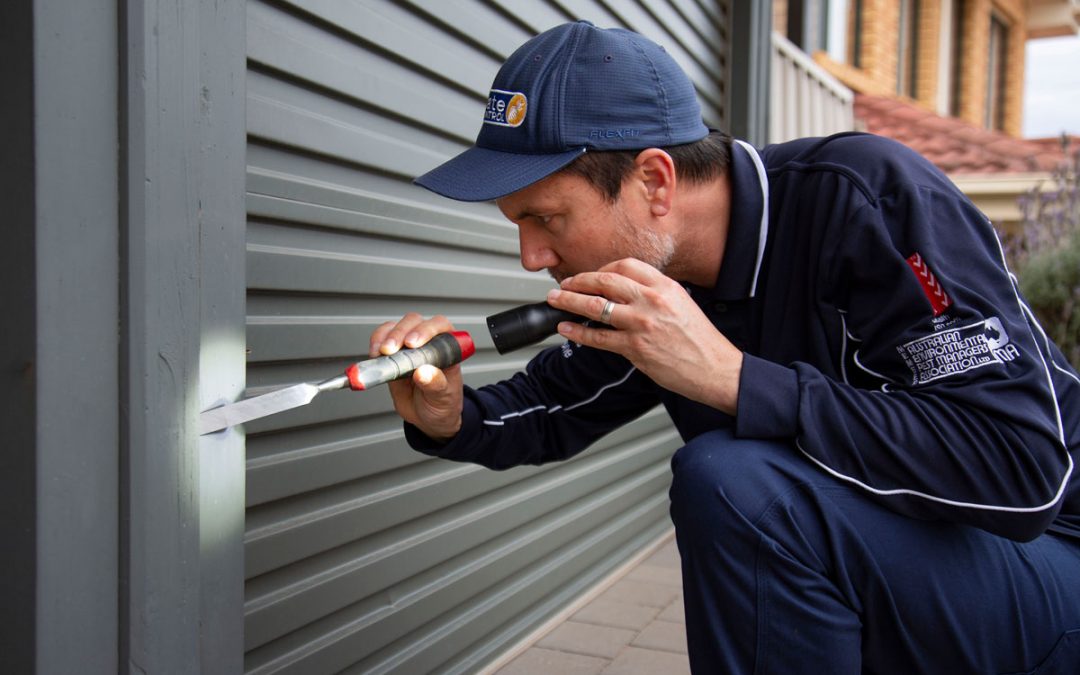
A termite inspector will begin by visually examining your property to check for damage to walls, ceilings, and floors, as well as the presence of mud tubes and ingress points. As termites are usually hard to see and hear, we’ll bring specialised equipment to help identify subtle signs of an outbreak. This includes borescopes, sounding tools, moisture metres and movement detectors.
Inspection report
Following the inspection, we’ll discuss our findings and prepare a formal document for your reference. This will include all observations, results, photos, and recommendations for treatment if needed.
What happens during a termite inspection?
Without proper training, it’s easy to miss early signs or mistake termites for another problem altogether. Our comprehensive pest control services ensure every area is checked carefully for signs of termite activity. Our highly trained termite inspectors follow an inspection protocol that ensures every area is checked carefully.
We are fully equipped with devices that assist with accurate termite detection and estimating the extent of an outbreak. Following the inspection, it is crucial to implement a termite control treatment to manage and prevent further infestations effectively.
Termite detecting equipment
- Borescopes are specialised optical devices used to photograph active termites inside timber structures.
- Sounding tools are tapped against wooden structures to assess their integrity.
- Moisture metres are used to locate areas of high moisture that attract termites, including inside rafters, joists, and sills.
- Movement detectors using an infrared sensor help us detect active termites behind walls, in ceilings, and beneath floors.
Physical inspection of your property
To ensure nothing is missed, we follow a general inspection procedure that allows for variations in property layouts. You can expect us to cover these termite hotspots:
- Interior rooms are assessed using a moisture metre, sounding tool and screwdriver. This covers wall, ceiling and floor surfaces, door frames, skirting boards and cupboards.
- A sounding tool and screwdriver can check timber beams in roof voids.
- Subfloors are a common entry point for termites, so we pay extra attention to this area. We may try to gain access by carving a trap into the floor, or if this is not possible, we’ll use a borescope to inspect for signs of termites.
- An exterior property inspection around the entire perimeter of your house is conducted using a sounding tool and screwdriver.
- All interior and exterior sections of any outbuildings are inspected with a sounding tool and screwdriver.
- The grounds surrounding the building are carefully assessed, including the garden beds, landscaping timbers, trees, stumps and along the fence line.
How will I know if I have termites?
Regardless of the colony’s size, termites can be hard to see and hear, so a professional inspection by a well-trained eye is best. However, knowing how to check for termites is essential to avoid worsening the issue. The following signs that may indicate a termite attack:
Changes to walls, floors and ceilings
- You notice cracks in your walls, floors and ceilings which can be mistaken for water damage.
- The paint on your walls may appear to have a “bubbling” or “honeycomb” appearance due to termites destroying the timber underneath.
- You may gradually see cracks, blisters and sagging to surfaces like laminated floors, ceiling beams and skirting boards.
- Warping of doors and frames can make doors and windows hard to open due to moisture filling the timber cavities left by termite destruction.
Mud tubes
Termites make tunnels from dirt, wood, debris, and droppings to protect them when they forage for food away from their underground nests. You should keep the perimeter of your house clear of moist soil and dirt to discourage termite activity.
Hollow sounds when knocking on timber structures
If you knock on your walls and hear a hollow, echoing sound, this may indicate that termites have tunnelled through the insulation to eat away the wood.
Clicking sounds can indicate termites eating away at the wood or soldier termites banging their heads against the wood to signal a threat to the colony.
Flying termite swarms and discarded wings
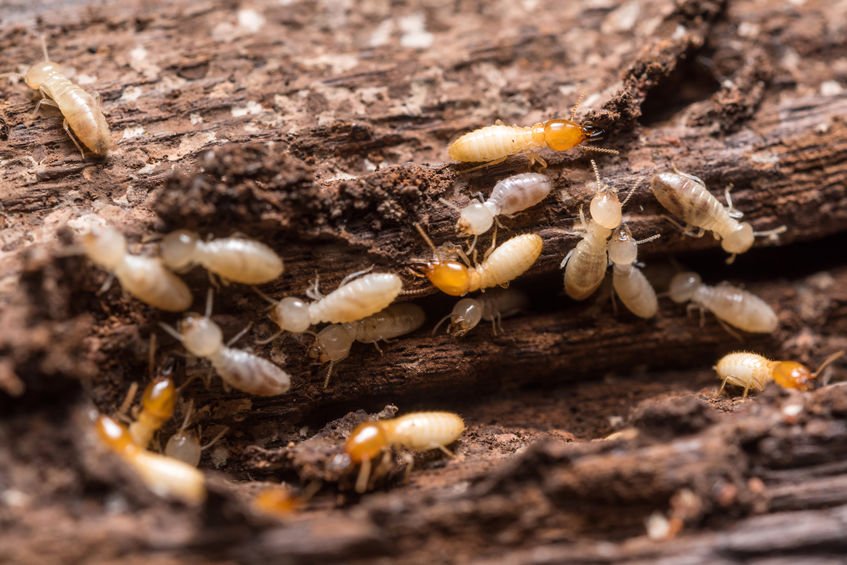
Every three to five years, a colony will send winged termites or swarmers to start a new colony elsewhere. You may have an outbreak of swarmers if you notice white flying insects or piles of wings around your property, near lights or window sills, particularly during spring and summer. They nest in wood piles and tree stumps, so it’s recommended that you clear your yard.
Short-circuiting power
Electrical wiring in walls, floors, and ceilings is susceptible to termite damage. If you experience electricity interruptions more often than usual, check for mud tubes or a build-up of organic material around your electrical fittings. Remember to take extra care when handling high-voltage electrical fixtures.
Noticing signs of a potential termite attack? Act fast!
Organise an urgent inspection today
or
How much does a Termite Inspection cost?
At Allstate, we offer termite inspections for $198. This figure can vary depending on the size of your home or property, the extent of the inspection and whether additional equipment is required to improve accessibility or detection.
A standard termite inspection can cost between $200 and $500, while a comprehensive inspection can cost upwards of $1,000 or more. However, the cost of a termite inspection is a small price compared to the potential cost of repairing termite damage.
What Factors Affecting the Cost of Termite Inspection?
The cost of a termite inspection can vary based on several factors, including:
- Property size and complexity: Larger or more complex properties may require more inspection time and resources.
- Location and accessibility: Hard-to-reach areas or properties in remote locations can affect costs.
- Type of inspection: Standard, comprehensive, or specialised inspections may have different pricing.
- Equipment and technology used: Advanced tools and technology can increase costs but provide more accurate results.
- Inspector’s experience and qualifications: More experienced and qualified inspectors may charge higher fees.
- Frequency of inspections: Regular inspections, such as annual or bi-annual, may offer cost savings compared to one-time inspections.
By following this plan, the new sections will seamlessly integrate into the existing article, providing valuable information while maintaining the same tone and style.
If I live in a new home, will I need a termite inspection?
Whether your home is new or old, pesky and persistent termites can still find their way into your property. Here are some other factors that may influence your susceptibility to an outbreak:
Hot and humid climates
For a significant part of the year, most areas in Australia, including Adelaide, have favourable weather conditions, which pose a high risk for termite infestations.
Neighbours with termites
If adjoining properties have confirmed outbreaks, termites may have also spread to your property, as they’re able to travel 50 to 100 metres away from their nest. If your neighbours have termites, we recommend that you conduct a property inspection just in case.
Water leaks
If you live in a high moisture, damp climate, or you’ve had a plumbing issue with water leakage, you may have attracted termites. In this case, you may require more frequent inspections.
Previous termite infestation
If there has been a previous outbreak in your area, this could mean that termites were able to penetrate any previous barriers that were installed.
Landscaping
Changes to your yard can compromise your existing termite barrier and offer termites new entry points to your property and home.
Termite inspections before purchasing a home
For extra protection against termites, particularly if you live in a high-risk area, Allstate can conduct pest inspections before you commit to buying your dream home.
We’ll let you know if we detect any termites or if the house has other risk factors that may pre-dispose your new place to a termite outbreak, such as dampness.
How to treat a termite outbreak?
Your inspection report will include all the information you need to know about preventing termites.
Depending on the severity of your outbreak and the layout of your home, we’ll propose a customised treatment plan using various types of termiticides and offer tips on preventing future outbreaks. It is crucial to seek professional termite treatment to ensure the infestation is managed effectively and safely.
Premise Treated Zones
Premise is a non-repellent termiticide that causes termites to become confused and disoriented, lowering their defence mechanisms. This makes them vulnerable to deadly diseases from fungi and soil microorganisms. By placing Premise in specific areas, known as treated zones, strategically around your property, more termites will interact with the product. While Premise is toxic to termites, it is safe for humans, the environment and other wildlife.
Sentricon® Always Active™
This product contains in-ground termiticide-coated rods designed to attract termites and then disrupt their growth and development by inhibiting the moulting process. By positioning a Sentricon® station in prime termite foraging areas, termites carry the termiticide back to the nest, spreading through the entire colony. This offers powerful protection against termite infestations by preventing them from happening in the first place.
Reduce your risk of attracting termites
- Garden and yard maintenance is essential. Store piles of wood and timber away from your house in a dry place, remove tree stumps and clear away piles of vegetation and litter.
- Ensure wooden furniture in the home is sealed, treated and moisture-free.
- Repair sources of leaks as quickly as possible, including pipes, drains and roof damage.
For safe and effective termite control,
speak to a termite technician today
or
Safeguard your home (and wallet) from a termite attack
At Allstate, we understand how dangerous, costly, and stressful a termite outbreak can be, so being proactive with annual inspections is the best way to stay vigilant of these quietly destructive pests.
To help keep you and your family safe, our fully licensed and experienced termite inspectors have extensive knowledge of termite behaviour and adhere to Australian Standards. We are highly trained to use specialised equipment to detect even the most subtle signs of a termite outbreak. Once your inspection is completed, we’ll send you a report of the findings and, if necessary, treatment recommendations.
We use strategically placed, targeted, high-quality treatments such as Premise Treated Zones and Sentricon® Always Active™, which are safe for people, pets and the environment.
We offer highly responsive services to inspect and treat termite infestations. Regular inspections are conducted with minimal disruption at a time that suits you. To ensure peace of mind that you and your family always stay protected, we offer payment plans and a 100% money-back guarantee if you’re unsatisfied with our service.
If you need to schedule a termite inspection or have concerns about termites on your property, speak to an Allstate consultant today.