





prevention-icon

Termites

prevention-icon

Ants

prevention-icon

Cockroaches

prevention-icon

Spiders

prevention-icon

Birds

prevention-icon

Bed Bugs

prevention-icon

Bees & Wasps

prevention-icon

Rats & Mice

prevention-icon

Possums

prevention-icon

Biting Insects

prevention-icon

Disinfection Services

HOW TO KEEP BIRDS AWAY

HOW TO KEEP BIRDS AWAY

Are you waking up to the sounds of persistent chirping? You could have a pest bird outbreak! Find out how to keep birds away from your house for good in this Hivemind blog.

Whether it’s noise, droppings or damage to your roof, this guide will cover practical DIY methods and professional bird control options in Adelaide.

What questions will this article answer?

Why are there so many birds at my house?

Are you waking up to the sounds of persistent chirping? You could have a pest bird outbreak! Understanding what attracts them is the first step in learning how to keep birds away from your home.

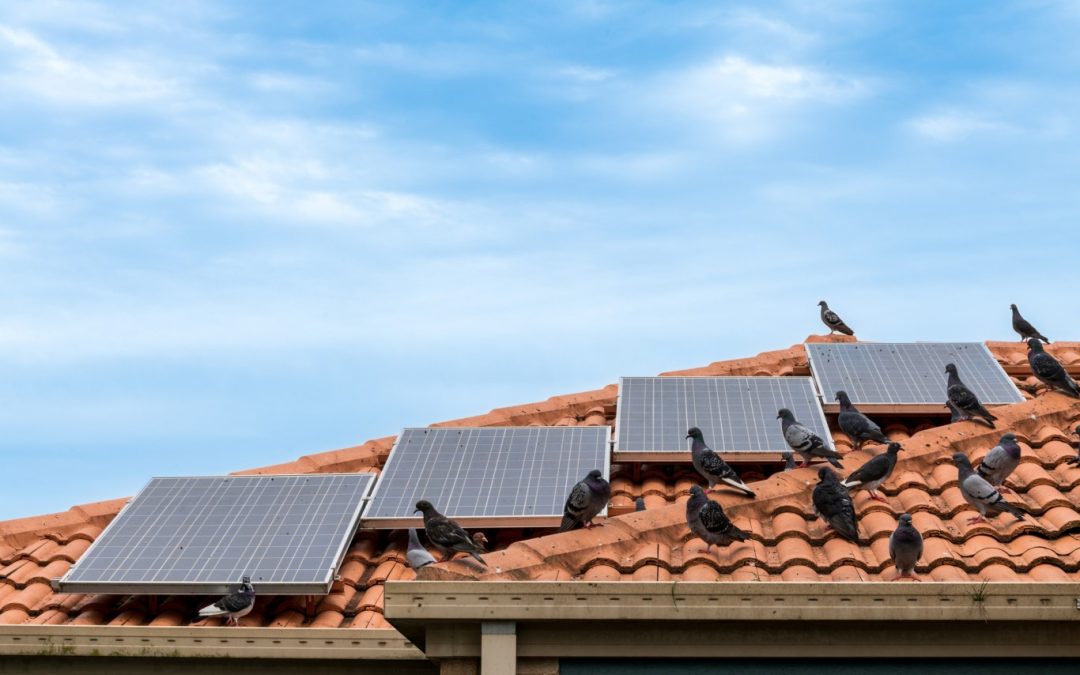
While they are active all year round, the peak season for pest birds is typically spring. With breeding in full swing, they’ll be looking for places to roost, safe and warm nesting spots, as well as food and water, making your roof and yard a very appealing target.

Here’s other ways to tell if you’re experiencing a pest bird infestation at your home:

  • You notice more of birds on your roof
  • Bird droppings and bird nests
  • You see more feathers and nesting material around

Make your yard less bird-friendly

Pest birds are always on the lookout for food, water and safe nesting sites. You’ll want to make your property as uninviting to them as possible by following some of these tips. If you’re looking for how to keep birds away from your house long term:

Grow plants which deter birds

Strongly scented leaves, fruits and flowers act as effective bird deterrents. This means that herbs such as mint, lavender and garlic are handy to keep around. Planting them in a dense pattern around the perimeter of your yard also creates an intimidating physical barrier against pest birds.

Remove sources of food and water

With an appetite for grains, seeds and plants, as well as the occasional small insect, pest birds are also notorious for enjoying food scraps. We recommend avoiding leaving food out, including bird feeders and keeping other food covered. This includes pet food bowls and water.

Manage waste properly

Teeming with rotting food, garbage and compost are popular targets for hungry pest birds, so it’s important to manage waste appropriately to avoid attracting pest birds to your yard.

Keep compost heaps covered and rubbish secured in plastic bags inside tightly sealed bins with well-fitted lids. Empty your bins regularly to avoid overflowing.

Regular yard maintenance

Remove fallen fruit from your yard, as this will attract many different pests, including pest birds. Trimming back overhanging tree branches and shrubs will reduce the chances of pest birds getting easy access to your property.

Keep outdoor dining areas clean

Make sure that outdoor dining areas are free from crumbs, dropped food and scraps. Wipe away spills immediately, and ensure that dining tables, cooktops and food preparation areas are disinfected.

Predator Decoys

Scarecrows have long been used to frighten birds away from veggie patches, but there are other predators which can stimulate a bird’s sense of danger.

You can install a life-size statue or replica of creatures such as cats, owls and even large birds such as hawks or vultures to keep pest birds out of your garden. These simple decoys are a low-cost way to keep birds away from your yard.

Keep birds away for good. Speak to an expert today.

or

Visual bird deterrents: how to keep birds away with sight-based tricks

With better eyesight than humans, birds can see further and with more vivid detail. If you’ve been wondering how to keep birds away from your garden or roof without chemicals, visual deterrents are one of the easiest DIY methods.

Here are some ways to make your property less appealing for pest birds to come and visit:

  • Many birds perceive colours such as orange, red and silver to be threatening
  • Hang spherical garden balls off tree branches, scatter them over the garden beds and lawns
  • Shiny objects can cause distracting reflections within pest bird eyes and can be suspended in trees and popular nesting sites. These include foil sheets, aluminium cans and mirrors

Electronic sound devices

Pre-programmed to broadcast pre-recorded predator calls, combined with distress calls from different species of pest birds, electronic sound devices are useful at keeping birds away from your home by simply just mimicking a threat. They’re especially useful if you want to know how to keep birds away from your roof or solar panels without physical barriers.

You can program these devices to operate at different times and intervals to minimise the distraction of these sounds during your day-to-day activities.

Bird-repelling scents to keep birds away

Although they mainly use their sharp vision to hunt for food, pest birds have special olfactory organs located on their beaks which help them to also detect smells from a distance.

Strong smelling household items can be mixed with water and poured into a spray bottle and applied liberally along popular roosting sites. These include:

  • Essential oils
  • Vinegar
  • Pepper
  • Citrus scents
  • Mint
  • Cayenne pepper

Seal off entry points around your roof

Pest birds are flexible enough to squeeze through small gaps between loose or cracked roof tiles, spaces between eaves and vents and holes in rotting timber.

We recommend regularly inspecting your roof for all potential access sites and then covering them or filling them completely. Ensure that mesh covers are strong enough to resist pecking, with fine openings that can’t be easily damaged and widened.

This step is essential if you’re focused on how to keep birds away from your roof in Adelaide homes.

Have birds chirping around your roof? Speak to an expert today

or

How to keep birds away: professional bird management

At Allstate, we emphasise a safe and humane approach to handling pest birds. Your pest technician will choose one or more of the following techniques to stop birds from roosting on your property.

Professional treatments are the most reliable way to keep birds away for good:

Bird spikes

By creating an uneven landing area, bird spikes are designed to discourage pest birds from roosting on leading edges along your roof. They’re best used on exposed ledges, beams, windowsills, railings, gutters, girders, chimneys and signs. They come in a range of types, sizes, shapes and materials including polycarbonate and steel.

Bird netting

Useful for enclosed areas, bird netting physically prevents birds and other pests from entering key areas, while still allowing air flow and light to pass through. Available in a range of flexible and durable materials and colours, they can be customised to fit problem areas.

Bird wire

An alternative to spikes, bird wire is a more discreet bird deterrent suitable for new buildings. Thin, UV protected stainless steel wire is secured between posts to destabilise the landing area and reduce roosting.

Bird Jolt Flat Track System

As a barely noticeable bird deterrent for roofs, the Bird Jolt Flat Track system is an electrically powered, near-flat surface that delivers a very mild electric shock whenever birds try to land on it. Standing at only ¼ of an inch tall, it can be installed on any surface.

Bird traps

For severe outbreaks, you may need to bait pest birds and capture them in a large cage to physically remove them.

Solar panel bird proofing

As more and more South Australians are reaping the benefits of solar energy, so are pest birds. Solar panels not only provide a safe place to shelter underneath, they also make for popular breeding and nesting sites. That’s why many homeowners ask how to keep birds away from solar panels in Adelaide.

Unfortunately, over a long period of time, their presence can create issues for even the most robust of solar panels, causing them to work less efficiently. However, you won’t have to worry about these types of problems with solar panel proofing.

At Allstate, our pest technicians will carefully begin by cleaning your solar panels and their surroundings, including roof spaces, to clear every trace of feathers, droppings or nesting material present.

They’ll then install a durable, UV-coated mesh, that does not interfere with the functionality with your solar panels, around the perimeter of each panel. This is specially fitted to prevent pest birds from venturing underneath, and can be removed or reinstalled at any time.

With a 1-year warranty on this service, protecting your solar panels from irreversible damage is just a phone call to Allstate away.

Choose Allstate for safe and humane bird control

Since 1986, we’ve offered reliable quality pest control services to clients in commercial, residential and industrial settings across all suburbs of Adelaide. Our highly trained and fully equipped pest control technicians can deliver a tailored, humane management plan to ensure that you, your family and employees won’t have to worry about nuisance pest birds for years to come.

While all our services emphasise the safety and wellbeing of the pest birds, we also have competitive warranties and payment plans available. So if you’re needing urgent advice on a pest bird outbreak, Allstate is here for you 24/7.
Our expert team is ready to help you now

or

HOW TO KEEP SPIDERS OUT OF THE HOUSE

HOW TO KEEP SPIDERS OUT OF THE HOUSE

With their peak season fast approaching in Adelaide, spiders are busy looking for food and places to breed, with your house ticking a lot of boxes! If you’ve been wondering how to keep spiders out of your house, this guide will walk you through both natural and professional solutions. Learn more in our Hivemind blog.

What questions will this article answer?

Why are spiders attracted to your house (and how to keep them out)?

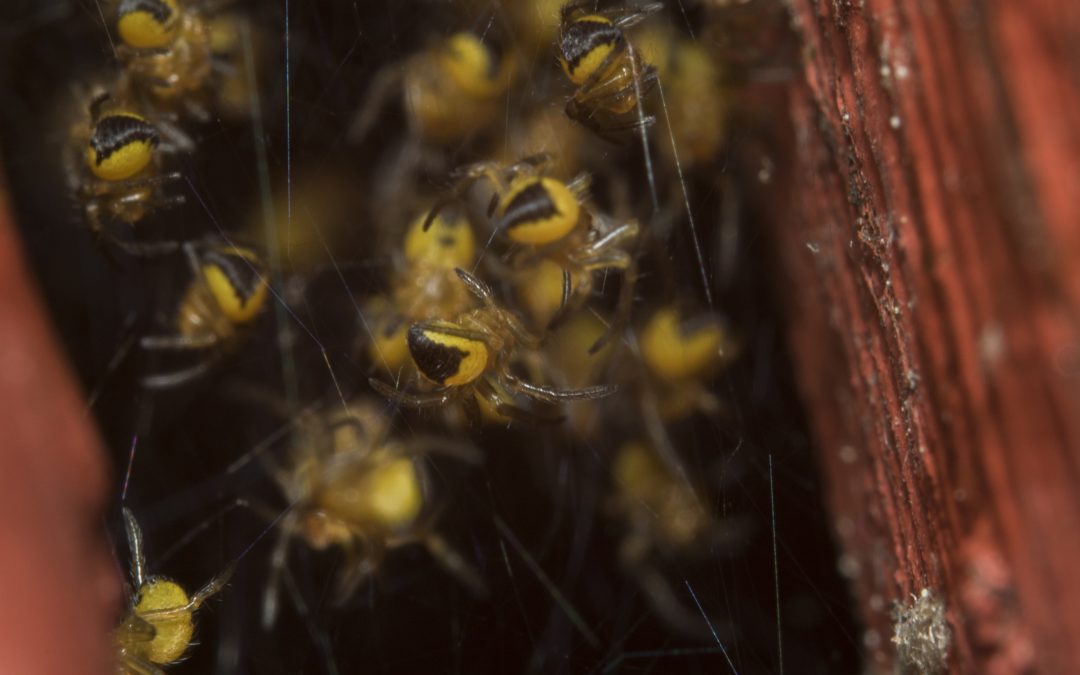
You might spot these 8-legged insects out and about all year round, but the warmer months of October through to April mark the official spider season, which peaks in December. During this period, they’ll be on the hunt for food and quiet places to nest, breed and lay eggs.

If your home is buzzing with other pests such as mosquitoes, moths and flies, you’ll be more likely to draw in hordes of hungry spiders.

Come winter, like many other pests, spiders will naturally be drawn to the warmth and shelter of your home, where many will bunker down and enter a hibernation-like state.

However, you’ll also find some spiders seeking refuge outdoors during winter. They could be lurking underneath rocks or piles of vegetation, including leaf litter in your backyard.

Preventing access: how to keep spiders out of your house

With their small size and nimble bodies, spiders are masters of finding their way into the most unlikely of spaces. That’s why one of the most effective ways to keep spiders out of the house is to stop them getting in altogether. Whether it’s a small crack, gap or crevice within the walls, foundations or utility line openings, it doesn’t take much for spiders to come inside and cause a full-blown outbreak.

So if you’ve been wondering how to keep spiders out of your house, we recommend inspecting your home regularly to identify and seal off potential entry points. Consider taking these following simple steps:

  • Install door sweeps and mesh screens, or weather-stripping where appropriate
  • Repair or replace damaged mesh screens
  • Check that mesh screens covering doors and windows are intact
  • Caulk gaps and cracks
  • Keep all windows and doors closed
  • Thoroughly inspect items that have been kept outside before bringing them into your home, including camping gear, boxes, furniture, pot plants and firewood
  • Sprinkle diatomaceous earth into hard-to-reach places around the perimeter of your home to reduce the number of secret passages for tiny spiders to crawl inside

Stop spiders from venturing indoors, get fast advice

or

Keep your house clean to keep spiders out

With a knack for finding quiet, undisturbed places to breed and nest, spiders are commonly found in storage areas, attics, garages, closets, spare rooms, basements and sheds. For many of us, it can be easy to forget cleaning these less frequented places when going about our household chores.

Regular cleaning doesn’t just make your home more comfortable, it also helps keep spiders out of your house by removing webs, egg sacs and hiding spots.

At Allstate, we suggest thoroughly dusting, vacuuming, sweeping, wiping and mopping to remove spider webs and egg sacs when completing your list of chores. Be sure to check behind and underneath furniture and appliances as well.

Regular decluttering of your storage areas is also essential to remove spider hiding spots.

Maintain your yard

Some species of spiders, such as garden orb weavers, live and breed outdoors. You’ll know that they’re around because their cobwebs will be visible on tree branches, bushes, shrubs, along your fence or even in long grass. During the daytime, they’ll hide underground or underneath rocks, piles or leaf litter or compost. Here are some handy hints to keep outdoor spiders at bay:

  • Regularly mow your lawn and dispose of grass clippings
  • Remove piles of leaf litter and vegetation and keep woodpiles away from your house
  • Always keep compost covered and sealed tightly in sturdy bins
  • Keeping plants well-maintained, pruned and trimmed away from your home to prevent access.

Maintaining your yard is another simple way to keep spiders out of the house, as it removes the outdoor shelters they rely on.

DIY natural repellents

With sensory organs located on their legs, spiders are highly sensitive to strong smells. If you’d prefer a natural approach, there are plenty of household items that can help keep spiders out of the house without harsh chemicals. Here are some common aromatic household items that can act as effective spider deterrents:

Garlic

Crushed fresh garlic has a pungent, distinct smell that is very off-putting to spiders. It can be mixed into water to form a potent solution that can be sprayed directly onto surfaces frequented by spiders. It is ideal to use indoors as it is less corrosive than vinegar. Apply liberally to floors, shelves, inside cupboards, as well as skirting boards and walls.

White vinegar

Containing acetic acid that acts as both a disinfectant and deterrent, white vinegar doesn’t just have an unpleasant smell and taste to spiders. It can remove spider pheromones and damage their delicate exoskeletons. Mix vinegar with water in a spray bottle and apply it to areas that you want to keep spiders away from, such as garages, sheds and other outdoor areas.

Essential oils

Although they can smell pleasant to humans, essential oils are despised by many insects, including spiders. Infuse a few drops of citrus, tea tree or peppermint essential oil with water to form a powerful spider deterring spray and apply it to spider-prone areas indoors and outdoors.

Plants

Lavender, eucalyptus, rosemary and mint emit a strong odour which overwhelms a spider’s olfactory sensors. You can keep these in your yard as well as in potted form to move around areas that are high in spider activity.

Sick of seeing messy cobwebs everywhere? Speak to an expert today

or

Use spider traps

Ideal for physically removing spiders from your space, there are several types of spider traps available on the market. Many of these are glue/adhesive based. Odourless, mess-free and inexpensive, spider traps contain a pheromone-based attractant to lure spiders onto their sticky surfaces.

How to keep spiders out of the house for good with professional spider control

Although DIY spider repellents can work well for short term spider prevention, most are simply not potent enough to combat a more severe outbreak. You’re far better off seeking professional help from qualified pest control technicians.

At Allstate, our spider management program begins with a thorough inspection of your property to locate the source of the problem. We’ll then come up with a targeted treatment plan to combat the outbreak.

We’ll then use a combination of pet-, child- and environmentally friendly spider control treatments including aerosol sprays, barrier sprays and control dust to make sure that your home stays spider-free for good.

For reliable and safe spider treatment, choose Allstate

Coming into spring, the last thing that you need to worry about is frustrating questions like “how to keep spiders out of my house?”.

With Allstate here to help, you’ll be able to spend your time enjoying the sunny weather with your family and friends instead.

Since 1986, we’ve stopped thousands of pest outbreaks from wreaking havoc in homes and businesses across all suburbs of Adelaide. Available 24/7, our pest control technicians are fully equipped to tackle all types of spider infestations using modern and innovative treatments which are nontoxic towards the health and wellbeing of your family.

All our services are covered by competitive warranties and eligible for payment plans where needed, so you can do away with pests for good, sooner rather than later.

Our expert team is ready to help you now

or

How a Termite Reticulation System Protects Your Home

How a Termite Reticulation System Protects Your Home

A termite reticulation system is one of the most innovative ways to prevent termites from entering your home. It works quietly underground, sending treatment through the soil month after month.

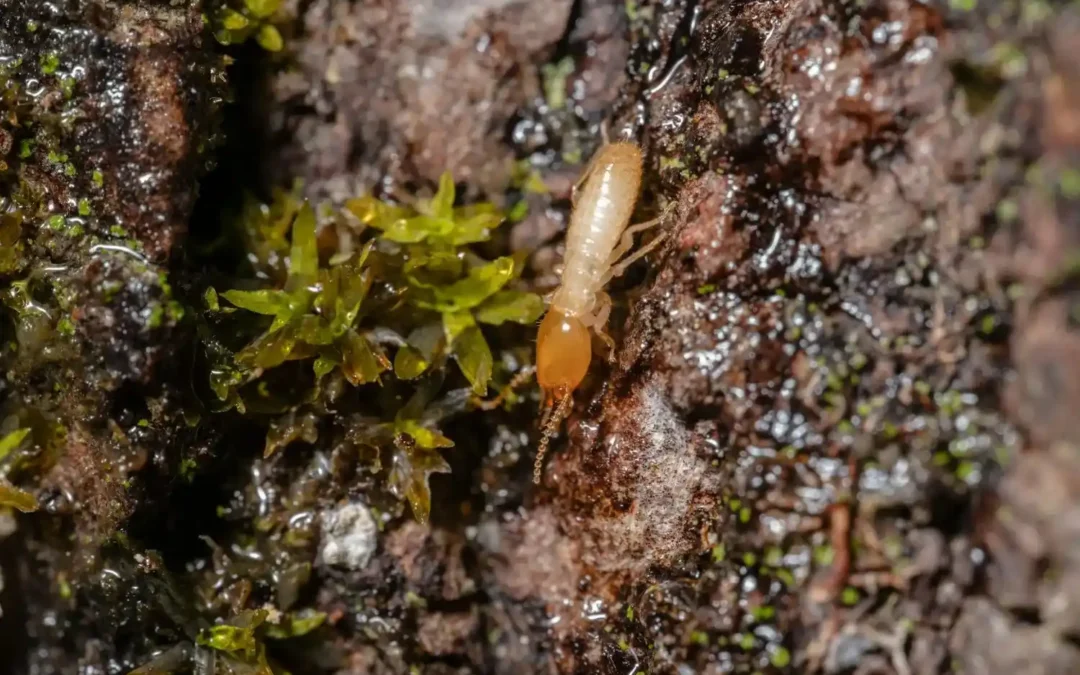
This is important here in Adelaide. Termites are everywhere. The CSIRO says one in three homes will get a termite infestation at some stage. Repairs cost billions every year. Most insurance won’t cover it either.

At Allstate Pest Control, we’ve been keeping homes safe for decades. We know and have seen the damage termites cause. We also know the relief homeowners feel once a proper barrier system is in place.

So, let’s break down what the system is, how it works, what it costs, and how Adelaide families use it in real life.

What is a Termite Reticulation System?

A lot of people mistake it for a “trap” or a box you swap out each year. It’s not that.

Simple Definition

A termite reticulation system is a set of underground pipes that run under your concrete slab or around your home. Those pipes release termiticide into the surrounding soil to block termites before they reach your timber.

Think of it like an underground sprinkler system. But instead of water, it pumps out termite treatment.

How the System Works

  • Pipes go in during the construction process or are dug in later around foundations.
  • Refill points sit at the edges of your home.
  • A licensed pest control tech pumps chemical through the pipes.
  • The treatment spreads out evenly and forms a protective barrier.

The barrier deters termites. It also kills any that try to push through.

Key Components

  • Pipes: Flexible enough to handle soil movement.
  • Refill points: Capped outlets where treatment goes in.
  • Chemical barrier: The actual defence line in the soil.

Why Install a Reticulation System?

Because once termites are inside, the damage is brutal. Catching them early or keeping them out is cheaper than fixing chewed beams later.

Long-Term Protection

A reticulation termite system gives you continuous protection for years. With proper refills and regular termite inspections, it holds strong.

Safer and More Consistent

Surface sprays miss spots. Reticulation doesn’t. It spreads chemicals evenly underground. Because it’s below the surface, it’s also safer for kids, pets, and gardens.

Fits Any Property

Brand new slab in Mount Barker? Old weatherboard in Prospect? It doesn’t matter. The system can be installed on all property types appropriately.

Here’s one real scenario a local shared online:

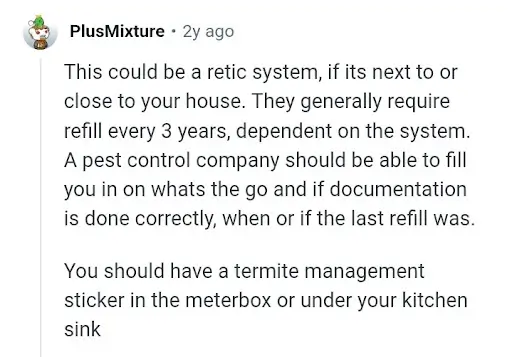
“When I bought this property, the agent told me this was a termite trap that needed changing once a year. I’ve seen online. What is it?”

And the reply:

“This could be a retic system, if it’s next to your house. They generally require refill every 3 years, depending on the system. You should have a termite management sticker in the meter box or under your kitchen sink.”

termite reticulation system review

That’s the thing. Most homeowners have no idea what they’ve got until a pest control crew explains it.

How to Refill a Termite Reticulation System

This is the bit many homeowners forget. The system doesn’t work forever unless you top it up.

How Often?

Every 3–5 years is standard. Sandy soils or high-termite-pressure areas might need shorter cycles.

Why Use a Licensed Pest Controller?

DIY is risky. Too little chemical and the barrier system has holes. Too much and you waste hundreds of dollars’ worth of product. A licensed termite control service person knows the exact dose for optimal protection.

What’s Involved?

  1. Inspection: check refill points and signs of termite activity.
  2. Termite reticulation refill: pump in new treatment through the pipes.
  3. Reseal: close refill points to keep pressure and safety.

Tip: Don’t just refill blindly. Pair it with an annual termite inspection so you know the barrier is doing its job.

Advantages Over Other Termite Systems

You’ve got a few options when it comes to termite protection: sprays, baiting stations, and full barrier systems. A termite reticulation system isn’t the only choice, but it does come with some serious perks that make it stand out.

Lasts Longer

Surface sprays are a quick fix. They fade after a year or so, and you’re back to square one. Retic systems, on the other hand, are built to last decades. As long as you keep up the refills every 3–5 years, the barrier stays strong.

For example, we’ve seen homes in Adelaide Hills that had systems installed in the late 2000s. The homeowners kept to the refill schedule, and nearly 15 years on, they’ve had zero termite activity in the house. Compare that to a neighbour who relied on sprays and ended up with termites in their subfloor within four years. The difference is in the maintenance.

No Lifestyle Interruption

Because it’s underground, you don’t even notice it’s there. No odours, no chemical patches on the lawn, no pest guy wandering around your lounge room with a spray can. The refill points are tucked neatly outside. It’s one of those “set it up properly and get on with life” solutions.

Even Chemical Spread

With surface sprays, it’s easy to miss spots. Termites only need one tiny gap, and they’re in. Reticulation systems pump treatment evenly through the soil via perforated pipes, so the whole perimeter is covered.

Think of it like watering a garden bed with a sprinkler hose compared to splashing buckets of water here and there. Which one gives you better coverage? The same logic applies here.

Better for the Environment

Because the treatment stays underground and is delivered evenly, you actually use less chemical overall. That means less runoff into drains, less exposure for pets and kids, and a cleaner way of handling termite prevention.

This is especially handy in Adelaide suburbs where homes back onto creeks or reserves. Homeowners are more conscious of what runs into the environment. So having a system that keeps things contained makes sense.

Common Questions From Homeowners

We get a lot of questions from Adelaide homeowners who are curious (or confused) about their systems. Here are the most common ones, with straight answers.

Is it safe for kids and pets?

Yes. The treatment sits underground, in the soil. Pets can play in the yard, kids can dig in the garden, and you don’t have to worry about them coming into contact with surface sprays. It’s one of the safest ways to manage termites around a family home.

What happens if I miss a refill?

The barrier weakens. It’s like leaving your front door unlocked. Termites are clever little things.. They’ll find that gap and take advantage of it. We’ve seen cases where just one missed refill lets termites march straight through to the subfloor. And again, you may be lucky not to get an infestation.

Do I still need inspections?

Yes, you do. A reticulation system isn’t some permanent fix that keeps termites out forever. Termites are stubborn little things. They’ll keep looking for weak spots, especially if the soil around your home sees moisture levels change from time to time.

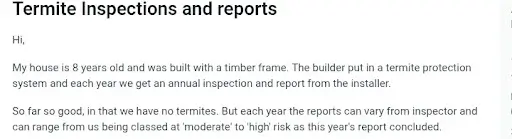
We’ve seen plenty of Adelaide homes where the system was in place, but the owners still booked yearly inspections. One homeowner had an eight-year-old timber frame house with a retic system installed during the build. Each year, the installer came out, did the inspection, and gave them a report. They never had termites, but the risk level in the reports wasn’t always the same. Some years the inspector marked it as moderate risk, and other years it was classed as high risk.

termite reticulation feedback

That shows that conditions around your home don’t stay the same. Weather, garden works, and nearby building activity; all of it can affect how much termite pressure your place is under. An inspection keeps you updated, makes sure your barrier is still working, and lets you know if you need a refill sooner rather than later.

Refills and inspections are like a termite prevention package. One keeps the barrier topped up, the other makes sure nothing has slipped through.

Adelaide Case Studies

Here’s what happens in the real world.

A family in Glenelg had a system put in during their build. They’ve stuck to the 3-year refill cycle and booked inspections each year. Twelve years later, still no termite damage.

A couple in the inner north skipped refills. They assumed once installed, it lasted forever. Wrong. A few years later, termites chewed into their floor joists. Meanwhile, the termite reticulation system cost for refills? A few hundred.

And when those with a reticulation system are asked which pest control they use for the installation, one summed it up online:

“Allstate. No complaints! It has been in place for about eight years now. We sometimes have activity in the stations, and usually by the next visit, they are gone. We got a very old post-war home and found evidence of damage previously.”

termite reticulation system customer review

Eight years? Yes, sometimes. When installed by us with enough refills and regular annual inspections, you’ll get the same experience as the above.

Wrapping It Up

A termite reticulation system is an underground defence that gives you control over termites before they move in. It’s reliable, discreet, and saves you a fortune compared to fixing chewed timbers later.

Call Allstate Pest Control:

  • To install it properly.
  • Refill it on schedule.
  • And keep up with regular termite inspections.

Do that, and you’ll sleep easy knowing your home has a protective barrier against one of Australia’s costliest pests.

Call Allstate Pest Control Adelaide on 08 8371 1277 or book an inspection with us online. We’ll help you install, refill, and maintain your system the right way.

Pet-Friendly Pest Control Methods to Keep Your Home Safe

Pet-Friendly Pest Control Methods to Keep Your Home Safe

Pests are annoying, but pets are a part of the family. Pet-friendly pest control lets you tackle the first without putting the second at risk. It employs safe, low-toxicity methods that are effective.

The old “spray everything and hope for the best” approach can backfire. Wet chemicals can linger on floors, skirting boards, or carpets where pets and kids spend their time.

That’s why more Adelaide households are looking for safer, environmentally friendly options. Over the last 30 years, Allstate Pest Control has seen the shift firsthand, helping South Australians manage pest problems while protecting the health of families and pets.

What Borers Look Like and How to Treat Them

What Borers Look Like and How to Treat Them

What Borers Look Like and How to Treat Them

If you’re a homeowner or property manager who just noticed tiny holes in wooden furniture or trees, you might be dealing with borers. If left alone, these wood-boring beetles and their larvae can cause serious damage to the wooden structure.

But you can’t control an infestation when you’re not 100% sure what’s behind it.

If you’re still unsure, we’ll help you find out what borers look like and how to spot them before the damage spreads in this post. Let’s break it down.

What Do Borers Look Like?

Borers aren’t always easy to spot.

Adult borers are typically beetles, ranging from small (a few millimetres) to larger (several centimetres) and can be various colours.

They usually begin as larvae, hidden inside timber or tree bark. When larvae hatch, they feed on the inner wood, weakening it from within. By the time adult beetles emerge through exit holes, significant damage may already be done.

Physical Appearance of Borers

Again, spotting borers isn’t always straightforward. Most people only notice the damage long after larvae hatch inside timber or trees. Knowing what these pests actually look like is the first step to protecting your home and garden.

Wood Borers

Wood borers include species like the common furniture beetle, powderpost beetles, and the European house borer.

They vary in size but are usually small, brown to black beetles, between 2mm and 7mm long. The female common furniture beetle lays eggs inside cracks of untreated timber, and larvae can live inside for up to four years before emerging as adult beetles.

Tree Borers

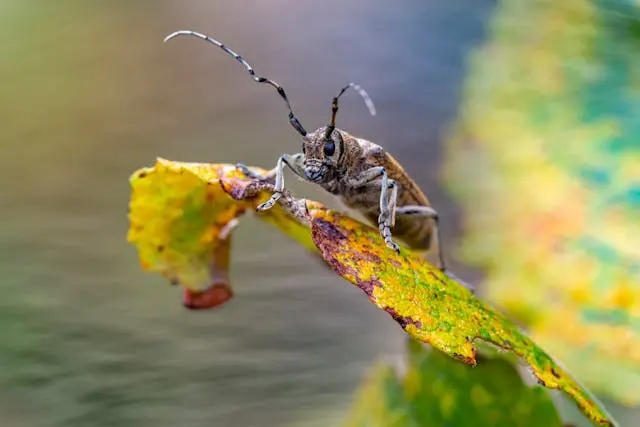
Tree borers, such as eucalyptus borers and longhorn beetles, are larger and more colourful. Some, like jewel beetles, have metallic sheens. The adult Queensland pine beetle is dark brown, about 15mm long, and infests hoop pine sapwood.

The larvae are cream-coloured grubs that tunnel deep into tree trunks and branches.

Signs of Borer Infestation

Borer activity leaves clear evidence if you know what to look for. The most common sign is small exit holes in affected timber, usually 1–2mm in diameter for furniture beetles, and up to 10mm for longicorn beetles.

Infested wood may also crumble easily, leaving fine wood powder near wooden structures or furniture. In trees, you may notice wilting leaves, oozing sap, or dieback in branches.

What Do Tree Borers Look Like in Australia?

Tree borers are often mistaken for other beetles.

Jewel beetles, for example, have metallic bodies and can be green, blue, or copper. Longhorn beetles are easily identified by their long antennae, sometimes longer than their own bodies.

Their larvae bore through live wood, leaving tunnels that compromise the tree’s strength and health.

Common Tree Borers in Australia

Citrus tree borers are one of the most destructive to backyard fruit trees. They lay eggs under bark, and the larvae hatch and feed on living wood, causing dieback.

Eucalyptus borers, such as Phoracantha semipunctata, are notorious across South Australia, especially in stressed or drought-affected gums.

Eucalyptus borers have spread widely in Western Australia and continue to threaten native trees.

Damage Caused by Borers in Homes and Gardens

Borers don’t just nibble at wood. They weaken trees, furniture, and even building timbers. Let’s look at how they affect both gardens and homes:

In Trees

Borer attack weakens trunks and branches, making them prone to splitting.

Severe infestations can kill mature citrus or eucalyptus trees within a few seasons. This loss affects the shade and fruit yield but also property value.

In Wooden Structures

Inside homes, borers target untreated timbers. Common furniture beetle damage often appears in wooden furniture, floorboards, and roof timbers.

Lesser auger beetle infestations weaken hoop pine and other softwoods. An old house borer infestation can threaten the structural integrity of entire buildings.

How to Treat and Prevent Borer Infestations

Once you’ve spotted borer activity, the next step is treatment. Different methods work for different situations, whether it’s a tree in your garden or timber inside your home.

Inspection and Identification

Start with a careful inspection.

Look for exit holes, wood powder, or weakened areas. Identifying the species is critical. Some infestations from the likes of the European house borer require different treatment than powderpost beetles when feeding in hardwood timbers.

Treatment Options

For furniture and wooden structures, wood borer treatment may include insecticide sprays or timber preservatives that penetrate deep into infested wood.

Severe infestations may require fumigation or heat treatment to kill hidden larvae. For trees, pruning affected branches, improving tree health, and applying surface treatments are effective.

Some metallic wood boring beetles can be managed by keeping trees watered and fertilised to reduce stress.

Prevention Methods

Prevention saves far more than treatment. And it starts from the choice of wood during furniture-making.

Always use kiln-dried or treated timbers when building or repairing. Avoid storing infested wood indoors. Regularly check wooden furniture and outdoor structures for new exit holes.

Keep trees healthy with proper watering, as stressed eucalyptus or citrus trees are more vulnerable to borer attack.

When to Call a Professional Pest Control Service

DIY methods rarely solve deep borer infestations. If you notice ongoing borer activity, widespread borer holes, or furniture beetle damage spreading across your home, it’s time to call in experts.

At Allstate Pest Control, we provide borer treatments across Adelaide, backed by decades of experience and 24/7 availability. Early action prevents expensive repairs and helps protect your property long-term. Call us today on (08) 8371 1277.

Frequently Asked Questions

How do I know if I have a borer infestation?

Look for exit holes, piles of fine wood powder, and weakening in wooden furniture or structures. In trees, symptoms include sap bleeding, leaf wilting, and branch dieback.

Are tree borers dangerous to my trees?

Yes. Severe infestations from species like citrus tree borer or eucalyptus borer can kill entire trees within a few seasons, especially if the tree is already stressed.

Can borers spread from one piece of timber to another?

Yes. Adult beetles leave infested wood through exit holes and lay new beetle eggs in nearby untreated timber. This is why a borer infestation can quickly spread across wooden furniture, floorboards, or roof timbers if not treated early.

For fast, reliable borer treatment anywhere in Adelaide, call Allstate Pest Control today on (08) 8371 1277. For quick enquiries, send us a message.