






prevention-icon

Termites

prevention-icon

Ants

prevention-icon

Cockroaches

prevention-icon

Spiders

prevention-icon

Birds

prevention-icon

Bed Bugs

prevention-icon

Bees & Wasps

prevention-icon

Rats & Mice

prevention-icon

Possums

prevention-icon

Biting Insects

prevention-icon

Disinfection Services

How to Prevent Ants in Spring

How to Prevent Ants in Spring

HOW TO PREVENT ANTS IN SPRING

With warm weather on its way, the last thing that you need is an army of ants infiltrating your home and yard. However, come spring, hungry ants that have been quietly hibernating during winter will start to emerge and forage for food to resume their reproductive cycle. It won’t be long before you have a full-blown outbreak on your hands.

If you’re concerned about ants roaming around your home or business this spring, continue reading to learn more about how you can keep them away for good.

What questions will this article answer?

Why are there more ants in spring?

As they are unable to regulate their own body temperatures, ants will slow down during winter to hibernate. They prefer to look for a place that is warm, such as your home, to take shelter during winter.

Once the mercury starts to rise in spring, ants will once again become active. They’ll be hungry and start foraging for food as they need to increase their energy levels to work, resume their reproductive cycle and scout for new areas to expand their colony.

This means that once the weather warms up, you may see many ants start to emerge around your home and yard, seemingly out of nowhere.

Signs of an ant outbreak

These clues will help you to know if you’ve got an ant problem around your home or business:


You notice more ants around

Ants travel to and from their food source and nest along well-defined trails, so look out for ant trails around your home and yard.

Dirt and soil mounds

If you see areas of raised dirt or soil with an opening at the apex, there is very likely an ant nest nearby.

Wood shavings (frass)

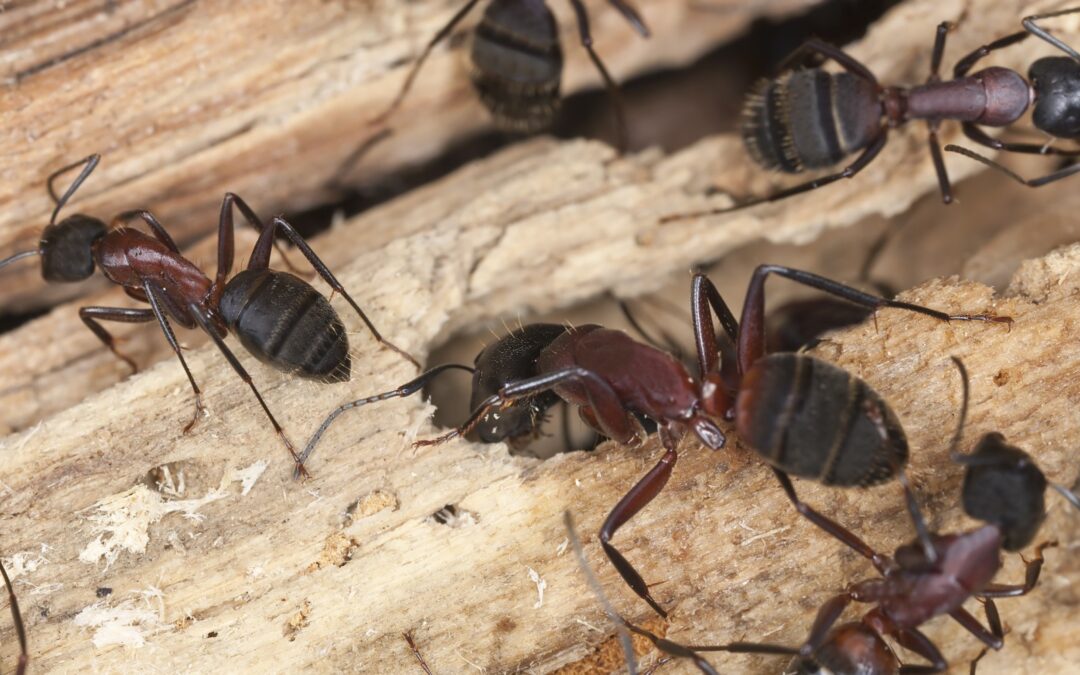
Carpenter ants leave behind debris as they tunnel through wooden structures.

Speak to an expert today to manage ants fast

or

Problems Caused by ants

There are many reasons why you’d want to prevent an ant outbreak this spring. Here’s why:


Ants contaminate food and spread disease

As expert foragers, ants are no strangers to germs. Whether it’s rubbish, pet droppings or rotten food, ants encounter a wide range of germs such as bacteria, viruses, parasites and fungi. These can lead to illnesses such as salmonella and e.coli poisoning.

Ant bites

Besides a sharp pain, ant bites can also trigger allergies in some people which can appear as skin rashes, swelling and even anaphylaxis.

Ant outbreaks can happen quickly

A small trail of ants can multiply fast as they attract fellow ants to feeding sites through pheromones.

Carpenter ants can damage buildings

With the ability to chew through wood and build nests inside, carpenter ants can cause major structural damage to walls, panels, floorboards and beams.

Damage to electrical wiring

You may experience electricity disruptions due to ants crawling into wall sockets and chewing through wiring, resulting in a fire hazard.

Fire ants cause damage in the garden

With an appetite for vegetables such as corn, red potatoes and cucumber seedlings, fire ants will eat your food before it has a chance to make it to the dinner table.

How to prevent an ant outbreak in spring

Ant infestations are very preventable. There are some simple steps that we recommend you take to stay ant-free this spring.

Practice proper food storage by using tightly sealed containers and packaging, stowed away out of sight in the pantry. Don’t forget to keep pet food and water bowls covered.

Make sure that all waste is kept in tightly sealed bags, and rubbish bins and compost are covered properly.

Keep surfaces clean, such as bench tops, tables stoves and sinks by wiping and disinfecting any food spills. Thoroughly wash and store away all cutlery, tableware and utensils after use.

Vacuum and sweep floors regularly, be sure to check underneath and behind furniture.

You’ll want to inspect your home regularly and seal off all potential entry points such as holes, gaps, cracks and crevices with silicone and acrylic.

Keep your yard clean by removing piles of debris, vegetation as well as fallen fruit.
Remove tree branches and vegetation that are in contact with your home to reduce access.

Remember to check and fix all leaking pipes to reduce moisture, which attracts ants.

Professional ant prevention

Since ant outbreaks can escalate quickly, we recommend calling in an expert to minimise disruption to your home or business. Bear in mind that most treatments will require a period of time before you notice a visible reduction in the number of ants.

An Allstate pest control technician will begin with an initial assessment of the outbreak and locate all potential nesting sites indoors and outdoors.

We’ll then use one or more of the following treatment options, depending on the extent of the problem:


Ant control dust

This is sprinkled into hard-to-reach places such as wall cavities and roof voids.

Insecticide

We apply this to the perimeter of the buildings in treated zones.

Chemical baits

Positioned at feeding sites, the toxic compounds that are ingested by the ants are carried back to the nest to destroy the population.

We’ll replenish the treatment and review its progress as needed to make sure that the outbreak is well and truly under control.

Choose Allstate for fast and effective ant prevention this spring

With sunny days ahead, the last thing that you and your family need is an ant outbreak to ruin outdoor activities. That’s why we’re here to help safeguard your home or business this spring.

Our highly trained and knowledgeable pest technicians are available 24/7 to assist with infestations of any size in all suburbs of Adelaide.

With payment plans available and a 100% satisfaction guarantee, our ant prevention service includes treatments that are non-toxic to people, pets and the environment.

For long-lasting protection from ants that can last well beyond spring, contact Allstate today for a quote.

Get ant removal advice from our expert team today

or

Your guide to Pigeon Control

Your guide to Pigeon Control

YOUR GUIDE TO HUMANE PIGEON CONTROL


Introduced to Australia from Europe, feral or pest pigeons have become well adapted to urban environments and steadily increased in population since. Unfortunately, these noisy pests can also carry diseases, parasites, leave a mess and damage your property.

With readily available nesting sites, sources of food and water, pigeons can breed all year round, almost anywhere. They may well choose your home or business as their next preferred spot to create a nuisance!

If you’re worried about a pigeon outbreak, keep reading our blog to learn more about how to responsibly prevente these pests for good. For expert pest control in Toorak Gardens, visit Allstate Pest Control’s Toorak Gardens location.

What questions will this article answer?

How to identify pest pigeons

Grey coloured with a small collar of iridescent feathers around the neckline, pigeons have two characteristic black stripes across each wing. While a majority are grey, you’ll also find brown and white coloured pigeons as well.

Unlike feral pigeons, you can identify domestic pigeons that are kept as pets or for racing by looking for a tag around their leg.

Pest pigeons? Our experienced team is ready to help.

or

Problems caused by pigeons

A pigeon outbreak can lead to the following issues at your home or business:


  • Highly acidic pigeon droppings can cause damage to buildings, outdoor furniture, airconditioning units, solar panels and rooftop machinery
  • They leave behind an unpleasant odour
  • Noise disturbance from chirping, especially from chicks
  • Carry and transmit diseases such as histoplasmosis, cryptococcosis and ornithosis (Bird Fancier’s Lung)
  • Carry parasites such as bed bugs, bird mites, ticks and clothes moths which can cause secondary pest outbreaks and trigger allergies
  • Attract ticks, mites and cockroaches
  • Contamination of food supplies and water through droppings, feathers and nesting material
  • Slippery pigeon droppings can cause a health and safety hazard on footpaths, stairs and fire escapes
  • Pigeons can squeeze through small gaps and enter your roof space

Signs of a pigeon outbreak

Here are some ways you can tell if you have a pigeon infestation:


  • Many pigeons roosting and perching on your roof, eaves and window ledges or even nesting under your solar panels
  • A large amount of brown-white pigeon droppings
  • Nest debris appearing on your roof, such as sticks, twigs, pine needles, straw or grass stems
  • Frequent chirping noises from chicks
  • Damage to native plants in your garden from pecking
  • Feathers accumulating around your roof and yard, in gutters and blocking drains, causing leaks and overflowing in plumbing


Learn more about the signs of a pigeon outbreak here.

Nuisance pigeons around your home? Get fast pigeon control today

or

DIY ways to avoid a pigeon outbreak

The best way to stop a pigeon outbreak is to prevent it from happening in the first place. There are several simple actions that you can take to make sure that your property does not become a potential nesting site.

We recommend removing all possible sources of food and water from your yard, including pet food, water bowls and fallen fruit.

Sealing off potential entry points with wooden panels or mesh, installing mesh screens over chimneys and fixing loose tiles on your roof will help keep them out of your home.

Regularly check your roof for nests and remove them promptly, then disinfect the area. Trim away overhanging tree branches that cover your roof and gutters.

You can even consider using audio and visual deterrents which can be purchased from hardware stores.

Professional pigeon prevention

Sometimes, despite your best efforts, pest pigeons can still persistently cause problems at your home.

At Allstate, we have a range of treatments to manage a pest pigeon outbreak. Our technicians will advise which solution is the most appropriate for your circumstances.

OvoControl

An innovative new treatment that has been shown to significantly reduce bird populations within two years, OvoControl works as a form of pigeon birth control. It uses AI-controlled automatic feeding baits laced with a chemical that inhibits egg fertilisation in female pigeons.

Bird netting

This is used to form a physical barrier to prevent pigeons from accessing your roof.

Bird spikes

Providing an uneven surface to land, particularly on leading edges, bird spikes are commonly used on exposed ledges, sills, girders and steel beams.

Bird wire

A discreet way to protect leading edges of a building, stainless steel bird wire can be secured between vertical posts and makes the surface too unstable for pigeons to land.

Bird Jolt Flat Track

An electrically active surface that works discreetly, the Bird Jolt Flat Track delivers a mild electric shock when pigeons land and stimulate it. It is humane and not harmful to pigeons in any way and can be powered either by an AC or solar charger.

Bird gel

Specially formulated, weather resistant, nearly invisible and nontoxic, bird gel can be spread over nesting areas and discourage birds from landing due to its uncomfortable, tacky consistency.

Bird repellent optical gel

A long lasting and non-harmful method to deter pigeons from an area, bird repellent optical gel not only has a strong scent that is unpleasant for pigeons. It also creates a visual disturbance and confuses pigeons to discourage them from returning to the site.

Solar panel proofing and cleaning

The shelter and warmth underneath solar panels provides an ideal spot for pigeon nesting but can cause damage over time. We can help you to protect your panels by cleaning away the mess left behind by the pigeons and installing a strong mesh around them.

Severe outbreaks

For infestations that cannot be brought under control by any other means, we can physically prevente pigeons if necessary. Our work is always carried out in the most humane and responsible way possible. We are compliant with the National Parks and Wildlife Act 1972 and have the appropriate permits and licenses to ensure a respectful and safe outcome.

Choose Allstate for fast and reliable pigeon control

At Allstate, we understand how stressful and disruptive a pigeon outbreak can be.

That’s why we have a range of innovative and effective, yet humane treatments that can help you rid of pest pigeons as quickly as possible. You can rest assured that all our treatments carried out respectfully and are nontoxic to people, pets and the environment.

We’re available 24/7 for all urgent pest enquiries to all suburbs of Adelaide in residential, commercial and industrial settings.

With a 100% satisfaction guarantee, competitive warranties and payment plans, you don’t need to delay getting rid of pigeons from your home once and for all.

Speak to the pigeon removal experts with 35+ years’ experience

or

Tips To Prevent Pests In Autumn

Tips To Prevent Pests In Autumn

TIPS TO PREVENT PESTS IN AUTUMN

It’s been a warm couple of months – perfect for going to the beach, relaxing and spending a whole lot of time outside. As the autumn weather forces us back indoors, you’d be forgiven for thinking pests are also going into hibernation and you won’t have to worry about them anymore.

Unfortunately this isn’t quite the case… rats, mice and cockroaches are just some of the pests still active in the cooler months.

If you’re keen to stay on top of nuisance pests this autumn, read this guide to find out what to do. We’ve covered which pests to look out for and our recommendations for keeping them away from your home or business for good.

What questions will this article answer?

Why pests are still a problem in autumn

If you thought that pests would go away at the end of summer, you could be in for a surprise. While it’s true that many pests do not adapt well to cooler weather, preferring to hibernate instead of breeding during the colder months, there are still plenty that will hang around your home or business.

With the onset of cooler weather, you’ll tend to find an increasing number of pests being drawn inside to shelter in warmer places like your shed, garage, as well as roof and wall cavities.

Other pests like birds and termites have not only evolved to adapt to cooler weather, but they may also become even more active. For example, pest birds like pigeons have waterproofing in their feathers. Some species of termites are drawn to moist, damp areas and can increase their activity by consuming more wood to boost their energy stores to survive.

Pests to look out for in autumn weather

The most common pests you’ll find in autumn are usually rodents, cockroaches and ants. However, some species of termites are also very active, particularly if your yard has woodpiles, fallen tree trunks or damp and shady areas.

Identifying and treating pest outbreaks in autumn

Here’s some ways you can tell if cockroaches, rodents and ants are infesting your home, and how to manage them.

Cockroaches

Active at night, if you’re noticing more and more cockroaches hopping about after dark, or even during the day time, you may need act fast to prevente an outbreak.
Look for droppings that resemble coffee grounds, skin shedding, eggs, an unpleasant musty odour and brown smear marks along walls and floors.
For professional treatment, we prefer using cockroach control dust, applying insecticide to treated zones, aerosol insecticide sprays and gel baits. Learn more about Allstate’s cockroach control program here Cockroach Control

Rodents

As nocturnal creatures, rats and mice will look for food at night, so if you see or hear them moving around, chances are, there are many more hiding away.

Pay attention to droppings, scratching and scurrying noises coming from your roof and walls, gnawed food and crumbs, bite marks on walls and electrical products, burrows and tracks in your garden, a musty odour and grease marks along your walls and skirting boards.

Rat nests are usually hidden away, but are usually fashioned out of piles of scraps such as paper and cardboard.

To manage rodents, we use a combination of chemical baits and traps, depending on the severity of the outbreak. Learn more about our rodent control options here Rats and Mice Removal

Ants

If you notice more ants marching around your home travelling along defined ant trails, this is a clear sign that you may have an outbreak.

When you follow the trail back to their colony, the entrance will look like a small mound of dirt with a central hole known as an ant mound or anthill.

Carpenter ants are known to damage wooden structures, so and leave behind discarded wood shavings, dirt, droppings or ant parts around the place.

At Allstate, we prevente ants by using a combination of treatments, including ant control dust, insecticide spray and chemical baits. You can learn more about our nontoxic ant prevention treatments here Ant Control

How to prevent an autumn pest outbreak

Taking some small steps to prepare your home or business in the summer months is the key to keeping pests away in autumn. Here’s our recommendations:

Block entry points

Rodents can easily squeeze through small gaps to enter your home, so it’s useful to regularly inspect for potential entry points and either cover or fill them. This can include fitting door seals underneath exterior doors, sealing holes and cracks within pipes and gaps in kitchen cupboards or installing mesh or screens over larger openings such as water tanks, chimneys and vents.

Learn more about sealing rodent entry points with our guide here How Rats get in your House

Building maintenance

With ants being very small in size and cockroaches having a flatter profile, this means that they can easily enter buildings through easily overlooked tiny cracks and crevices. However, these can easily be sealed over with filler and expanding foam. Look out for damaged drains and pipes which should be replaced quickly, as water leaks can attract cockroaches.

Garden maintenance

Regularly trimming your plants, bushes, shrubs, trees and mowing the lawn doesn’t just keep your yard looking tidy. It also limits hiding and nesting spots for rodents.
By reducing the amount of vegetation touching your building, this limits access points for ants and cockroaches.
Remove piles of organic waste, pet waste and fallen fruit also reduces the availability of potential food sources which attract pests.

Keep less frequented areas tidy

Storage areas such as garages, sheds and attics are preferred safe areas for pests to hide out, but not if you regularly clean and declutter.

Practice safe food handling, preparation and storage

Reduce pest access to food sources and avoid leaving food uncovered. Keep all food items stored away in the fridge, cupboards or drawers in sturdy, tightly sealed containers or packaging. Make sure all food preparation utensils, cutlery and dining surfaces are clean and wipe away spills immediately.

Practice proper waste disposal

Ensure that rubbish bins are properly covered and that bin bags are intact and tightly sealed.

Choose Allstate for reliable and effective pest prevention

At Allstate, we’ve seen firsthand how pests such as rodents, ants and cockroaches can still be a nuisance long after the summer peak season has gone.

This is why we recommend staying vigilant to deter pests from coming inside your home or business to seek warmth in the cooler autumn weather.

Fortunately, our fully-equipped Allstate pest technicians can help you avoid the disruption of having unwanted pests in your home when it’s cold. Since 1986, we’ve helped many clients all over Adelaide resolve pest outbreaks in residential, commercial and industrial settings.

We take care to use tailored treatments which are nontoxic to pets, children and the environment. All our services are covered by competitive warranties and a 100% money back satisfaction guarantee. Payment plans are also available.

We’re available 24/7 for urgent callouts and advice, so if you’re experiencing any unexpected pest outbreaks this autumn, our expert technicians are here to help.

Our expert team is ready to help you now

or

The Ultimate Guide to Wasp Control

The Ultimate Guide to Wasp Control

THE ULTIMATE GUIDE TO WASP CONTROL

Although bees and wasps can be hard to tell apart, it is best not to confuse them. Wasps can be very aggressive when provoked, their stings feel more painful and, to make matters worse, they can sting multiple times.

Wasps play a key role in the ecosystem and agricultural industry, but there are plenty of reasons why you’d want them to steer clear of your home or business this summer.

If you suspect that you may have a wasp problem, tour Hivemind article will help you learn more about how to identify wasps, how to prevent them from nesting and how to exterminate them once and for all.

What questions will this article answer?

Why are wasps important?

Though they may look similar, wasps are far less popular than bees. But let’s not underestimate their value – wasps are equally as essential for the environment.

They are excellent predators for other crop-damaging insect pests such as caterpillars, spiders, flies and aphids. This means that wasps play a crucial role in helping to protect our crops and the agricultural industry.

Like bees, wasps also act as pollinators for plants to help maintain our ecosystem. This is very useful as they can step in when there are no bees around.

Some wasp species are known to be very generous by sharing their nests with other insects such as hover flies.

Why are wasps attracted to my garden?

While it’s clear that wasps have a beneficial role in nature, it’s certainly not ideal to have them build a nest on your property. Unfortunately, you may be at higher risk of a wasp attack if you have:

  • Uncovered sweet or protein-rich food and drinks left outdoors
  • Open bodies of water, such as ponds, fountains or swimming pools
  • Brightly coloured foliage, plants or flowers
  • Exposed, weathered or decaying wood that can be used to make nests
  • Eaves or roof overhangs, which make ideal nesting sites

Types of wasps

There are three main types of wasps found everywhere in Australia. They are generally more active in warmer weather.

Paper wasps

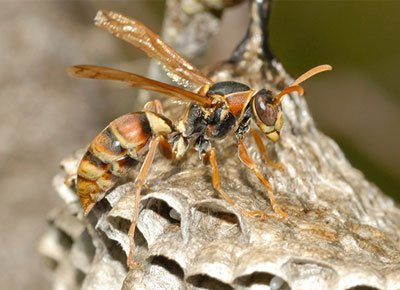
Growing up to a length of 2.5cm, paper wasps have brown wings and a black abdomen with yellow/orange bands, though some are yellow/brown.
They build smaller nests shaped like inverted cones consisting of hexagonal cells made of saliva mixed with wood fragments, which gives them a paper-like consistency and appearance. These nests hang by a stalk underneath eaves and tree branches and hold a maximum of 100-200 wasps.

Mud daubers

Named for their tendency to collect water and mud for their nests, mud daubers or mud wasps come in different sizes with black and orange colouring.
You’ll find their nests attached to walls and ceilings and overhanging rocks in less frequented areas.
These nests are small and divided into individual cells fashioned from mud. Mud daubers put paralysed spiders inside each cell as a food source before laying an egg and sealing off the cell.

European wasps

Considered a pest and more aggressive than native wasps, European wasps are 1-1.5cm in length with a bright yellow body and legs and black triangle-shaped markings.
As an introduced species, European wasps don’t have any natural predators in Australia to keep their population under control.
Their nests can house up to 100,000 wasps and are usually buried underground, with only the opening hole visible.
European wasp nests are oval-shaped and made up of multiple cells arranged in a honeycomb-like configuration.
These nests are covered by a material resembling paper mache or egg cartons, which is the result of chewed wood pulp mixed with saliva.
They fly in a straight line from their food source back to their nest and have a range of 50-250m.

What is the difference between bees and wasps?

To learn more about bees, check out our Hivemind blog here: https://allstatepest.com.au/pests/ultimate-guide-to-bee-prevention/

Given that wasps can be more aggressive and dangerous than bees, you’ll want to know how to identify them as quickly as possible. Here’s what you should look for:

Physical appearance

Bees have a larger body, and most are covered with fine hairs. Wasps have a longer abdomen and more distinct yellow, black or orange markings.

Flying pattern

Wasps fly directly from their food source back to their nest in a zigzag pattern. They do not retract their legs during flight, whereas bees do.

Nesting material, appearance and location

Wasp nests tend to be larger in size, football-shaped and sheltered inside a building or underground. They have a paper-like appearance as they are made of mud or chewed wood mixed with water or saliva.
Beehives are smaller in size, have a more organised, distinct honeycomb pattern and are made of yellow wax. You’ll find them concealed in tree hollows, roof and wall voids, abandoned sheds and thick grass.

Stinging behaviour

Bees can only sting once; wasps, on the other hand, can sting multiple times. They are generally more aggressive and their stings more painful.

Food preferences

Bees feed on honey and pollen, but they are also attracted to overripe fruit and sugary items. Wasps’ diet includes the above, but they also scavenge other small insects, meat, fish, vegetable scraps, pet food and even garbage when necessary.

Worried about wasps? Our expert team is ready to help you now

or

Signs of a wasp outbreak

Pay close attention to the following clues and stay alert to a potential infestation in your home or business:

You notice a large number of active wasps

If you see wasps swarming around a particular area, this is a sign that there may be a nest nearby.

You come across a wasp nest

Look for wasp nests in roof and wall cavities, trees, garages, bird boxes and underneath eaves. They are usually tucked away in sheltered areas but still easy to access. Some nests are located underground or within compost heaps, so don’t forget to check outside.

You see damaged wooden structures

Wasps often use chewed wood to make nests, so pay attention to signs of stripped wooden beams, furniture, fencing, firewood and trees.

They’re noisy

Similar to bees, wasps emit a tell-tale buzzing sound when flapping their wings together during flight. This means that a large swarm will create a pretty loud and constant distraction.
If you have wasps building a nest inside your wall or roof space, you may also hear a tapping noise.

Problems caused by wasps

A wasp outbreak can be dangerous, distracting and disruptive. Here’s why:

Painful stings

Unlike bees, wasps sting multiple times, and many can attack at once. They’ll exhibit this aggressive behaviour if you accidentally disturb their nest. Luckily, most stings can be easily treated with painkillers and a cold compress.

Triggering allergies

Some people can have an allergic reaction to the venom from a wasp sting, which contains a mixture of enzymes, proteins and neurotoxins.
In most cases, the allergies are easily treatable. People who have a history of allergies or have experienced multiple wasp stings must be monitored for a more serious systemic or anaphylactic reaction and require urgent medical attention.

European wasps are a pest

European wasps are notorious for competing with native insects for resources, and as an introduced species, they have few predators to keep their numbers controlled. They can damage crops like grapes and stone fruit and prey on the already dwindling bee population.

Concealed nests

You may have a significant outbreak of wasps and be unable to find the source as it is buried underground or inside a compost heap.

Safety concerns

Outdoor activities and events can be affected by aggressive wasp behaviour, foraging habits and hidden nests. Be extra careful if children are present.

Get safe and effective wasp nest removal today

or

How to prevent wasps

An effective way to prevent wasps from building nests outside is by spraying the perimeter of your home with insecticide aerosol and focusing on the eaves.

Aerosols are often very useful to deter wasps from returning to their nest, but take care when applying, as they will become aggressive when sprayed. You’ll need to leave the area quickly.

We recommend using a long-range aerosol with a powerful jet nozzle that can spray a large volume of insecticide reaching up to six metres, allowing you to stay a safe distance away from the nest.

You can also follow these suggestions to safeguard your home from wasps:

Identify and seal off entry points to your home

Cover all small openings, gaps, cracks and crevices that permit wasps to crawl inside your roof space or wall void. Consider window and door screens for extra protection.

Maintain your yard regularly

Trim and check tree branches for wasp nests. Keep lawns tidy and mowed, and remove food scraps and fallen fruit.

Remove food sources

If you’re hosting an outdoor event, keep food and drinks covered where possible. Cover pet food and water bowls that are not in use. Seal and secure rubbish bins and compost heaps.

Remove or repair damaged or decayed wood

Many wasps build their nests by stripping and chewing wood they find in your yard.

Professional wasps extermination

European wasp nests are a threat to public safety and need to be removed or destroyed.

At Allstate, we don’t recommend handling wasps yourself, especially if you have allergies or no previous experience. Our team is highly trained to understand wasps, their aggressive behaviour and the safe application of treatment with protective clothing and proper equipment.

When we treat your wasp outbreak, you can expect us to begin with a comprehensive assessment and inspection of your property.

Our treatment plan involves locating the hive, then applying a control dust inside the cavity to manage the colony housed inside and deter other swarms from using the hive. When it is safe, we’ll physically remove the hive from your property.

As it takes time to manage severe outbreaks, we will carefully monitor the progress of the treatment over follow-up visits and refresh the treatment if necessary.

You’ll receive a follow-up report detailing the entire treatment for your reference.

For all urgent callouts, we have an emergency service where we will respond to your concerns within 24 hours.

Our wasp nest removal cost starts at $187, and you can count on our experienced technicians to keep your home or business safe from wasps.

Our expert team is ready to assist you with professional wasp prevention now

or

Choose Allstate for a reliable wasp removal service

For most of us, experiencing a swarm of wasps can be very stressful. There’s no need to panic though, because at Allstate, we’ve successfully treated wasp outbreaks since 1986. No matter where you are in metropolitan Adelaide, we have a 24/7 wasp emergency callout service that you can count on.

From residential to commercial and industrial settings, our experienced team is highly trained and fully equipped to ensure the safe handling of wasps. We use innovative, modern solutions and targeted treatments to keep your home or business safe from wasps for years to come. All the treatments that we use are are non-toxic to children, pets and the environment.

With a six-month warranty on our wasp removal service, as well as payment plans and a money-back satisfaction guarantee, you won’t need to delay any urgent treatment. Contact Allstate today to prevente wasps from your home or business for good.

Our expert team is ready to help you now

or

How to manage spiders this spring

How to manage spiders this spring

HOW TO GET RID OF SPIDERS THIS SPRING

Now that spring is upon us, have you been noticing more spiders around your house? Chances are, they were actually there for months, quietly hiding throughout winter. As they emerge from hibernation looking for food, you’ll notice messy, sticky cobwebs and even insects (spider food!) crawling around the place. As female spiders can lay hundreds of eggs, it doesn’t take long for an outbreak to happen.

If you’re keen to safeguard your house from a spider outbreak this spring, we’ve shared our top recommendations on how to keep spiders away and manage them indoors and outdoors.

What questions will this article answer?

Why are there so many spiders in the house?

Though most of us are used to seeing an odd spider here and there, it’s certainly an unpleasant surprise to discover that there are actually many more than usual. However, it’s very likely that they were there all along, cleverly hidden away. Let’s  go through some possible explanations as to why these pesky creatures have chosen to make your house their home.

Hibernating in your home

In winter, spiders are usually attracted to the warmth and shelter provided by your house and settle in dark, less frequented areas. They will often crawl through tiny access points including holes, gaps, cracks and crevices in roofs, walls and screens to gain entry.

Come springtime, as the days become longer and warmer weather sets in, the spiders inside your home that have been quietly hibernating over the winter months begin to emerge for breeding season. With females known to lay hundreds of eggs, this is a sure sign that you could soon have an outbreak on your hands.

Hitchhiking from the outdoors

In some instances, you may accidentally introduce spiders inside by letting them, or unhatched eggs, hitch hike on equipment that you’ve brought inside, including camping gear, outdoor furniture, firewood and toys.

Keeping up with regular yard maintenance reduces the number of available hiding places for spiders to breed and nest. You’ll need to trim back trees, shrubs and plants that are near or touching the sides of your house.

Spiders may also be drawn to your home because of the availability of their preferred food source: insects. This includes moths, flies and mosquitoes, indicating that you may potentially have an insect outbreak at the same time.

To detect early signs of a spider or pest outbreak and prevent it from escalating, we recommend being proactive by scheduling routine professional spider control treatments.

Stuck with spiders? Our expert team is ready to help you now.

or

What is the fastest way to manage spiders inside?

For serious infestations, it’s best to get in touch with a spider control professional

to ensure the problem is completely resolved. However, if you’re only noticing a few more spiders than usual, here are some simple DIY methods to manage them easily:

Insecticide aerosol sprays

A fast and effective way to remove pesky spiders indoors, store-bought insecticides can be applied directly to spiders and are readily available from supermarkets and hardware stores. The major advantage to using an aerosol is that you have precise control of the direction of the spray and it can access small, hard to reach places. They also leave a residue which can give longer lasting protection.

Spider catcher

Consisting of a bristles located at one end of a stick, and a pistol grip at the other, this handy device enables you to easily trap and release spiders outside with minimal harm.

Remove spider webs

The presence of webs can attract more spiders, so it’s best to either wipe them away and clean the area with a damp cloth. You can also use a duster or a vacuum cleaner to remove them.

Spider traps

Laced with an attractant to trap insects on the adhesive surface, glue traps are a simple and inexpensive method to remove spiders. With many non-toxic and odourless options available, you can easily lay them out in any areas of your home that are regularly frequented by spiders.

How to manage spiders outside

The best way to keep your spider population down is to make it a less attractive home for them. You can do this by limiting the number of hiding spots and available of food sources. Consider these options to reduce the number of spiders outside your home:

Diatomaceous earth

A natural and environmentally friendly product that is easily found at hardware stores, food grade diatomaceous earth can be safely sprinkled around outdoor areas used by pets and children. This powdery silica substance contains sharp edges that can damage the exterior covering of spiders, causing them to die from a loss of moisture.

Reduce potential hiding places

With regular garden and yard maintenance, you will significantly reduce the risk of a spider outbreak. We suggest:

  • Keeping plant pots clear
  • Trimming away excess vegetation growing close to your building including tree branches, shrubs, bushes, foliage and vines
  • Storing firewood away from the building
  • Keeping outdoor furniture, equipment and shoes covered if not in use

Insecticide aerosol sprays

You can purchase larger quantities of aerosol spray from hardware stores and apply it more liberally outdoors over a wider area. However, use with caution around children and pets.

Eliminating insects

As spiders primarily feed off insects, it’s helpful to keep away as many as possible including flies, moths and mosquitoes. Learn more about how Allstate can control flies here

What will keep the spiders away naturally?

There are several options available if you prefer to use non-toxic ways of preventing spiders.

Essential oils such as peppermint, lavender and tea tree are thought to be highly effective. You can use them with an oil diffuser or simply place 15-20 drops of your preferred oil into a spray bottle and fill with water. This mixture can be applied to affected areas on a regular basis.

Vinegar can be mixed with water at a 1:1 ratio in a spray bottle and applied to affected areas, but due to its corrosive nature take care when applying.

Covering vents and installing mesh screens over windows and doors can go a long way towards keeping out unwanted insects. Ensure you keep then clean and free from holes so that they remain effective.

Sealing all entry points such as crack and crevices is a key method to reduce access to your home. Covering gaps underneath doors and around windows with draught excluders helps prevente entry points.

Spiders can easily hide inside shoes, toys, furniture and sports equipment so give your belongings a good shake and check that you have removed spiders before they come inside your home.

Keep your house clean and tidy by removing clutter and dusting and vacuuming thoroughly, including all the corners, under and behind furniture. Immediately remove any spider webs that you encounter.

Carefully check dark and less frequented areas of your home for spiders, as they give ample opportunities for spiders to hide and lay eggs. Don’t forget to look underneath and behind furniture, and if possible, make sure to clean these places regularly as well.

As insects are attracted to lights, spiders may notice an abundance of their preferred food source, and also be drawn indoors as a result. Switch off unnecessary lights to avoid this from happening.

Available at hardware stores, insect repelling lights consist of globes covered in a green, yellow or red coating. They are thought to be highly effective at deterring insects.

How does spider pest control work?

At Allstate, our technicians are highly trained and fully equipped to tackle spider outbreaks of any size. We can assess if you have a simultaneous insect outbreak and come up with a fast and targeted treatment plan that causes minimal disruption to your home and business.

We normally begin by conducting a thorough assessment of the outbreak and investigate potential sources. By combining these findings with our knowledge of spider species, we can then put together a tailored treatment plan.

Our preferred spider removal treatments primarily include using insecticide applied to treated zones around the perimeter of the building, as well as spider control dust tipped inside gaps, holes and crevices. We take care to only use products that are safe for children, pets and the environment.

For severe outbreaks, a follow up replenishing treatment may be needed, and we are on hand should any urgent problems arise.

For fast spider removal, speak to our expert team

or

Choose Allstate for long-lasting protection from spiders this spring

If you’re experiencing an unexpected spider outbreak this spring, Allstate is here to help. Our technicians understand how stressful and disruptive it can be even when you’re only noticing a few more spiders than usual.

As Australia’s largest pest control company, we have more than 30 years’ experience in managing spider issues in commercial, residential and industrial settings. With a thorough knowledge of common spider species and behaviour, we have long term solutions to keep your home protected from spiders. We use only the latest technology and treatments which are non-toxic to children, pets and the environment.

All of our services come with a 100% money-back satisfaction guarantee, and are covered by competitive warranties. We offer interest-free payment plans so you can enjoy the warm weather in spring without having to worry about spiders crawling around.

Call on Allstate for a pest-free spring

or