






prevention-icon

Termites

prevention-icon

Ants

prevention-icon

Cockroaches

prevention-icon

Spiders

prevention-icon

Birds

prevention-icon

Bed Bugs

prevention-icon

Bees & Wasps

prevention-icon

Rats & Mice

prevention-icon

Possums

prevention-icon

Biting Insects

prevention-icon

Disinfection Services

How a Termite Reticulation System Protects Your Home

How a Termite Reticulation System Protects Your Home

A termite reticulation system is one of the most innovative ways to prevent termites from entering your home. It works quietly underground, sending treatment through the soil month after month.

This is important here in Adelaide. Termites are everywhere. The CSIRO says one in three homes will get a termite infestation at some stage. Repairs cost billions every year. Most insurance won’t cover it either.

At Allstate Pest Control, we’ve been keeping homes safe for decades. We know and have seen the damage termites cause. We also know the relief homeowners feel once a proper barrier system is in place.

So, let’s break down what the system is, how it works, what it costs, and how Adelaide families use it in real life.

What is a Termite Reticulation System?

A lot of people mistake it for a “trap” or a box you swap out each year. It’s not that.

Simple Definition

A termite reticulation system is a set of underground pipes that run under your concrete slab or around your home. Those pipes release termiticide into the surrounding soil to block termites before they reach your timber.

Think of it like an underground sprinkler system. But instead of water, it pumps out termite treatment.

How the System Works

  • Pipes go in during the construction process or are dug in later around foundations.
  • Refill points sit at the edges of your home.
  • A licensed pest control tech pumps chemical through the pipes.
  • The treatment spreads out evenly and forms a protective barrier.

The barrier deters termites. It also kills any that try to push through.

Key Components

  • Pipes: Flexible enough to handle soil movement.
  • Refill points: Capped outlets where treatment goes in.
  • Chemical barrier: The actual defence line in the soil.

Why Install a Reticulation System?

Because once termites are inside, the damage is brutal. Catching them early or keeping them out is cheaper than fixing chewed beams later.

Long-Term Protection

A reticulation termite system gives you continuous protection for years. With proper refills and regular termite inspections, it holds strong.

Safer and More Consistent

Surface sprays miss spots. Reticulation doesn’t. It spreads chemicals evenly underground. Because it’s below the surface, it’s also safer for kids, pets, and gardens.

Fits Any Property

Brand new slab in Mount Barker? Old weatherboard in Prospect? It doesn’t matter. The system can be installed on all property types appropriately.

Here’s one real scenario a local shared online:

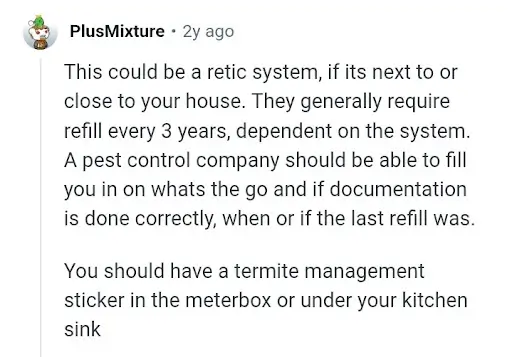
“When I bought this property, the agent told me this was a termite trap that needed changing once a year. I’ve seen online. What is it?”

And the reply:

“This could be a retic system, if it’s next to your house. They generally require refill every 3 years, depending on the system. You should have a termite management sticker in the meter box or under your kitchen sink.”
termite reticulation system review

That’s the thing. Most homeowners have no idea what they’ve got until a pest control crew explains it.

How to Refill a Termite Reticulation System

This is the bit many homeowners forget. The system doesn’t work forever unless you top it up.

How Often?

Every 3–5 years is standard. Sandy soils or high-termite-pressure areas might need shorter cycles.

Why Use a Licensed Pest Controller?

DIY is risky. Too little chemical and the barrier system has holes. Too much and you waste hundreds of dollars’ worth of product. A licensed termite control service person knows the exact dose for optimal protection.

What’s Involved?

  1. Inspection: check refill points and signs of termite activity.
  2. Termite reticulation refill: pump in new treatment through the pipes.
  3. Reseal: close refill points to keep pressure and safety.

Tip: Don’t just refill blindly. Pair it with an annual termite inspection so you know the barrier is doing its job.

Advantages Over Other Termite Systems

You’ve got a few options when it comes to termite protection: sprays, baiting stations, and full barrier systems. A termite reticulation system isn’t the only choice, but it does come with some serious perks that make it stand out.

Lasts Longer

Surface sprays are a quick fix. They fade after a year or so, and you’re back to square one. Retic systems, on the other hand, are built to last decades. As long as you keep up the refills every 3–5 years, the barrier stays strong.

For example, we’ve seen homes in Adelaide Hills that had systems installed in the late 2000s. The homeowners kept to the refill schedule, and nearly 15 years on, they’ve had zero termite activity in the house. Compare that to a neighbour who relied on sprays and ended up with termites in their subfloor within four years. The difference is in the maintenance.

No Lifestyle Interruption

Because it’s underground, you don’t even notice it’s there. No odours, no chemical patches on the lawn, no pest guy wandering around your lounge room with a spray can. The refill points are tucked neatly outside. It’s one of those “set it up properly and get on with life” solutions.

Even Chemical Spread

With surface sprays, it’s easy to miss spots. Termites only need one tiny gap, and they’re in. Reticulation systems pump treatment evenly through the soil via perforated pipes, so the whole perimeter is covered.

Think of it like watering a garden bed with a sprinkler hose compared to splashing buckets of water here and there. Which one gives you better coverage? The same logic applies here.

Better for the Environment

Because the treatment stays underground and is delivered evenly, you actually use less chemical overall. That means less runoff into drains, less exposure for pets and kids, and a cleaner way of handling termite prevention.

This is especially handy in Adelaide suburbs where homes back onto creeks or reserves. Homeowners are more conscious of what runs into the environment. So having a system that keeps things contained makes sense.

Common Questions From Homeowners

We get a lot of questions from Adelaide homeowners who are curious (or confused) about their systems. Here are the most common ones, with straight answers.

Is it safe for kids and pets?

Yes. The treatment sits underground, in the soil. Pets can play in the yard, kids can dig in the garden, and you don’t have to worry about them coming into contact with surface sprays. It’s one of the safest ways to manage termites around a family home.

What happens if I miss a refill?

The barrier weakens. It’s like leaving your front door unlocked. Termites are clever little things.. They’ll find that gap and take advantage of it. We’ve seen cases where just one missed refill lets termites march straight through to the subfloor. And again, you may be lucky not to get an infestation.

Do I still need inspections?

Yes, you do. A reticulation system isn’t some permanent fix that keeps termites out forever. Termites are stubborn little things. They’ll keep looking for weak spots, especially if the soil around your home sees moisture levels change from time to time.

We’ve seen plenty of Adelaide homes where the system was in place, but the owners still booked yearly inspections. One homeowner had an eight-year-old timber frame house with a retic system installed during the build. Each year, the installer came out, did the inspection, and gave them a report. They never had termites, but the risk level in the reports wasn’t always the same. Some years the inspector marked it as moderate risk, and other years it was classed as high risk.
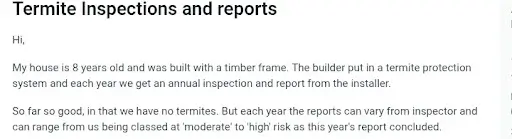
termite reticulation feedback

That shows that conditions around your home don’t stay the same. Weather, garden works, and nearby building activity; all of it can affect how much termite pressure your place is under. An inspection keeps you updated, makes sure your barrier is still working, and lets you know if you need a refill sooner rather than later.

Refills and inspections are like a termite prevention package. One keeps the barrier topped up, the other makes sure nothing has slipped through.

Adelaide Case Studies

Here’s what happens in the real world.

A family in Glenelg had a system put in during their build. They’ve stuck to the 3-year refill cycle and booked inspections each year. Twelve years later, still no termite damage.

A couple in the inner north skipped refills. They assumed once installed, it lasted forever. Wrong. A few years later, termites chewed into their floor joists. Meanwhile, the termite reticulation system cost for refills? A few hundred.

And when those with a reticulation system are asked which pest control they use for the installation, one summed it up online:

“Allstate. No complaints! It has been in place for about eight years now. We sometimes have activity in the stations, and usually by the next visit, they are gone. We got a very old post-war home and found evidence of damage previously.”
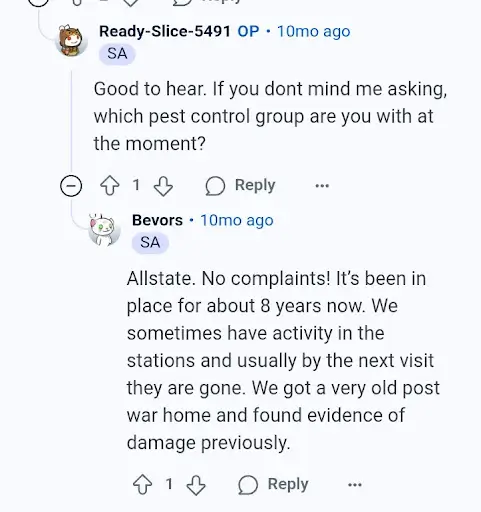
termite reticulation system customer review

Eight years? Yes, sometimes. When installed by us with enough refills and regular annual inspections, you’ll get the same experience as the above.

Wrapping It Up

A termite reticulation system is an underground defence that gives you control over termites before they move in. It’s reliable, discreet, and saves you a fortune compared to fixing chewed timbers later.

Call Allstate Pest Control:

  • To install it properly.
  • Refill it on schedule.
  • And keep up with regular termite inspections.

Do that, and you’ll sleep easy knowing your home has a protective barrier against one of Australia’s costliest pests.

Call Allstate Pest Control Adelaide on 08 8371 1277 or book an inspection with us online. We’ll help you install, refill, and maintain your system the right way.

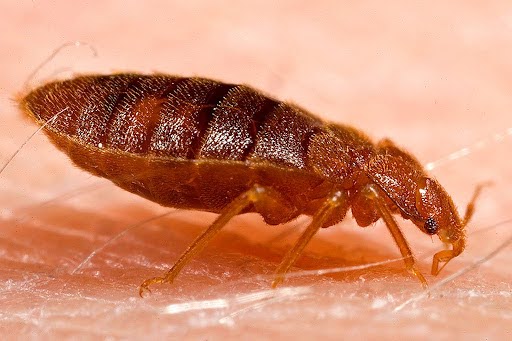
Pet-Friendly Pest Control Methods to Keep Your Home Safe

Pet-Friendly Pest Control Methods to Keep Your Home Safe

Pests are annoying, but pets are a part of the family. Pet-friendly pest control lets you tackle the first without putting the second at risk. It employs safe, low-toxicity methods that are effective.

The old “spray everything and hope for the best” approach can backfire. Wet chemicals can linger on floors, skirting boards, or carpets where pets and kids spend their time.

That’s why more Adelaide households are looking for safer, environmentally friendly options. Over the last 30 years, Allstate Pest Control has seen the shift firsthand, helping South Australians manage pest problems while protecting the health of families and pets.

How to Treat Bed Bug Bites on Human Skin: Relief, Remedies and When to Act

How to Treat Bed Bug Bites on Human Skin: Relief, Remedies and When to Act

So, how do you treat bed bug bites?

Start by washing the affected skin with soap and water. Apply a cold compress. Use an anti-itch cream or calamine lotion. And avoid scratching, no matter how tempting.

If the bites worsen or signs of infection appear (which is rare), speak to your doctor. Some cases may need antihistamines or prescription creams.

At Allstate Pest Control, we’ve helped thousands of South Australians manage bed bug problems and infestations for over 35 years. We’re here to guide you, step by step, through relief, remedies, and long-term prevention.

Let’s walk you through what to do.

What Do Bed Bug Bites Look Like?

Bed bug bites usually appear as red, raised welts. You’ll often find them in clusters or lines on exposed skin of the arms, legs, neck, or back.

Unlike spider bites, they don’t swell up immediately. They can take hours or even days to show. And once they do? The itching kicks in.

The bite marks can become inflamed, especially if you scratch at them. On brown skin, bites may appear as darkened or purple spots rather than red.

What makes things tricky is that not everyone reacts the same way. Some people experience severe itching or even an allergic reaction. Others barely notice the bites at all.

Bed Bug Bites: How to Treat 

  1. First step: clean the area. Gently wash the bite marks with soap and lukewarm water. This helps prevent skin infections and soothes the itch somewhat.
  2. Apply a cold compress. It reduces swelling and numbs the itch. Don’t scratch, it spreads bacteria and delays healing.
  3. Next, use an over-the-counter cream or gel like calamine lotion or hydrocortisone. These reduce inflammation and provide relief from severe itching.
  4. If the bites are widespread or you’re having a stronger reaction, speak to your GP or pharmacist. They may recommend an oral antihistamine or prescription topical cream.

Home Remedies for Bed Bug Bites: Quick Relief Tips

Got no creams on hand? No worries.

Here’s how to treat bed bug bites with what’s already in your kitchen or medicine cabinet.

Topical treatments for itching and swelling

  • Aloe vera gel: Straight from the plant or a natural gel. Soothes, hydrates, and promotes healing.
  • Tea tree oil: A few drops diluted in water or carrier oil help with itching and have antibacterial properties.
  • Baking soda paste: Mix with a few drops of water and dab it on. Leave for 15 minutes, then rinse.
  • Toothpaste: Surprisingly effective. The menthol provides a cooling effect and reduces irritation, but avoid using it on broken skin.

When to seek medical help for bed bug bites

Get medical advice if:

  • You develop a fever.
  • The bite area feels warm, hard, or has pus (signs of infection).
  • You experience an allergic reaction, such as swelling of the face or trouble breathing.

Also see a GP if the bites aren’t healing after a few weeks or you’re constantly being bitten at home. That’s likely an ongoing bed bug infestation, not just a one-time problem.

    How to Prevent Bed Bug Bites in the Future

    The real problem isn’t the bites but the bugs.

    To prevent bed bug bites, you need to eliminate bedbugs or avoid them in the first place.

    Here’s what helps:

    • Avoid secondhand furniture, especially mattresses, bed frames, and upholstered items, without a pest check.
    • Vacuum carpets, beds, and soft furnishings on a weekly basis. Pay extra attention to mattress seams and box springs.
    • Use bed bug-proof covers on mattresses and pillows.
    • Inspect your hotel room before unpacking. Pull back the bed sheets. Look at the seams. Check for tiny insects or black stains.

    Worried you’ve picked them up during travel? Then, put all clothes and bags in a hot wash and dry cycle on the highest setting when you return.

    Act fast on pests around your house, speak to an expert today

    or

    Frequently Asked Questions

    What is the fastest way to heal bed bug bites?

    The fastest way to treat bed bug bites is to wash the affected area with mild soap and water, apply calamine lotion or an antihistamine cream, and avoid scratching. Cold compresses help reduce swelling. Otherwise, leave the bite site alone. Most bites will heal on their own in a week or so. 

    How long does it take for bed bug bites to go away?

    Bed bug bites usually heal in 7 to 14 days, or less. It depends on your skin type and whether you scratch. For some individuals, the itching can persist for several weeks.

    What does toothpaste do for bed bug bites?

    Toothpaste contains menthol and other cooling agents that can temporarily relieve itching. It’s not a medical treatment but can work in a pinch.

    How do you stop bed bug bites from spreading?

    You stop the spread by controlling the bed bug infestation. Regular cleaning, vacuuming, and professional pest control treatments are key. Bites themselves don’t spread, but repeated bites will occur until the bugs are removed.

    Can bed bug bites cause serious problems if not treated?

    In rare cases, untreated bed bug bites can lead to skin infections or allergic reactions. Sleep deprivation and stress are also common effects of ongoing infestations.

    Need fast help with bed bug bites or a suspected bedbug infestation? Leave us a message or call Allstate Pest on (08) 8371 1277 today.

    Contact Allstate Pest Control for Professional Bed Bug Treatments

    Think you’ve been bitten? Seeing signs of a bed bug infestation at home or work?

    Call Allstate Pest Control today on 08 8371 1277. We’re South Australia’s most trusted pest control company, available 24/7 for inspections and fast treatment plans. We’ll help you sleep easy again.

    Our expert team is ready to help you now

    or

    Why Do Ants Come Inside The House?

    Why Do Ants Come Inside The House?

    Because your home has everything ants want, from food to water, and shelter.

    That’s the short answer. 

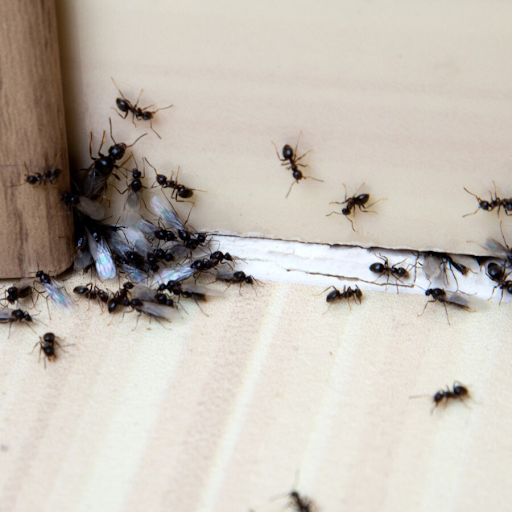
    But if you’re seeing tiny ants marching across your benchtop or around the pet food bowl, there’s more going on under the surface.

    At Allstate Pest Control, we’ve been helping South Australians tackle pest infestations for over 35 years. We handle emergency call-outs, long-term treatments, and prevention plans for both homes and businesses. And when it comes to ant control, we’ve seen it all, from sugar trail scouts to full-blown carpenter ant infestations hiding behind the wall.

    Let’s help you find out why ants invade homes, what attracts ants inside, and how you can stop ants from coming back.

    Why Do I Keep Getting Ants in My House?

    Because they’ve found a food source or water, and told their colony.

    Ants don’t wander in randomly. Worker ants go out to search for food or moisture. Once they find something, like a crumb, a leaky pipe, or a pet bowl, they leave behind a chemical trail. This trail guides the other ants directly to it.

    Most ants come inside looking for:

    • Sweet foods (think honey, sugar, juice spills)
    • Greasy leftovers or meat scraps
    • Water from leaky taps, condensation, or plant trays
    • Shelter from rain or extreme heat

    Why Do Ants Come Inside When It’s Hot?

    During hot seasons, such as summer, ants are more likely to invade homes. 

    Why? 

    When it’s hot and dry, ants come inside to escape the heat and search for water. Ant activity increases during warm months, especially for pavement ants and other ground-dwelling species common in Australia.

    Once the colony finds a reliable food source, you’ll notice ants walking in steady lines across the floor, benchtop, or windowsill. That’s your cue to act fast.

    What attracts ants inside the home?

    Ants love it when you have a messy kitchen, dining room or living room in any form.

    They’re drawn to sugary substances, food residue, and anything not appropriately sealed. Even the tiniest crumb under your toaster can be enough to trigger an ant infestation.

    Here’s what attracts ants:

    • Unsealed food like cereal, rice, or snacks
    • Fruit left out on the counter
    • Spills straight from soft drinks or juice
    • Pet food bowls left out overnight
    • Poorly sealed windows, cracks, or entry points
    • Damp areas like under sinks or laundry rooms

    Carpenter ants may also enter your home if there’s rotting or damp timber. Unlike other ants, they don’t eat wood, but they hollow it out to create nesting habitats.


    How to Stop Ants from Coming Inside My House: 7 Things to Do

    If you’ve had ants invading your kitchen more than once, it’s time to break the cycle. Here’s what to do.

    Identify the type of ant

    Different ants need different treatment methods. Some ants are sweet lovers. 

    Others prefer grease or protein. Some build nests in walls (like carpenter ants). 

    Others stay outdoors but forage inside. Identifying the ant species helps choose the right bait or barrier.

    Keep surfaces clean

    Wipe down benchtops after every meal. Mop floors regularly. Don’t leave dirty dishes overnight. Even a small spill can trigger an ant trail. Pay attention to hidden spots like under the fridge, toaster, or microwave.

    Store food in sealed containers

    Use airtight containers for sugar, beverages, flour, grains, and snacks. Don’t rely on cardboard packaging. Ants can chew through it. The same goes for pet food; store it in sealed containers and clean bowls daily.

    Seal cracks

    Inspect your walls, windows, doors, and skirting boards. Use sealant to block gaps. Fix poorly sealed windows or broken flyscreens. If ants are coming through a specific crack, you’ll often see them forming a line there.

    Use ant baits

    Ant bait is more effective than sprays in the long run. Worker ants carry the bait back to the colony. It poisons the entire nest over time. 

    Ensure the bait matches the ants’ food preference; some prefer protein, while others prefer sugar. Always follow the label instructions.

    Use an ant spray barrier

    Apply non-repellent ant spray along door frames, windows, and exterior walls. These products allow ants to walk through and carry the toxin back to the colony without alerting others. 

    Avoid strong-smelling repellents, as they can cause the ants to split and form new colonies.

    Turn to pest control professionals

    If ants keep returning, it’s time to call an ant control professional. At Allstate Pest Control, we use targeted treatments that eliminate the entire nest, not just the visible ants. We also identify access points and prevent ants from coming back.

      Protect your warehouse from a pest outbreak, get expert advice today

      or

      How Do I Know If I Have Termites or Ants?

      Not all ants are harmless, and not every wood-loving insect is a termite.

      If you see small piles of sawdust, hollow-sounding timber, or ants with wings, it could be something more serious. Carpenter ants are often mistaken for termites, but they don’t eat wood; they dig into it. Termites, on the other hand, feed on cellulose and cause structural damage.

      A licensed pest control expert can confirm what pest you’re dealing with. Don’t guess, especially if you own a timber-framed home.

      Frequently Asked Questions 

      Why are there ants in my house suddenly? 

      Ants appear suddenly when they discover food or water. Once a worker ant finds it, others quickly follow via a scent trail. This can happen within hours of a spill or leak.

      What do ants hate most? 

      Ants dislike strong scents, such as lemon juice, peppermint oil, and vinegar. But these are only short-term deterrents. Professional pest control methods target the nest directly for more effective and longer-lasting results.

      Does killing ants attract more? 

      Yes, in some cases. Crushing ants releases alarm pheromones that can attract other ants to the area. It’s better to use ant bait to target the entire colony discreetly.

      Why are there ants in my room but no food? 

      Even if you don’t see food, ants may detect food residue, pet food, or moisture. Sometimes ants use rooms as pathways to other areas. Check windows, skirting boards, and power outlets.

      How to get rid of ants when you don’t know where they’re coming from? 

      Start with deep cleaning. Remove all food sources. Use ant bait along ant trails or suspected areas. If the problem persists, contact a licensed pest control expert to locate the nest and apply a comprehensive treatment.

        Act fast on pests around your warehouse, speak to an expert today

        or

        If ants have become a constant battle, don’t wait until the colony grows.

        Call Allstate Pest Control on (08) 8371 1277 or send us a detailed message about the situation to book an inspection or emergency treatment. We’re trusted by thousands of South Australians, and we’re ready to help you protect your home.

        Our expert team is ready to help you now

        or

        Are Possums Dangerous to Humans?

        Are Possums Dangerous to Humans?

        Yes, possums can be dangerous, though not in the way most people think. They’re not naturally aggressive. But when cornered, a possum may bite, scratch, or spread harmful diseases through droppings and parasites.

        At Allstate Pest Control, we’ve protected thousands of homes and businesses in South Australia for over 35 years. We’re trusted by families, schools, and councils across Adelaide to handle wildlife pests, especially the sharp-clawed, nest-building kind. Possums included.

        Let’s break it all down for you. What possums do, why they act out, and what you should never do if you spot one in your backyard or roof cavity.

        What Are Possum Defensive Behaviours?

        If a possum feels threatened, it won’t go down quietly.

        It might growl, hiss, or bare its teeth. It may even lunge.

        That’s not because a possum is inherently dangerous. It’s simply scared.

        Possums, especially common brushtail possums, are prey animals. They’re wired to defend themselves from predators like owls, dogs, or humans. When backed into a corner, they might:

        • Bite with sharp teeth
        • Scratch with strong claws
        • Release a foul-smelling liquid
        • Or “play dead” to escape.

        It’s nature’s panic button, and it can get messy.

        Also Read: What Does Possum Look Like?

        Do Possums Pose Health Risks to Humans?

        Yes, they do.

        Direct contact or exposure to possum droppings and urine can pose real health risks.

        Possums may not attack unprovoked, but they carry parasites and bacteria that don’t belong in your ceiling or kitchen.

        What Diseases Can Possums Spread?

        Here’s where it gets serious. According to research and local wildlife experts:

        • Leptospirosis can spread through the urine of certain animals, such as possums, especially in damp roof spaces.
        • Salmonella has been found in possum droppings, which can contaminate surfaces and food.
        • Mites, ticks, and fleas that live on possums can be transferred to pets or humans.
        • Possums are known to be reservoirs for buruli ulcers, a flesh-eating bacterial infection, although it’s rare.

        While possums look cute, they’re still wild animals. Handling them without gloves or letting kids play near possum nesting material is risky.

        Why Do Humans Get Bitten by Possums?

        It’s not common, but it happens. Most possum bites occur when someone tries to pick one up, block its exit, or disturb its nest boxes.

        Possums have up to 50 teeth, which is more than other mammal. So, they are good at giving a bite.

        Brushtail possums may live in your roof, garage, or shed, especially if there’s warm insulation, nesting material, or easy access to pet food. And if you accidentally corner one?

        It’ll fight its way out.

        Possums don’t go looking for a fight, but they won’t back down when they feel threatened. Keep kids, pets, and curious fingers away from their hiding spots.

        Protect your house from a pest outbreak, get expert advice today

        or

        How to Prevent Negative Interactions with Possums

        Possums are a common sight in South Australia. So, rather than panic, take preventative steps.

        Here’s how to keep the peace between humans and possums:

        • Remove food sources, such as open compost bins, fallen fruit trees, or pet food, from verandas.
        • Block entry points in your roof, wall vents, and eaves. Possums love a cosy roof space.
        • Trim trees near your roofline to reduce access. They can leap 2–3 metres if needed.
        • Avoid confrontation. Never try to trap or move one yourself.
        • Install nest boxes in your yard to redirect them away from your ceiling.

        If you ever need help with roof inspections, sealing or possum removal in Adelaide? Allstate Pest Control can sort that out quickly. Call us on 08 8371 1277.

        What to do if a possum enters your home

        First, stay calm.

        Second, don’t touch it.

        Turn off the lights and leave a door or window open. Give it space to escape on its own.

        If it refuses to leave or appears distressed, contact a licensed wildlife handler or pest control service, such as Allstate Pest Control. Trapping common brushtail possums is regulated in South Australia. They can’t be relocated more than 50 metres and must be released safely near their capture site.

        Who can trap common brushtail possums?

        In South Australia, only licensed wildlife handlers can trap or relocate possums.

        According to the Australian Department for Environment and Heritage, it’s illegal to kill or move a possum without permission under the National Parks and Wildlife Act 1972. 

        At Allstate Pest Control, we collaborate with licensed professionals to ensure that every solution is safe, legal, and humane. We won’t harm your wildlife. We help control it with proper approvals.

          Are Possums Dangerous or Misunderstood?

          They’re mostly misunderstood.

          Possums aren’t naturally aggressive or out to attack your kids or pets. But like all wild animals, they’ll defend themselves when they feel vulnerable.

          They can carry diseases, cause roof damage, and trigger allergic reactions through their fur or faeces. In the wrong place, they’re a problem. In nature, they’re part of the ecosystem.

          So no, not every possum is dangerous. However, a possum can be dangerous when cornered, sick, or living on your roof without permission.

          The best course of action is to prevent them from nesting near you.

          Frequently Asked Questions

          Is it bad to have possums around your house?

          It can be. Possums are wild animals. When near your roof, they may cause significant damage, especially if they chew insulation, scratch ducts, or urinate on your ceiling. They also attract predators, especially if you leave pet food out at night.

          Are Australian possums dangerous?

          Yes and no. Australian possums, such as the common brushtail possum, are protected wildlife. They’re not inherently dangerous, but they may scratch or bite if handled. Their droppings can spread disease, so it’s best to avoid direct contact.

          What do you do if a possum approaches you?

          Stay still. Don’t scream or run. Let it pass, and avoid blocking its escape route. If it doesn’t move, back away slowly. Then call a pest control professional at Allstate for help.

          Will a possum try to bite you?

          Only if it feels threatened. Possums generally avoid confrontation but will bite if cornered, scared, or picked up. Never attempt to remove one from your yard or roof without professional support.

          Do possums nest in roof spaces or gardens?

          Yes. They often seek dry, dark spaces, such as ceiling voids or sheds, especially when searching for nesting material. Possums may also settle in nest boxes in your garden if there are nearby trees and shelter.

          Get Help Now. Call Pest Control

          Still unsure whether the possum on your roof is harmless or a risk? Don’t guess. Get expert advice. Contact Allstate Pest Control or call 08 8371 1277 for safe, legal, and fast possum solutions. We’ll help you stay safe, avoid bites, and keep your home or business protected, 24/7.

          Our expert team is ready to help you now

          or